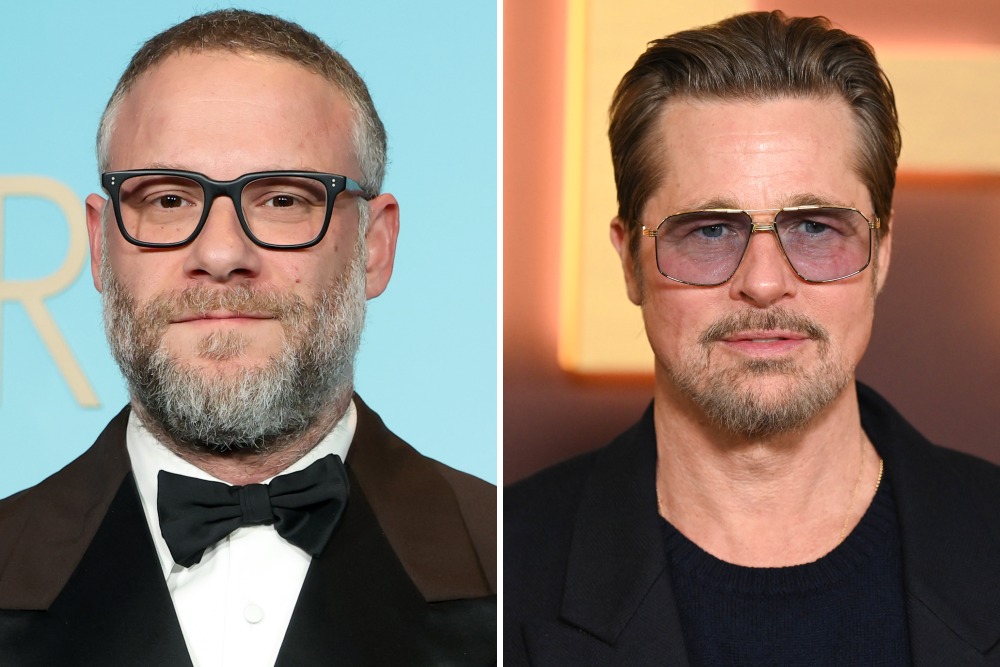
Seth Rogen remembers Brad Pitt, Michael Fassbender, and the entire cast of 12 Years a Slave stopping by the This Is the End set in 2013, brightening the mood amid a bleak New Orleans filming schedule.
When the lights on the This Is the End set flickered on in the heart of New Orleans, the city itself was already buzzing with stories of resilience. In a cramped studio that had once echoed with the sounds of brass bands, Seth Rogen and friends were staging a chaotic, laugh‑filled scene that would later become a cult favorite. But beyond the scripted madness, an unexpected group of actors arrived on a rainy Tuesday, their presence turning a dreary day into a memorable one.
The surprise visitors were none other than Brad Pitt, Michael Fassbender, Chiwetel Ejiofor, and the rest of the ensemble from 12 Years a Slave, a historical drama that would soon win an Academy Award for Best Picture. Their arrival was a quiet testament to the camaraderie that can flourish when two very different worlds collide on the same city lot. Rogen, who was then in the midst of shooting a high‑energy comedy, recalled that the 12 Years a Slave crew had found themselves in a “bummed‑out headspace” after days of heavy, emotionally charged scenes. Their spontaneous visit, full of laughter and shared jokes, lifted the spirits of everyone on the comedy set and forged an unlikely friendship that still resonates with fans today.
Background & Context
The year 2013 proved to be a whirlwind for Hollywood. While This Is the End promised an explosion of slapstick and pop‑culture references, 12 Years a Slave was tackling one of America’s darkest histories with grit and compassion. Both productions chose New Orleans as their backdrop, drawn by the city’s rich cultural tapestry and generous tax incentives. What seemed a coincidence to the casual observer was, in reality, a carefully orchestrated logistical alignment. The two crews shared a studio space for a portion of their shoots, which facilitated the chance encounter that would later be celebrated by fans.
Seth Rogen, starring and writing the screenplay, had already been building a reputation for blending comedy with heartfelt storytelling. His previous work had shown a penchant for creating inclusive environments on set. When the 12 Years a Slave team walked in, they carried a different energy—one forged from days of intense emotional work. Brad Pitt, known for his versatility, was portraying a Southern planter in a role that demanded a nuanced performance. Michael Fassbender, portraying a young enslaved man, was bringing depth and vulnerability to a scene that required quiet strength. Chiwetel Ejiofor’s portrayal of a free Black man navigating a world of oppression added a layer of poignancy to the film’s narrative. Together, they embodied a different side of Hollywood that was often unseen in the realm of high‑budget comedies.
In contrast, This Is the End was a collaborative effort among friends and colleagues. The film’s premise, a group of friends stranded during a catastrophic apocalypse, allowed for a meta‑commentary on celebrity culture. Rogen, alongside friends such as Emma Stone, Jay Z, and Kevin Hart, pushed the envelope by breaking conventional genre boundaries. Their decision to film in New Orleans was both a nod to the city’s vibrant creative scene and a strategic move to maximize logistical efficiency. While the comedy’s set design was extravagant and the special effects were cutting‑edge, the production’s heart lay in its collaborative spirit—an environment that would soon welcome a cast from a vastly different narrative.
What People Are Saying
In interviews conducted after the film’s release, Rogen reflected on the day the 12 Years a Slave crew joined him. He described the moment as a “lifesaver” for the crew, noting that the actors’ presence injected a much-needed burst of humor into the set. The shared laughter, the exchange of jokes, and the informal conversation helped break the tension that often accompanies long filming days. While Rogen never made a formal announcement about the cameo, his recollection has been embraced by fans and has sparked discussions about the intersection of genre and the shared humanity among actors.
Social media buzz around the anecdote highlighted the surprise that fans felt when learning about the cross‑genre collaboration. The hashtag #EndOfTheWorldCollab trended briefly, with users sharing behind‑the‑scenes photos and celebrating the unexpected friendship between the two ensembles. Commenters pointed out that this was a rare example of Hollywood’s willingness to support one another, regardless of the scale or type of the project. The anecdote also reignited conversations about the emotional toll of shooting period dramas, underscoring the importance of camaraderie in mitigating fatigue and burnout.
Industry observers noted that the encounter exemplified a broader trend of cross‑genre support within the film community. In a landscape where competition often dominates, moments like these serve as a reminder that the creative process is a shared journey. For the 12 Years a Slave team, the visit offered a reprieve from the heavy themes they were grappling with. For Rogen and his colleagues, it was an opportunity to celebrate a fellow artist’s dedication to storytelling. As a result, the exchange became more than a fleeting encounter; it was a symbolic gesture that echoed through the industry, reinforcing the idea that solidarity can thrive in even the most unlikely circumstances.
What Happens Next
Following the release of This Is the End in July 2013, the film quickly gained a dedicated fan base. Its unconventional blend of comedy, pop‑culture references, and meta‑narratives resonated with audiences who craved fresh storytelling. The film’s success prompted discussions about potential sequels and spin‑offs, though none have materialized to date. The comedic world of the movie, complete with characters like Seth Rogen’s character, became a cultural touchstone for internet memes and pop‑culture enthusiasts.
Meanwhile, 12 Years a Slave continued its remarkable journey, securing multiple Academy Awards, including Best Picture, Best Adapted Screenplay, and Best Supporting Actress for Lupita Nyong’o. The film’s critical acclaim solidified its place in cinematic history and demonstrated the power of storytelling to effect change. The actors who appeared on the This Is the End set went on to pursue diverse projects, each contributing to the evolving tapestry of modern cinema.
In the years since, Rogen has remained an influential voice in comedy, while Brad Pitt and Michael Fassbender continued to tackle varied roles, from drama to action. The moment of cross‑genre camaraderie on the New Orleans set has become a favorite anecdote shared at industry events and behind‑the‑scenes panels, often cited as an example of how collaboration can transcend genre boundaries.
Fans who watched This Is the End are left with the subtle knowledge that behind the laugh‑out‑loud set design was a day of genuine human connection. The film’s legacy is not only in its cinematic achievements but also in the reminder that Hollywood, at its core, thrives on shared experiences and mutual support.
In the end, the unexpected visit of a dramatic ensemble to a comedic set reminds us that even in the most chaotic of productions, the simple act of sharing a moment can lift spirits, forge friendships, and leave an indelible mark on both the people involved and the audience who watches the final product.
The Bottom Line
MyWorldPulse.com believes that moments of genuine camaraderie on set—like the 12 Years a Slave crew’s unexpected stop at the This Is The End shoot—are a testament to the heart of the entertainment industry. In a market that often rewards spectacle over substance, such spontaneous interactions remind us that the creative process is human, messy, and deeply collaborative. While studios chase ratings and revenue, it’s the off‑camera bonds that often translate into richer storytelling, more inclusive environments, and ultimately, a film that resonates on a deeper level with audiences. We champion this narrative because it aligns with our commitment to spotlighting the unsung heroes of filmmaking—the everyday acts of kindness that ripple through productions. By celebrating these instances, we encourage a culture that values mutual support over rivalry, proving that even in the most chaotic of productions, a shared laugh can lift spirits, forge lasting friendships, and leave an indelible mark on the final product. – MyWorldPulse.com
Reference:
- Official post on Seth Rogen's verified Twitter
- Official post on Brad Pitt's verified Instagram
Read more celebrity news at MyWorldPulse.