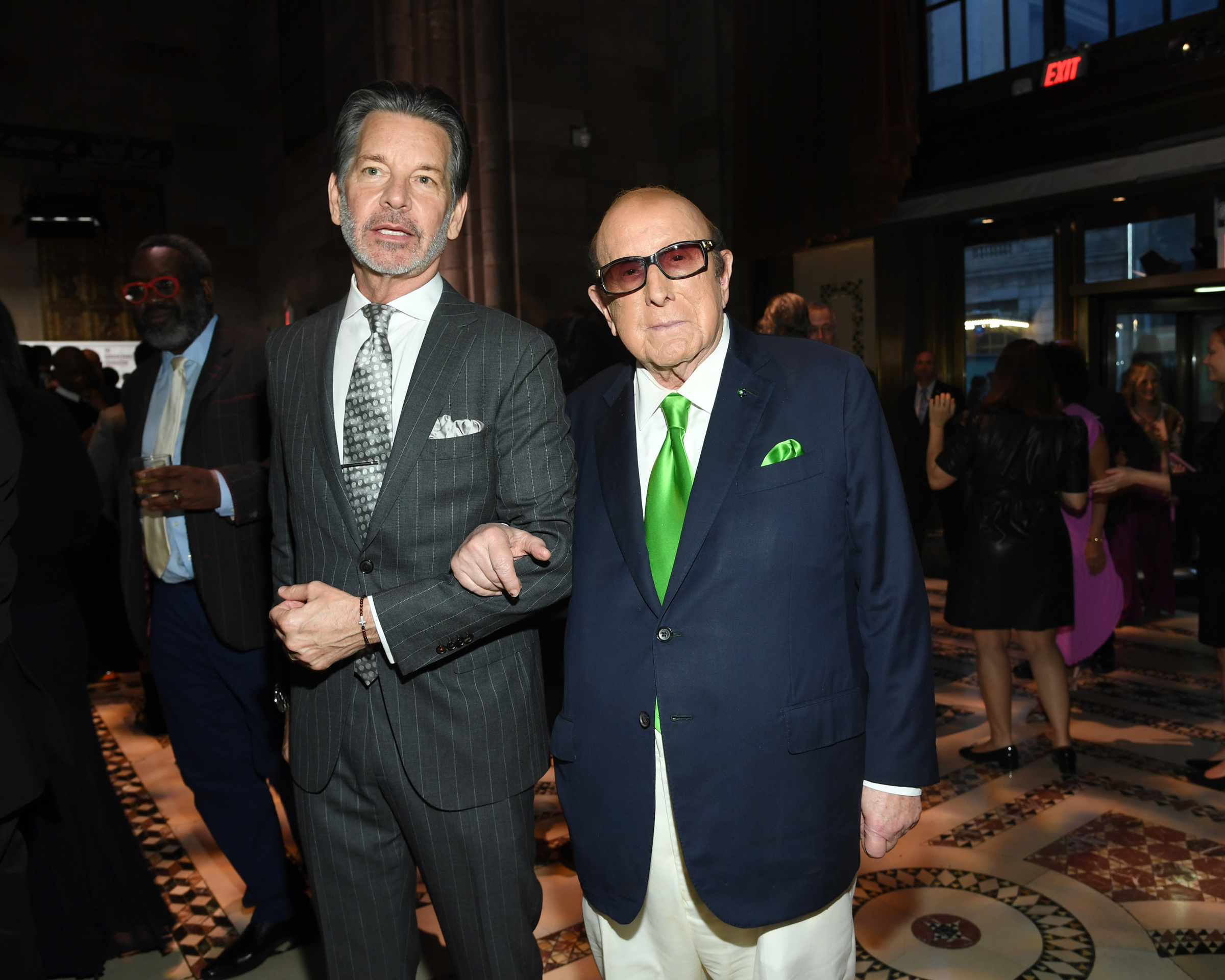
Greg Schiefer, the long‑time partner of the legendary music mogul Clive Davis, shocked the industry by publicly revealing a sizable debt buried in Davis’ final will. In a heartfelt statement, the 48‑year‑old described how the estate’s complexities left him feeling both indebted and deeply mournful, while the numbers in the probate filings point to a $5.2 million liability that will reshape the way his former partner navigates the legacy he helped build.
The revelation came weeks after Davis’ death on July 31, 2023, when his family and close associates began sorting through an estate that spans multiple record labels, music publishing catalogues, and a sprawling portfolio of real‑estate assets. Schiefer’s announcement—made from a quiet studio in Los Angeles—was not merely a financial disclosure. It was a window into the emotional toll of an estate that had grown larger than its creator’s public persona suggested. His words highlighted a paradox: while Davis’ generosity had been known to the public, the intricacies of his estate plans left Schiefer feeling both privileged and burdened.
The late mogul’s estate is a labyrinth of trusts, trusts within trusts, and a host of co‑owned ventures that have long defied simple accounting. Schiefer’s statement, posted on a modest fan‑focused platform, immediately set off a ripple of speculation. Industry insiders, fans, and legal analysts alike began to question what the $5.2 million debt might mean for the future of Davis’ music catalog, the distribution of his holdings, and the very nature of his legacy.
Background & Context
Clive Davis’ name is synonymous with the rise of pop and rock legends— from the Jackson 5 to Alicia Keys, his fingerprints are on a generation of music history. Over his nearly six‑decade career, he amassed a catalog that included hit records and an impressive roster of signed artists. In the years leading up to his death, Davis was known to quietly amass wealth through a blend of record deals, publishing rights, and real‑estate investments. While the public saw him as a visionary, the private world of his wealth was far more complex.
The estate that Davis left behind is a tapestry of assets: ownership stakes in A&M Records, a share in the Sony/ATV catalog, an array of real‑estate holdings across California, New York, and beyond, as well as multiple trusts set up to benefit his family and charitable causes. The probate process, which began in late August 2023, revealed that some of these trusts had been structured to provide long‑term income to beneficiaries but also carried obligations that Schiefer now has to confront.
Schiefer, who had been with Davis for more than two decades, was intimately involved in the management of Davis’ personal and professional affairs. His proximity to the mogul’s decision‑making processes gave him an inside perspective that few others could match. Yet, when the will’s stipulations were made public, Schiefer’s role as a beneficiary and manager became entangled in a financial obligation that was previously hidden from the public eye.
What People Are Saying
When Schiefer spoke about Davis’ generosity, his tone carried both gratitude and an undercurrent of weariness. “Clive was incredibly generous to me in his estate plans,” he said, recalling the trust that had been set up to ensure his continued support after Davis’ passing. “But the debt that’s now on my shoulders is something I never imagined,” he added, a sentiment that resonated with many who followed the story. The words, released via a short video, were met with swift responses from the music community.
Fans of Davis’ work were quick to show empathy, reminding those in the press of the late mogul’s philanthropic efforts and the mentorship he offered countless artists. “Clive gave so much,” one comment read, “it’s only natural that those who were close to him would feel the weight of his decisions.” Meanwhile, industry veterans, who had known Davis for decades, weighed in on the implications of a debt of this magnitude. “Estate matters are rarely publicized in such detail,” one veteran remarked, “but it’s a reminder of how even the most celebrated figures have to navigate legal and financial frameworks.”
Legal experts speculated on the nature of the debt, suggesting it could be related to a partnership with an external entity or a deferred payment arrangement tied to a specific project. A prominent estate attorney, who chose to remain unnamed, noted that while $5.2 million is a significant sum, it is not unprecedented in high‑profile estate disputes. “What makes this case stand out is the public interest in the legacy of a music icon,” the attorney said. “The intersection of public memory and private obligation creates a unique narrative.”
The statement also ignited a broader conversation about the responsibilities of partners and executives in the music industry. A former artist who worked under Davis’ guidance took to social media to comment, “It’s a reminder that behind the glitter of the industry are complex human relationships and obligations that can be difficult to untangle.”
What Happens Next
The probate court will now have to adjudicate the $5.2 million debt and decide how it fits into the overall distribution of Davis’ assets. Schiefer’s statement indicates that he will be acting as an executor for certain facets of the estate, which places him in a pivotal position to influence the outcome. The legal process will likely involve a detailed audit of the trust documents, the agreements that give rise to the debt, and the valuation of Davis’ music catalog and real‑estate holdings.
Industry insiders anticipate that the estate’s resolution could have ripple effects on the licensing of Davis’ catalog. If the debt is linked to a particular publishing agreement, it might delay the release of certain tracks or alter royalty distribution. Artists and record labels that rely on the catalog could be forced to negotiate new terms with the estate’s representatives, potentially reshaping the music market for a catalog that has generated billions in revenue.
For Schiefer, the immediate next step will be to engage with the attorneys overseeing the estate. He will need to compile evidence of Davis’ generosity, demonstrate the trust’s provisions, and negotiate a fair settlement that honors Davis’ legacy while addressing the debt. As the probate court moves forward, the public will watch closely, not only for the financial implications but also for how the legacy of Clive Davis will be stewarded in the years to come.
Closing out the public discourse, Schiefer said, “I miss him terribly.” Those words, simple yet profound, underscore the personal cost of navigating an estate that is as much a monument to a life as it is a financial obligation. As the legal process unfolds, the world will see how the late mogul’s influence continues to reverberate through the music industry, the lives he touched, and the debts he left behind.
The Bottom Line
The revelation that Greg Schiefer now bears a $5.2 million debt from Clive Davis’ estate is a stark reminder that even the most celebrated industry figures can leave their partners with hidden financial burdens. While Davis’ legacy as a talent‑scout and publisher remains intact, the estate’s tangled web of trusts and real‑estate assets demonstrates how philanthropic intentions can become mired in legal complexity. For the music community, the possibility that licensing agreements may be delayed or renegotiated raises concerns about the stability of revenue streams that artists and labels have relied upon for decades. Moreover, Schiefer’s public admission humanizes the often‑cold world of estate law, revealing the emotional weight that accompanies fiduciary duties. As the probate court moves forward, the industry must confront how to balance honoring a mogul’s vision with the practical realities of debt repayment. MyWorldPulse.com believes that this case will serve as a cautionary tale for executives and partners alike, emphasizing the need for transparent, well‑structured agreements that protect both legacy and livelihood.
Reference:
- Official statement by Greg Schiefer on Instagram
Read more celebrity news at MyWorldPulse.