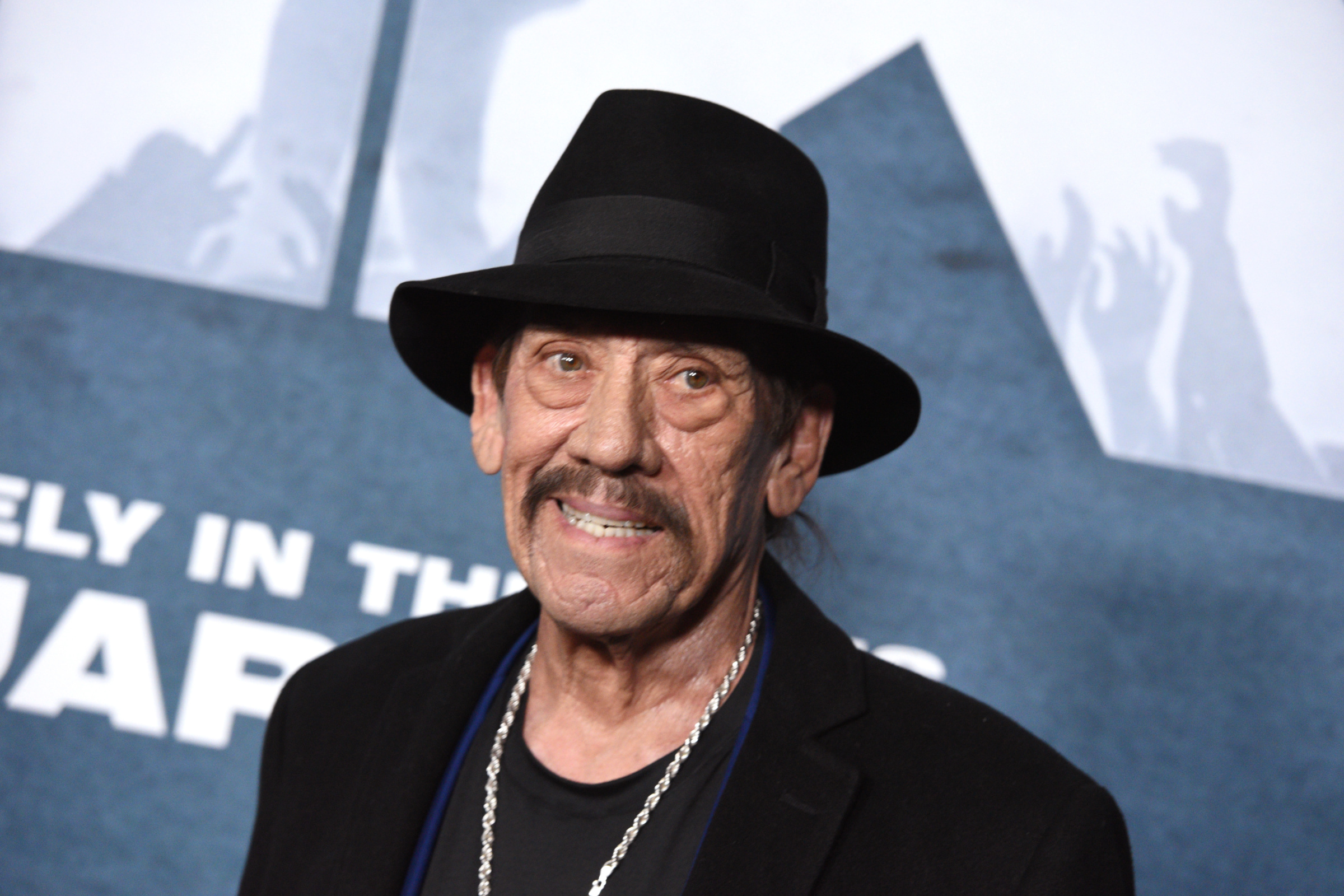
When a tweet surfaced this week revealing that the veteran tough‑guy actor Danny Trejo would headline Ben Shapiro’s newest film, the reaction was instant and electric. Fans of Trejo’s rugged, no‑fuss persona – the guy who carved a career out of raw, gritty roles – sent a deluge of messages that ranged from “what a surprise” to outright outrage. By the time the clip from the trailer aired on a streaming platform, comments had exploded into a thousand‑plus thread, echoing a sentiment that the actor’s new project had come out of left field and carried the weight of a political storm. The shockwave of the announcement was amplified by a wave of support and criticism that highlighted how quickly Hollywood’s public perception can shift on a single headline.
The controversy, however, was not the only dramatic headline in the week. Just days earlier, the world of television mourned the loss of a beloved child star who had become a symbol of resilience on one of the most iconic crime dramas of the 2000s. RJ Mitte, the actor who portrayed Walter White Jr. in the celebrated series, was found dead at 34, a tragedy that left fans and fellow actors stunned. The news prompted a flood of tributes from those who had shared the set, as well as reflections on how his performance had broadened the conversation about disability and representation on mainstream television. In the same week, Bryan Cranston, the man who gave the series its gravitas, posted a heartfelt message on his personal platform, underscoring the personal loss of having a son who had become a friend and collaborator in the industry.
These parallel currents—one of political controversy and the other of personal grief—intersected in the broader conversation about how Hollywood navigates ideology, artistry, and personal loss. The story that unites them is one of actors grappling with the implications of their choices, and audiences that respond with fervor, compassion, or both.
Background & Context
Danny Trejo, known for his towering presence and gravel‑soaked delivery, has spent decades delivering roles that embody the underdog spirit. Born in Los Angeles in 1954, he survived a turbulent youth, turned to acting in the late 1970s, and became a fixture in films that ranged from Desperado to The Fast and the Furious series. His latest venture—an action thriller titled Pawn Shop—marks a departure from the grit that made him famous. Produced by Ben Shapiro, a prominent conservative commentator, the film is an unapologetic showcase of law‑enforcement zeal, with themes that align closely with Shapiro’s public messaging.
According to family insights, Trejo had not known of Shapiro’s political stances until mid‑production, a claim that he later supported. Gilbert Trejo, the actor’s son, explained that the father had been contractually bound to remain neutral about the project’s political connotations. This detail has sparked debate over whether actors can truly separate themselves from the ideologies of the works they endorse. In the broader Hollywood landscape, the conversation has become a litmus test for many actors who face similar dilemmas when their chosen projects are tied to politically polarizing figures.
Meanwhile, RJ Mitte’s untimely death has revived conversations about mental health, particularly among actors with disabilities. Mitte, who was born with cerebral palsy, brought authenticity and nuance to the character of Walter White Jr. The role gave the show a unique lens on life with a physical disability while simultaneously elevating the discourse on inclusivity in television. In a world where entertainment often falls short of truly representing varied experiences, Mitte’s presence on the screen and his public advocacy for disability rights were milestones.
Bryan Cranston’s public message following the loss of his on‑screen son was a stark reminder of the human relationships forged in the industry. Cranston, who has earned multiple awards for his portrayal of Walter White, expressed his grief in an emotionally raw post, acknowledging how the bond formed on the set had transcended the fictional storyline and became a real, lasting family connection. The industry’s reaction was swift, with peers offering condolences, sharing memories, and highlighting the legacy Mitte would leave in both the show’s narrative and his advocacy work.
What People Are Saying
The immediate fan response to Trejo’s announcement was polarized. On social media, thousands of messages either celebrated his willingness to collaborate with a high‑profile producer or criticized the decision as a departure from his filmography’s core themes. Some commentators noted that Trejo’s previous roles had rarely intersected with overt political content, making this collaboration a bold, if controversial, step. Others highlighted that the actor’s personal convictions had never been publicly disclosed, raising questions about whether this was a genuine partnership or a strategic career move.
The conversation quickly shifted toward broader questions about artistic integrity and the responsibility of actors in aligning their work with ideological platforms. Critics argued that an actor’s participation in a politically charged project could unintentionally legitimize or amplify certain viewpoints. Supporters countered that artistic expression should remain independent of political bias, and that actors should be free to explore varied roles without fear of being pigeonholed.
In the case of RJ Mitte’s passing, the outpouring of condolences reflected a community grieving the loss of an actor whose presence on the screen had felt like family. Fans of the series flooded personal accounts of how his portrayal of Walter White Jr. had resonated with them, drawing parallels to their own experiences. The actor’s advocacy for disability rights had cultivated a dedicated following beyond the confines of the show, as evidenced by the widespread sharing of his philanthropic work. The tragedy also reignited discussions about mental health support within the entertainment industry, particularly for those who have faced unique challenges due to physical or cognitive conditions.
The tributes to RJ Mitte were interwoven with reflections on how the show itself had evolved. Comments about the show’s cultural impact highlighted how it was not only a crime drama but a catalyst for conversation about complex family dynamics, morality, and systemic issues. The shared sentiment was that the actor’s death symbolized the loss of a voice that had bridged entertainment and social commentary.
What Happens Next
In the immediate aftermath of Trejo’s controversial announcement, producers of Pawn Shop have reiterated their commitment to the film’s vision, emphasizing the storyline’s focus on action and character development rather than political messaging. The film’s release date has been set for the third quarter of this year, with a marketing campaign that stresses the film’s high‑octane sequences and the star power of Trejo. Industry insiders predict that the film will generate significant box‑office interest due to the star‑studded cast, but the reception will likely remain divided along ideological lines.
For the Breaking Bad community, the loss of RJ Mitte has spurred a renewed examination of the show’s legacy. Fan communities have organized tribute events and online memorials that celebrate his contribution to the series and his advocacy work. In addition, discussions about a potential reboot or continuation of the Breaking Bad universe have surfaced, with some fans hoping to honor Mitte’s memory by bringing his character’s story into a new narrative. Though no official announcements have been made, the conversation remains active, reflecting how the series continues to shape conversations about storytelling, character arcs, and social impact.
The actor community is also taking steps to address mental health and support systems. A series of panels and workshops have been scheduled, focusing on how industry professionals can provide a safe environment for artists facing personal struggles. These efforts come in the wake of the collective loss of an actor whose voice resonated with many and whose passing highlighted gaps in current support mechanisms.
On a personal level, Bryan Cranston has expressed a desire to honor his late co‑star through charitable initiatives that support mental health awareness and disability advocacy. While no formal project has been launched yet, his public commitment signals an intention to channel grief into constructive action, keeping Mitte’s legacy alive through continued advocacy.
Final Thought
The week’s events—spanning a bold new film collaboration to the sudden loss of a beloved actor—underscore how intertwined art, ideology, and human experience are within the cinematic world. Danny Trejo’s choice to engage with a politically charged production invites a dialogue about the limits and freedoms of artistic expression. Meanwhile, the Breaking Bad community’s mourning of RJ Mitte serves as a reminder that the stories we tell on screen reverberate far beyond the celluloid, touching the lives of both performers and audiences alike. In both scenarios, the impact is measured not just in box‑office numbers or viewership metrics, but in the conversations they spark, the reflections they inspire, and the ways they challenge us to consider the ethical dimensions of the stories we choose to bring to life.
The Bottom Line
MyWorldPulse believes that an actor’s career choices should not be judged solely by the political affiliations of the people they work with, but rather by the integrity of the work itself. Trejo’s move into a Ben Shapiro‑produced film should be judged on its artistic merits—its narrative strength, character depth, and production quality—rather than on the presumed ideology of its financier. At the same time, the community’s reaction reveals a broader concern: we are living in an era where every production is instantly dissected through a partisan lens. Hollywood must therefore find a way to preserve the freedom of expression while ensuring that the personal convictions of its artists are respected and that they do not feel coerced into aligning with a particular agenda. The passing of RJ Mitte reminds us that, regardless of politics, the industry must invest in robust support systems for its talent, especially those who navigate health and disability challenges. By prioritizing artist well‑being and fostering an environment that values creative diversity over political uniformity, Hollywood can continue to deliver stories that resonate with audiences while upholding the humanistic values that define true artistry. – MyWorldPulse Editorial
Reference:
- Danny Trejo's official tweet about his collaboration with Ben Shapiro
- RJ Mitte's last post on his verified social media account
Read more celebrity news at MyWorldPulse.