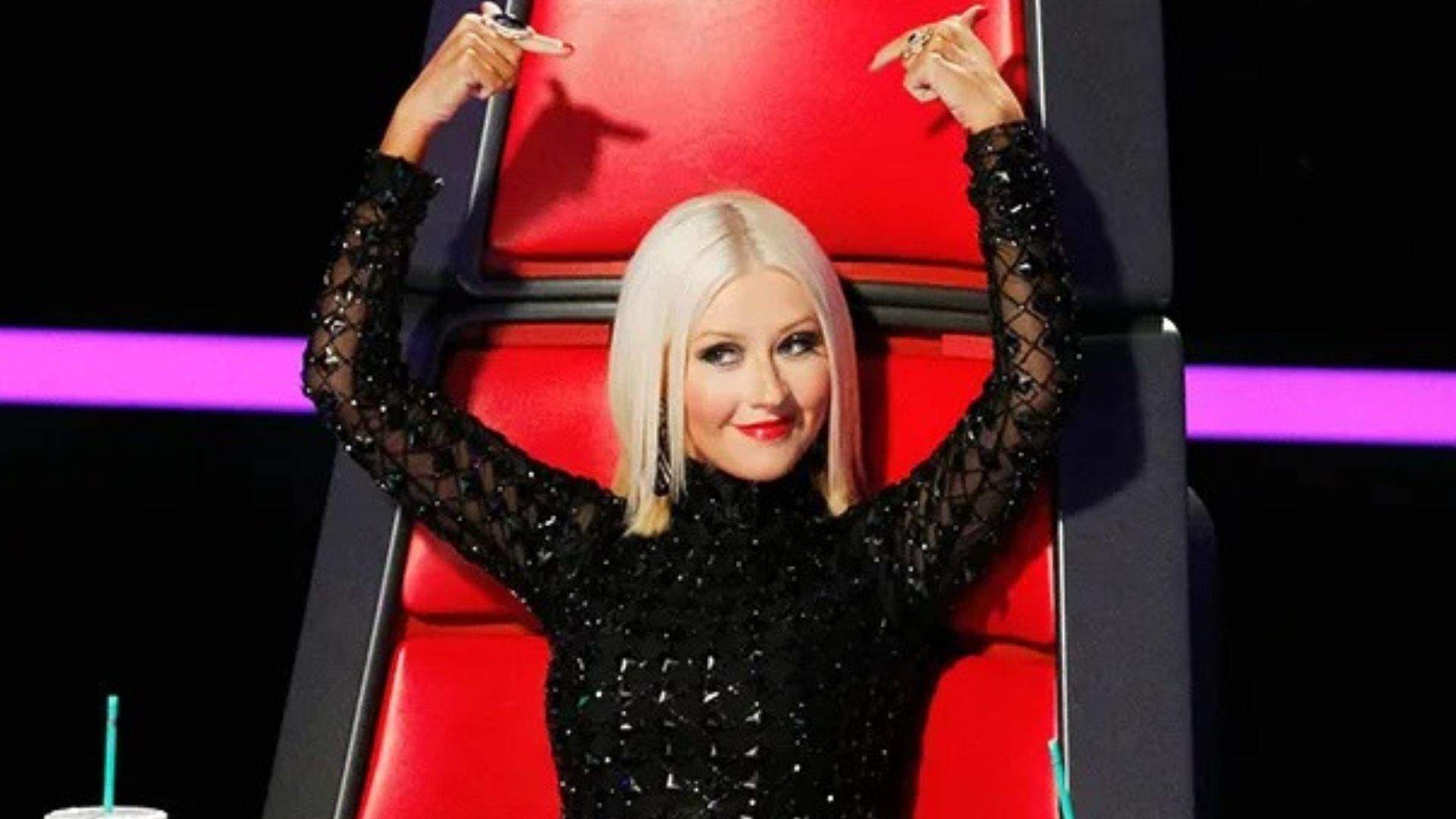
When the final chords of a late‑night studio rehearsal faded, Aguilera stepped off the set with a quiet defiance, her mic in hand but her eyes set elsewhere. In a career that has spanned more than four decades, the former “Beautiful” singer had already left a lasting imprint on reality‑tv coaching, but now she’s choosing to silence the familiar “We’re on The Voice” soundtrack, preferring instead the raw beats of her own playlist.
In April 2011, when NBC first opened its blinds to a nation of hungry viewers, Christina Aguilera signed on as one of the original coaches, alongside Blake Shelton, Adam Levine, and CeeLo Green. The concept of blind auditions had captivated her from the start: a stage where talent could rise above appearance. Over six seasons she mentored contestants, guiding one—Alisan Porter—to the coveted title of champion in season ten. Yet, even after that triumph, the show began to feel less like a platform for music and more like a treadmill of television theatrics, a revelation that prompted her to step away.
The decision carries weight beyond the buzz of a popular talent show. It signals a veteran artist reasserting control over her creative narrative, a narrative that has often been mediated by network demands, and it echoes a broader industry conversation about authenticity versus spectacle. Fans of Aguilera, and of reality‑tv as a genre, now find themselves questioning what it truly means to “coach” when the coaches themselves must confront the constraints of a 24‑hour production schedule, contractual stipulations, and the relentless pressure to deliver ratings‑boosting moments.
Background & Context
Christina Aguilera’s tenure on “The Voice” coincided with a period of heightened scrutiny for reality‑tv programming. From its inception, the show marketed itself as a music‑first platform, but the structure of the competition—blind auditions, battle rounds, live performance shows—introduced layers of drama that often eclipsed the artists’ original purpose. In early interviews, Aguilera admitted that the concept of blind auditions was a major draw; it offered an egalitarian stage where look did not matter. She said she loved the chance to discover talent that might otherwise have been overlooked in an industry steeped in image.
However, as seasons progressed, the show’s demands began to conflict with Aguilera’s own artistic integrity. She described the environment as a “churning hamster wheel” and an “energy sucker.” The sense of relentless production—tight schedules, frequent edits, the need to craft story arcs for viewers—created a dissonance between her coaching ethos and the network’s entertainment calculus. The pressure to produce “good TV moments” often meant curating narratives that felt contrived, a fact she didn’t shy away from.
Adding to that friction were the creative restrictions imposed on her appearance and speech. The production team, aiming to maintain a polished brand image, dictated what Aguilera could wear and say on camera. This limited her ability to convey her persona, a crucial outlet for an artist who had always relied on visual and vocal expression. In a post‑filming ritual, she would strip away the makeup and broadcast headphones, and then let the world of hip‑hop, Nirvana’s “Creep,” or even the aggressive riffs of Slayer wash her back into the raw world she wanted to inhabit. It was a stark reminder that behind the glitz of a televised competition lies a production that can feel suffocating.
What People Are Saying
During a 2018 interview with a major Los Angeles newspaper, Aguilera gave a candid account of why she would not return. She spoke of being “disconnected for a while” and feeling that the environment had become unhealthy. She also recounted witnessing “blatant things that I didn’t think were okay,” which further eroded her trust in the show’s culture. Her words resonated with other industry observers who have chronicled the often‑unseen toll that high‑profile reality‑tv shows can take on their participants. The sentiment—artists sacrificing authenticity for the sake of ratings—has been echoed by various musicians who have similarly expressed discomfort with the constraints of televised coaching roles.
The discussion also drew attention to the broader context of how television programming intersects with artists’ personal lives. Aguilera had taken a break during seasons six and seven, a decision rooted in family priorities. She returned for seasons eight and ten, seeking stability for her child—a need that underscores how many performers juggle creative ambitions with personal responsibilities. Her experience highlights a recurring theme in the industry: the precarious balance between professional opportunities and personal wellbeing. In the public eye, the show’s schedule was presented as a steady source of income and exposure, yet behind the scenes, it demanded an emotional labor that could compromise an artist’s mental health.
The conversation has also illuminated the expectations placed on female coaches. Aguilera noted that she “didn’t get into this business to be a television show host” and that the rules, particularly around appearance and speech, felt more restrictive for her. In a broader cultural sense, her comments echo feminist critiques of media that argue for greater agency and representation for women in creative roles. The backlash she faced for her outspoken criticism of the show’s constraints sparked a dialogue about the power dynamics inherent in reality‑tv production.
What Happens Next
Christina Aguilera’s exit from “The Voice” leaves a notable gap in the coaching lineup. For NBC, the decision signals a potential recalibration of its mentorship roster. While the network has historically recruited high‑profile artists to fill these roles, the loss of a mainstream icon may prompt a search for fresh voices that align more closely with the evolving demands of audiences, who increasingly value authenticity and diverse representation. Meanwhile, Aguilera has announced a renewed focus on her own music, and it appears she will be dedicating time to projects that allow her to reclaim her creative agency. Fans can anticipate a possible return to the studio or a foray into touring—both arenas that offer her the freedom she craves.
In the broader entertainment landscape, Aguilera’s departure may serve as a cautionary tale. Producers and executives might take heed of her concerns about restrictive creative environments and consider restructuring coaching agreements to grant artists more autonomy. Additionally, the industry may see a rise in artists who opt for alternative platforms—such as independent streaming shows or digital mentorships—where they can maintain control over their artistic vision while still reaching wide audiences.
The immediate aftermath of Aguilera’s exit will likely involve media speculation about potential replacements and the future direction of “The Voice.” Meanwhile, fans and fellow musicians will continue to celebrate her contributions to the show’s legacy while also acknowledging her courage to speak out. For Aguilera, the path ahead is clear: a commitment to music that is not filtered through a studio’s lens but expressed in the full spectrum of her artistry.
In the echo of the studio’s closing lights, Christina Aguilera’s voice remains a reminder that talent thrives best when it is given room to breathe, unshackled by the expectations of a camera.
The Bottom Line
At MyWorldPulse we view Aguilera’s exit as a pivotal moment that challenges the status quo of reality‑TV coaching. The industry’s focus on ratings has long compromised the integrity of music education within these shows. By stepping away, Aguilera not only reclaimed her narrative but also highlighted the necessity for contractual frameworks that respect artists’ creative agency. We believe this signals a potential renaissance of artist‑led platforms—whether digital mentorships or independent productions—that can provide the autonomy and authenticity that modern audiences increasingly demand. In short, her decision is not merely a personal choice; it’s a statement that the entertainment world must evolve to honor the artistry it touts.
Reference:
- Christina Aguilera’s Instagram post announcing her Voice exit
Read more celebrity news at MyWorldPulse.