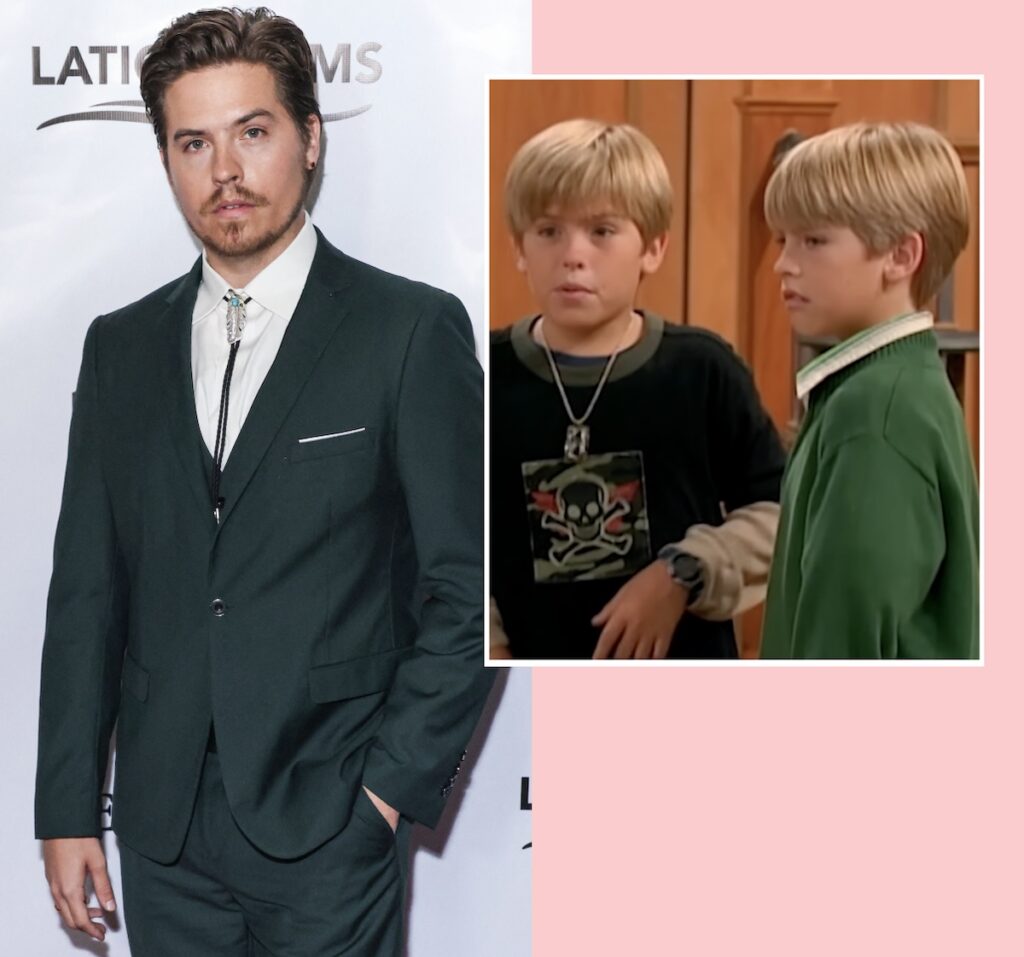
The 34‑year‑old actor revealed he received a single 5‑cent residual from the Disney Channel juggernaut that catapulted him to fame. ---
Dylan Sprouse’s name still rings with the squeaky‑toothed laughter of a show that filled living rooms across the globe in the early 2000s. But when the actor, now in his mid‑thirties, opened up on a podcast with former co‑star Phill Lewis, he confessed a startling truth: the only money he ever earned from reruns of The Suite Life of Zack & Cody was a single 5‑cent check for a crossover episode with Hannah Montana. The revelation struck fans and industry observers alike, raising questions about residuals for children’s programming and the long‑term financial fate of young performers.
The surprise was amplified by the sheer volume of the show—nearly 190 episodes in a single season, followed by several spin‑offs and cross‑overs. Sprouse’s story underscores a broader conversation about how revenue from syndication, streaming, and global licensing is shared, and it places his experience in stark contrast to recent high‑paying awards for authors whose books are turned into films.
The conversation began on a casual podcast, but it has since rippled through fan communities, sparking debate about the economics of youth‑oriented content and the protections afforded to child actors. It also prompted a look at how the industry’s compensation models have evolved—or failed to evolve—over the past two decades.
Background & Context
When The Suite Life of Zack & Cody premiered in 2005, it quickly became one of Disney Channel’s highest‑rated shows. The teenage duo, played by Dylan and his twin brother Cole, navigated hotel life while entertaining a global audience that could tune in on any of 80 translated broadcasts. In its prime, the network’s children’s programming block dominated the daytime schedule, and reruns were a constant in households from the United States to Asia. The show’s success generated a steady stream of revenue through advertising, licensing, and later, online platforms.
However, the contractual landscape for child actors at the time was markedly different from today. Most Disney productions did not offer residuals beyond a base salary and a one‑time production fee. The residuals system—where actors receive a percentage of future earnings from reruns or streaming—has historically been reserved for networks that negotiate syndication deals, and Disney Channel’s model leaned more toward maintaining brand control than sharing profits. As a result, even performers who appeared in almost 200 episodes were left with little to no ongoing compensation from subsequent broadcasts.
The industry context was further complicated by the advent of digital streaming. When Disney launched its own streaming service and later partnered with other platforms, the question of residuals resurfaced. Yet for many former child actors, the agreements they signed were silent on these new revenue streams, leaving them without the financial safety net that would accompany a career in adult‑centric television.
Against this backdrop, Sprouse’s mention of a single 5‑cent check—a remnant of a crossover episode—speaks to a systemic issue: the absence of fair residual structures for young talent. It also highlights how revenue sharing models have lagged behind the rapid evolution of media distribution, leaving many early‑career actors with minimal post‑career earnings.
What People Are Saying
The reaction to Sprouse’s disclosure has been swift and multifaceted. Among fans, many expressed disbelief and frustration, recalling how the show seemed to offer endless opportunities while, in reality, the financial returns were negligible. Social media threads were filled with anecdotes from other former child actors who reported similar experiences, pointing to a shared industry grievance.
Industry insiders added nuance to the conversation. Some suggested that residuals for children’s programming are inherently limited because these shows are designed to be family‑friendly, heavily syndicated, and heavily packaged—yet the profits are largely absorbed by the network and distribution partners. Others highlighted that Disney’s business model prioritizes brand ownership over profit sharing, a strategy that has long been both profitable and controversial.
In a broader sense, the discussion dovetails with ongoing debates about the rights of child performers. While recent legislative reforms have improved child labor protections, the financial aspects remain under‑regulated. The outcry also dovetails with the success of authors who recently received significant cash prizes from Mirror Fiction—a Taiwanese IP development and production company—showing a stark contrast in how creators and actors are compensated. Mirror Fiction’s award of $50,000 to two authors for book‑to‑screen adaptations illustrates the tangible financial support that can be granted to creative talent in certain sectors, prompting calls for similar support mechanisms in the television world.
The conversation has also touched on the ethical responsibilities of networks. Critics argue that, given the reliance of many households on Disney Channel’s programming, networks should adopt more equitable residual systems. Proponents of the current model contend that the cost of production and the risk associated with syndication justify a different approach. Whatever stance one takes, Sprouse’s experience has re‑ignited an old conversation about who truly benefits when a cultural phenomenon takes off.
What Happens Next
Following the disclosure, the conversation has shifted toward potential reforms. Several advocacy groups are pressing for clearer residual agreements for child actors, especially those who have already transitioned into adult roles. They argue that a universal framework would help future performers avoid the pitfalls that Sprouse faced. Some networks have already begun revisiting their contracts, with a few offering new residual clauses in response to public scrutiny.
In the realm of Disney, the company’s recent expansion into streaming and film production may alter the dynamics. The streaming era has introduced new revenue streams, and there is a growing awareness that existing contracts need to adapt. While there is no definitive public policy change yet, the industry is in a period of transition, and the momentum sparked by Sprouse’s revelation could catalyze further adjustments.
For Sprouse himself, the focus appears to shift from financial compensation to broader career development. After stepping away from the spotlight, he has pursued diverse projects, from short films to entrepreneurial ventures. Nonetheless, his candidness has shed light on a hidden cost of early fame and may inform his future choices. Meanwhile, the conversation around residuals is likely to persist, especially as the entertainment industry grapples with new platforms, international markets, and the legacy of legacy content.
The final outcome remains uncertain, but the immediate effect is clear: young actors and their advocates now have a stronger voice, and the industry is being forced to confront long‑standing inequities in compensation. Whether that will translate into tangible change, or simply spark further debate, remains to be seen.
The story serves as a reminder that the bright lights of a beloved childhood show may mask a far more complex financial reality—one that, for many, ends with a single 5‑cent check.
The Bottom Line
MyWorldPulse.com believes that the 5‑cent residual check is a wake‑up call for Hollywood. The industry’s reliance on child talent, coupled with an outdated contract framework, threatens the future of storytelling. Disney’s model, which prioritizes brand control over revenue sharing, has long been a comfortable illusion for investors but a painful reality for performers. In an era where streaming dominates, it is no longer sufficient to grant a one‑time production fee and hope for goodwill. Every actor who lights a screen should have a stake in its ongoing success. The industry must adopt universal residual standards that reflect the true value of creative labor. Advocacy groups already champion this change, but the momentum generated by Sprouse’s candidness may finally compel studios to act. Without reform, the next generation of actors will continue to face financial uncertainty, undermining the very diversity and innovation that audiences demand. The time for equitable compensation is now, and MyWorldPulse.com stands firmly behind that imperative.
Reference:
- Official post on Dylan Sprouse's verified social media account
Read more celebrity news at MyWorldPulse.