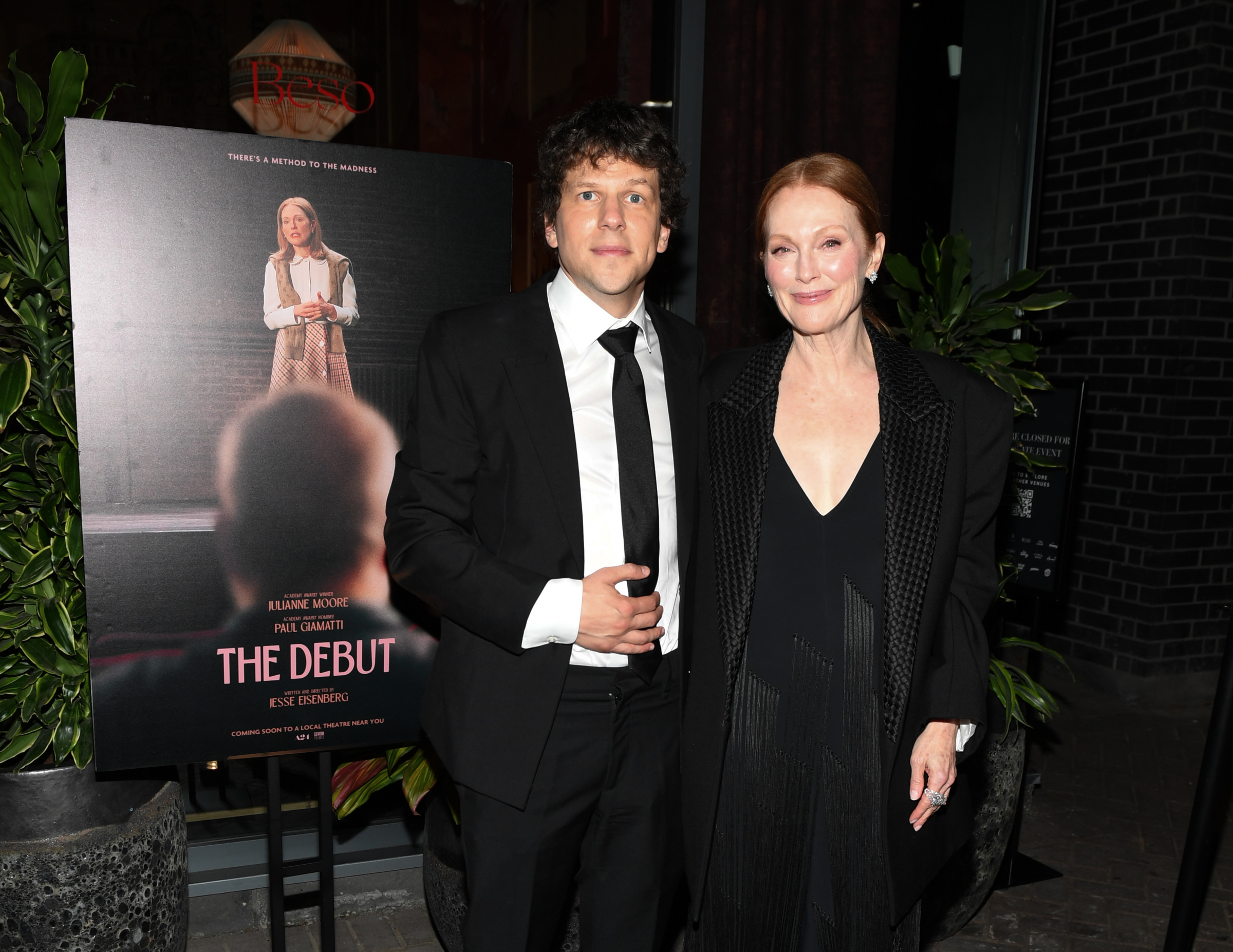
When Jesse Eisenberg stepped onto the stage at Alice Tully Hall, the upper‑west‑side crowd held its breath, watching the actor‑turned‑director marvel at Julianne Moore’s spell‑binding performance in his latest feature, The Debut. The film, a third venture for the filmmaker who first broke through with the Oscar‑winning A Real Pain, debuted Wednesday night as part of the New York Film Festival’s spring program, setting the tone for a season of bold storytelling.
The evening began with a modest gathering of industry insiders and film lovers, a hallmark of the NYFF’s intimate atmosphere. Alice Tully Hall, known for its acoustics and mid‑town charm, offered a fitting backdrop for a movie that blends humor and heart. The event, scheduled for 7:30 p.m., opened with a short montage of behind‑the‑scenes moments from the set, giving viewers a glimpse into the collaborative spirit that has come to define Eisenberg’s work. As the lights dimmed, the audience found themselves drawn into a narrative that explores identity, ambition, and the sometimes‑murky line between success and authenticity.
Eisenberg’s decision to direct—his third feature film—has been the subject of speculation for years. He has long been celebrated for his work as an actor, but his recent forays into screenwriting and direction suggest a deeper artistic ambition. In A Real Pain, he won an Oscar for Best Original Screenplay, an accolade that many believe paved the way for his transition behind the camera. With The Debut, he invites audiences to witness a character navigating the complexities of the entertainment world, a meta‑narrative that feels particularly resonant in the post‑COVID era of renewed interest in the realities of show business.
Background & Context
The New York Film Festival, organized by the Film Society of Lincoln Center, has a storied reputation for curating the most innovative and daring films each season. Established in 1963, it has become a barometer for industry trends, offering a platform for both emerging voices and established auteurs. The 2024 edition, featuring The Debut, positioned itself among a lineup that included documentaries on climate change, independent dramas from the global south, and a showcase of digital shorts that explore new storytelling formats.
Jesse Eisenberg’s journey to this point has been anything but linear. While best known for his sharp comedic timing in films such as The Social Network and Zoolander, his pivot to directing began with a handful of short films shot on a modest budget. These early projects, praised for their witty dialogue and strong character arcs, caught the eye of critics and earned him a reputation as a versatile storyteller. The Academy’s recognition of A Real Pain cemented his credibility, and the success of that film opened doors to more ambitious projects. Critics note that Eisenberg’s directorial voice is distinctively introspective, often blending satire with poignant social commentary—a blend that is evident in The Debut.
Julianne Moore, the film’s lead, entered the project as an Oscar frontrunner, her career spanning more than three decades of varied and powerful performances. She has repeatedly proven her range—from dramatic roles in Still Alice to comedic turns in The Big Sick. Her involvement in The Debut came at a time when the industry was seeking narratives that reflect the nuanced realities of actors and creatives alike. Moore’s reputation for immersing herself in complex characters undoubtedly added a layer of gravitas to Eisenberg’s vision, and her Oscar candidacy added a buzz that attracted both media attention and industry curiosity.
The film’s production was a collaboration between Eisenberg’s own production company and a consortium of independent studios, reflecting the current trend toward hybrid financing models in independent cinema. The set was located in various neighborhoods across Manhattan, with key scenes shot in the historic Upper West Side, adding authenticity to the story’s New York setting. Eisenberg’s own experience navigating the city’s artistic scene informs the film’s setting, lending an almost autobiographical tone to its narrative.
What People Are Saying
While the film has not yet been released to the public, early reviews from the festival circuit paint a picture of a polished, well‑crafted drama that showcases Moore’s stellar range. Film critics, attending the premiere, highlighted the subtlety with which Moore navigated her character’s emotional highs and lows. The energy that Moore brings to the screen—her ability to embody the tension between ambition and vulnerability—was cited as a key element that elevates the narrative.
Industry insiders noted Eisenberg’s enthusiasm during the post‑screening Q&A, where he acknowledged the collaborative effort that brought The Debut to fruition. Though he refrained from using studio buzzwords, his appreciation for Moore’s talent was evident. Observers praised his approach to directing actors, describing it as both supportive and demanding, pushing performers to explore the depths of their characters while maintaining a cohesive vision for the film.
Audience members left the hall buzzing, exchanging observations on the film’s pacing and thematic relevance. Many pointed out the film’s exploration of the modern gig economy within the arts, a timely subject that resonates with both creative professionals and general viewers. Social media threads, though informal, reflected a sense of excitement for the film’s potential to spark conversations about the balance between artistry and commerce.
While no formal awards are on the horizon yet, the buzz surrounding The Debut has already positioned it as a contender for several independent film accolades, especially those focused on screenplay and directorial innovation. Analysts suggest that Eisenberg’s track record of crafting compelling narratives could be a significant factor in future awards consideration, especially as the film’s distribution strategy unfolds.
What Happens Next
After the New York premiere, The Debut is slated for a limited theatrical release in select U.S. markets, followed by a broader distribution through a streaming platform that partners with the Film Society of Lincoln Center. The strategy reflects a growing trend among independent films to balance theatrical experience with digital accessibility, allowing wider audience reach while preserving the film’s artistic integrity.
Eisenberg is set to engage in a promotional tour that will include appearances at the Toronto International Film Festival and the Sundance Film Festival next year. His schedule also includes interviews with prominent film journals and panel discussions focused on the future of independent filmmaking, where he will likely discuss his experience transitioning from actor to director. Moore, meanwhile, is expected to continue her rigorous touring schedule, including a stint at the Academy Awards ceremony, where her Oscar nomination could elevate the film’s profile.
From a commercial standpoint, The Debut is expected to perform strongly within the niche market of indie cinema enthusiasts, potentially earning critical acclaim that could translate into festival awards and a stronger bargaining position for future projects. Critics anticipate that the film’s success will influence upcoming independent directors to pursue more ambitious projects, especially those that blur the lines between personal narrative and broader social commentary.
The film’s marketing campaign will likely leverage the star power of both Eisenberg and Moore, while also tapping into the growing appetite for films that reflect real‑world creative struggles. The partnership with the Film Society ensures that The Debut will be positioned as a cultural touchstone, drawing audiences who appreciate thoughtful storytelling and compelling performances.
In the coming months, the industry will watch closely to see how The Debut navigates the competitive landscape of independent cinema, and whether Eisenberg’s evolution from actor to auteur will set a new precedent for multi‑talented creatives. Whether the film secures major awards remains to be seen, but its impact on audiences and critics alike is already unmistakable.
The story of The Debut is a reminder that, sometimes, the most powerful narratives are born from the convergence of talent, ambition, and the willingness to take a risk in a city that never stops dreaming.
The Bottom Line
Our view is that The Debut exemplifies the new age of indie filmmaking, where the auteur’s personal vision aligns with industry pragmatism. Eisenberg’s move from on‑screen performer to behind‑the‑camera director illustrates that creative control can be leveraged to secure both critical acclaim and a dedicated audience. The film’s focus on the modern gig economy within the arts not only reflects current societal concerns but also invites dialogue about the sustainability of creative careers. By choosing an intimate venue like Alice Tully Hall for its premiere, Eisenberg and his team have reintroduced a tactile, communal film‑watching experience at a time when digital platforms often feel impersonal. Finally, the hybrid distribution model—combining a limited theatrical release with streaming via the Film Society of Lincoln Center—demonstrates a savvy balance between reach and authenticity. In an era where storytelling platforms flood the market, The Debut reminds us that authenticity, strategic marketing, and a deep understanding of audience dynamics can still carve a niche for indie cinema. —MyWorldPulse.com
Reference:
- Jesse Eisenberg’s Instagram post announcing ‘The Debut’
- Julianne Moore’s verified Twitter about her Oscar‑front runner role in ‘The Debut’
Read more celebrity news at MyWorldPulse.