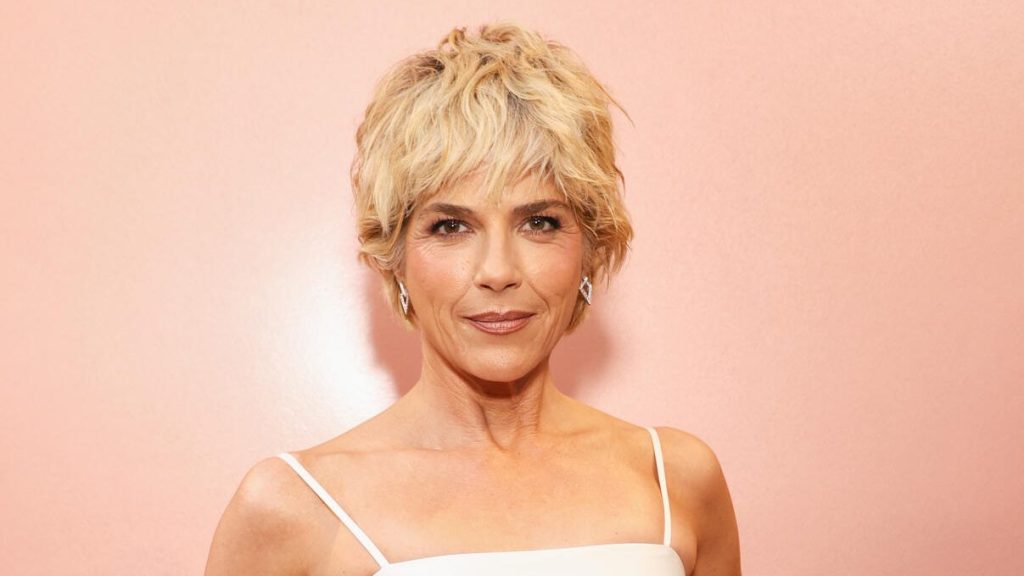
Selma Blair stood in front of a packed New York hall, the lights on her face turning a quiet hush into a roar of applause, and declared she would finally share the story that had left her voice silenced for two years.
When the Hollywood veteran first found herself in the spotlight for a remark she later said she did not fully understand, the backlash was swift and unforgiving. Two years ago, a single Instagram comment that was interpreted as Islamophobic spiraled into a cascade of professional consequences: she was dropped from upcoming projects, her social media presence was blocked by former collaborators, and her name was suddenly absent from many entertainment listings. The experience of being “erased” from the industry left Blair with an unsettling silence that she has now chosen to confront head‑on.
In a public address at the Anti‑Defamation League’s State of the Arts Reception, Blair announced a new creative direction—a documentary titled Hineni (“Here I Am”). The film is not only a response to the accusations that led to her isolation but also a broader examination of antisemitism that she says she could not discuss openly in her earlier statements. By naming the film Hineni, Blair signals her readiness to stand in front of the camera and take responsibility for her past while also shining a light on the prejudice that has seeped into both Hollywood and society at large.
Background & Context
Selma Blair’s career, once defined by sharp wit and memorable roles in films like Legally Blonde and The Princess Diaries, faced a sudden pivot in 2021 when a misread comment on a trending news story was seen as a statement against Islam. The outcry was amplified by social media algorithms that amplified the narrative, and industry insiders moved quickly to distance themselves. A week after the incident, Blair’s name was missing from a major casting announcement for a new TV series, and a prominent studio publicly said it would no longer consider her for roles. In interviews, she described the emotional toll of being cut off from her own professional life, admitting, “I didn’t have a career at all.”
In the months that followed, Blair turned inward. She engaged in therapy, studied religious texts, and sought to understand the roots of her own biases. Her conversations with Jewish community leaders at the ADL led her to a deeper appreciation of the shared histories of marginalization between Muslim and Jewish communities. It was this conversation that sparked the idea for Hineni, a documentary that would merge her personal narrative with a broader dialogue on antisemitism. Rather than simply defending herself, Blair chose to create a platform for victims of hate to share their stories, turning her own experience of being erased into a catalyst for healing and education.
What People Are Saying
The announcement reverberated across social media and within industry circles. Many followers praised Blair’s willingness to confront her past, noting that her openness signaled a shift in Hollywood’s willingness to address controversial topics head‑on. A well‑known comedy writer tweeted, “Selma has always been fearless—now she’s fearless about the past, and that takes courage.” Some fans applauded the documentary’s title, recognizing the Hebrew word Hineni as a declaration of presence and accountability.
However, not all reactions were supportive. A group of online commentators labeled the film a “self‑serving PR stunt,” arguing that Blair’s focus on antisemitism diverted attention from the original criticism. In response, Blair highlighted the parallels she sees between the experiences of marginalized groups, insisting that the film is not a deflection but a conversation. In an email exchange with a friend, she noted, “I am not trying to get absolution; I’m trying to build bridges.”
The ADL, which co-sponsored the reception, released a brief statement that praised Blair’s “dedication to learning and to fostering honest dialogue.” While they did not comment on the specifics of the documentary, their endorsement helped lend credibility to her new project. Industry insiders are watching closely to see if Hineni will be a turning point for other performers who have faced backlash for their public statements. The potential ripple effect on how Hollywood manages controversy could be substantial, especially as studios look for ways to protect reputations while also fostering inclusive storytelling.
What Happens Next
Hineni is slated to begin production next month, with filming locations spread across New York and Tel Aviv. Blair will collaborate with a team of producers experienced in social issue documentaries, and she plans to include archival footage of her past interview moments to illustrate her journey. The film will feature interviews with activists, scholars, and everyday people who have felt the sting of antisemitic rhetoric, weaving a tapestry of stories that mirror Blair’s own.
Distribution plans are still in development. Rumors suggest that the documentary may debut on a streaming platform known for tackling social issues, or perhaps as a feature-length film at a major film festival. Regardless of its release platform, Blair is clear that Hineni is not a product to be sold but a conversation to be sparked. She has already scheduled a Q&A session for fans and a panel with scholars at a major university to discuss the film’s themes in depth.
On a personal level, Blair has expressed a renewed sense of purpose. She plans to continue speaking at conferences, joining the ranks of artists who use their platforms to advocate for social justice. The project is also expected to open doors for her to write a memoir, where she will chronicle the two‑year period of silence and the lessons learned along the way. The industry’s reaction to Hineni will likely influence how future controversies are addressed; if the documentary is successful, it could become a template for other artists seeking to reconcile public missteps with genuine accountability.
Selma Blair’s journey from being “erased” to taking her place in the spotlight is proof of the power of vulnerability and the possibility of transformation. By confronting her own past and turning the spotlight onto antisemitism, she offers a hopeful blueprint for navigating the complex interplay of personal growth, public scrutiny, and societal healing. Her story underscores the idea that a single misstep does not have to define a career—rather, it can become the catalyst for a broader, more impactful conversation.
The Bottom Line
Selma Blair’s candid pivot signals that the entertainment world can still thrive on truth and empathy. By publicly owning her mistake, she challenges a culture that often rewards silence over sincerity. The documentary offers a tangible roadmap for artists: confront the fallout, seek genuine understanding, and use the platform to amplify marginalized voices. Hollywood’s future lies in this very humility—turning personal missteps into communal learning. As audiences demand transparency, creators must rise to the occasion, proving that growth is possible without compromising integrity. “Hineni” isn’t just a film; it’s a manifesto that could redefine how the industry handles controversy, proving that accountability can coexist with artistic resurgence. —MyWorldPulse.com
Reference:
- Selma Blair's official Instagram announcement of 'Hineni'
Read more celebrity news at MyWorldPulse.