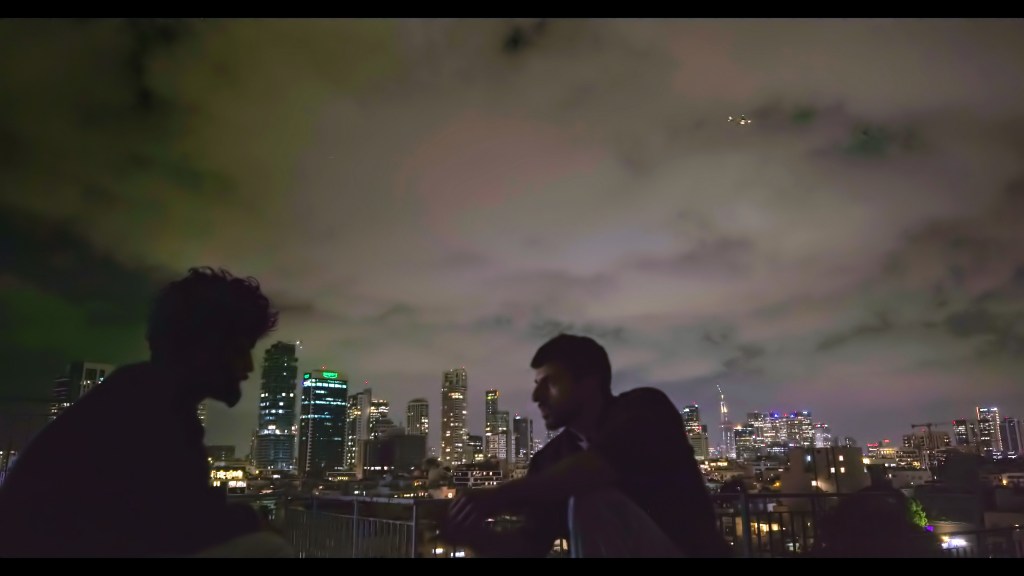
A sudden hush fell over the IFC Center in New York as the 25‑minute, 3‑minute, 48‑second documentary‑drama NAZA rolled its final frame into the evening’s last reel. The two‑hour burst of truth—about a life lived in the shadow of the Gaza Strip—has already outshined the biggest names of last month’s Venice Film Festival, where the film earned a Special Jury Prize and a standing ovation that lasted 25 minutes, a record for the festival. The cinematic fire has ignited conversations in New York cafés and on quiet streets, forcing viewers to confront a story that has long been kept at the edge of mainstream consciousness.
The film, written and directed by Israeli duo Yuval Abraham and Rachel Szor, is an intimate portrait of a woman named Naza, a former militant who now runs a modest clinic in Gaza City. Her story is framed by a relentless pace of scenes, each one a pulse that mirrors the tension of the region. The filmmakers’ daring choice to present the narrative in a quasi‑docu‑drama format, blending real footage with staged reenactments, has struck a chord with audiences who crave authenticity. While the film is short, its impact has been anything but brief, sending ripples through independent‑film circles and social‑justice forums alike.
The IFC Center’s decision to bring NAZA to a U.S. audience is more than a distribution choice; it is a cultural event. The film arrived on Wednesday, a mere three days after its screening at the New York Film Festival, and the venue’s intimate space amplified every whispered reaction. In a city that often feels saturated with glossy celebrity fare, NAZA offered a raw, unfiltered look at a world that many have never seen beyond headlines. For the first time in decades, the American public is presented with a narrative that forces them to confront the moral complexities of war, identity, and survival.
Background & Context
Yuval Abraham and Rachel Szor, both seasoned documentarians, have long been fascinated by the human stories that unfold in conflict zones. Their previous work, The Olive Branch, chronicled a family’s survival in the West Bank, earning critical acclaim for its fearless storytelling. With NAZA, the pair pushed their craft to new frontiers, choosing to focus on a single, multifaceted figure whose life mirrors the broader struggle of Gaza’s population.
The film’s premiere at Venice was a watershed moment. In the bustling corridors of the Venice Biennale, NAZA stood out among a sea of glossy, high‑budget productions. Critics praised its minimalist aesthetic and the way it collapsed complex geopolitical narratives into a series of compelling vignettes. The Special Jury Prize, awarded for its courage and artistry, cemented the film’s place in the annals of socially relevant cinema. The 25‑minute standing ovation that followed was not merely applause; it was a collective acknowledgment of the film’s emotional heft and its refusal to let the audience feel detached.
Gaza’s landscape—characterized by narrow alleyways, the ever‑present sound of distant artillery, and a resilient community—serves as both backdrop and character in NAZA. The film’s narrative is a microcosm of the larger story: the struggle between oppression and hope, memory and the present, faith and fear. By focusing on Naza, a former militant who now provides medical care, the filmmakers challenge conventional narratives that often reduce Gaza to a list of statistics and news clippings. Instead, they reveal the humanity that thrives even in the most constricted spaces.
What People Are Saying
Word of mouth about NAZA has spread faster than a social‑media trend, not through viral memes but through word‑of‑mouth at cafés and quiet community centers. Many viewers describe the experience as “a visceral reminder that stories can change the way we see the world.” One audience member, a graduate student studying Middle Eastern politics, said the film “forced me to confront the paradoxes of conflict: that the same walls that separate people can also protect and heal.”
Industry insiders note the film’s influence beyond its own audience. A producer who attends the IFC Center’s screenings remarked that NAZA has “reminded us that short, powerful storytelling can still dominate the conversation.” The film’s minimalist budget—reported at under $200,000—makes it a beacon for independent filmmakers who believe that compelling narratives can be produced without blockbuster financing. Some film festivals have already announced plans to add NAZA to their lineups, citing its “critical importance” to contemporary discourse.
Critics, too, have weighed in on the film’s impact. One reviewer highlighted the filmmakers’ decision to let Naza speak for herself, noting that the lack of overt commentary gives the film a “raw authenticity.” Others have praised the film’s use of intercutting—juxtaposing present-day scenes with flashbacks that gradually unfold the character’s past. This technique, they argue, mirrors the layered nature of memory and trauma.
The film’s reception also sparks a broader conversation about the role of cinema in shaping public opinion. As people flock to the IFC Center, they bring with them questions about how stories from the other side of the conflict can be represented fairly. The conversation that has sprung up around NAZA shows that audiences are hungry for nuanced portrayals that go beyond headlines. The film has become a catalyst for dialogues that might otherwise have remained silent.
What Happens Next
The IFC Center’s run will continue through the end of the month, with the venue hosting a special Q&A session featuring Yuval Abraham and Rachel Szor. In that session, the filmmakers are expected to discuss their creative process and how they navigate the ethical dilemmas of depicting such a fraught region. The conversation will likely cover the challenges of filming in Gaza, the process of securing permission from local authorities, and the decision to blend documentary with dramatized scenes.
Beyond the New York screenings, the film’s future is bright. A distribution deal with a major streaming platform is reportedly in the final stages, which would give NAZA a wider audience. The filmmakers have expressed interest in creating a companion piece—a short film exploring the perspectives of the medical staff who work alongside Naza, shedding light on another dimension of Gaza’s daily reality.
Film festivals across the globe are already in talks to feature NAZA in their programming. The Cannes Film Festival’s short‑film competition, known for championing socially relevant works, is a likely destination. Meanwhile, the Toronto International Film Festival, with its strong focus on global storytelling, may consider a special showcase. If the film continues to capture the public’s imagination, it may even find its way into academic curricula, offering students a nuanced lens through which to study conflict, resilience, and representation.
Closing
In a world where the headlines come at a dizzying pace, NAZA offers a pause—a moment to breathe, reflect, and see the humanity that exists on the other side of the headlines. By bringing an intimate story from Gaza to the heart of New York, Yuval Abraham and Rachel Szor have carved out a space where empathy can flourish, and dialogue can begin. As the lights dim and the screen goes black, the echoes of that 25‑minute standing ovation continue to resonate, reminding us that even the briefest stories can reverberate for a lifetime.
The Bottom Line
NAZA’s triumph is a clarion call for the film community: the appetite for concise, authentic narratives has never been stronger, and the industry must heed it. In an era where headlines spin faster than the world's cameras can capture, the 25‑minute journey of Naza stands out as a testament to the power of human stories to bridge divides. By foregrounding a woman who has lived the war and chosen healing, the film dismantles binary narratives of perpetrator and victim, inviting viewers to grapple with the messy reality that lies between. The fact that this story was told without a blockbuster budget—and still won a Special Jury Prize—demonstrates that compelling content can thrive outside conventional financing models. For independent filmmakers, NAZA proves that creativity, daring form, and a relentless focus on truth can eclipse the allure of high production values. As the film heads toward a broader audience via streaming, it will likely influence future productions to prioritize depth over spectacle. MyWorldPulse believes that NAZA's success is not just a fleeting moment but a benchmark for what cinema can achieve when it remains unflinching, intimate, and universally human. —MyWorldPulse Editorial
Reference:
- Official post by Yuval Abraham on Instagram announcing NAZA’s Venice win
- Rachel Szor’s Twitter thread on NAZA’s IFC Center premiere
Read more celebrity news at MyWorldPulse.