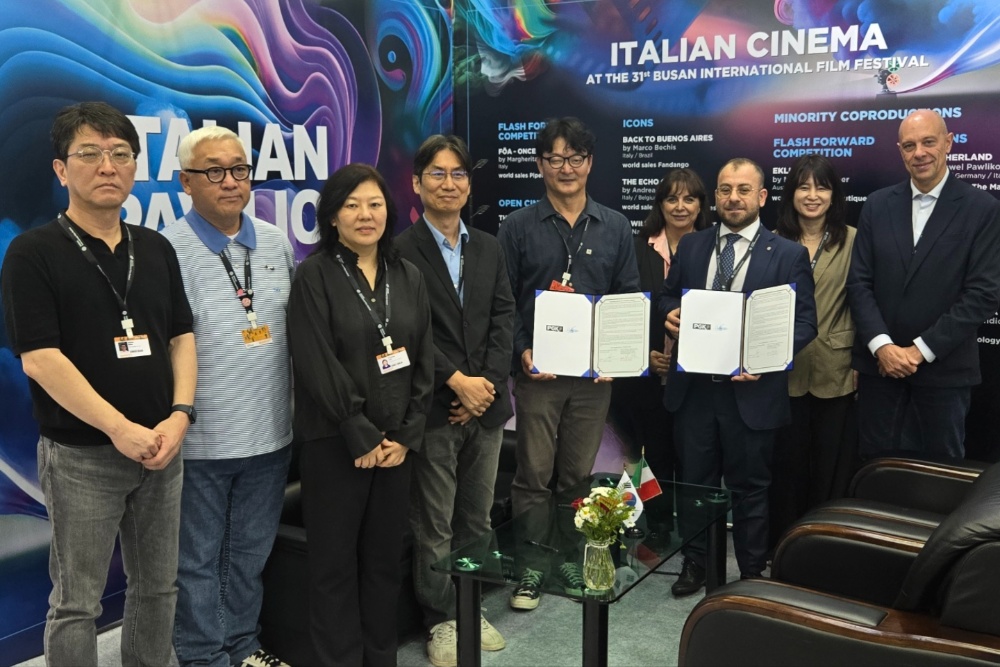
A surge of tweets and Instagram stories lit up Seoul, Rome, and Yakutsk at 11:30 a.m. on Wednesday, when the Producers Guild of Korea (PGK) and Italy’s CNA Cinema e Audiovisivo (CNA) announced a joint co‑production accord, followed moments later by an MOU between PGK and the Sakha Filmmakers Association (SFA). Within minutes, fans and industry insiders shared gifs of smiling faces, emojis of film reels, and the hashtag #FilmFuture, as if a new chapter in global filmmaking had just been unlocked.
The reactions were electric. In Seoul, fans streamed the live announcement on KakaoTalk, while Italian cinephiles in Milan posted screenshots of the deal on Facebook, praising the historic bridge between Asian and European cinema. In Yakutsk, a wave of comments on local forums echoed the same enthusiasm, with many citing the potential to bring international attention to the remote Sakha region. The immediate fanfare highlighted a growing appetite for cross‑cultural collaborations that can blend diverse storytelling traditions and reach wider audiences.
At its core, the agreements create a direct pipeline for producers across three continents to access each other’s markets, share public‑funding information, and launch exchange programs that span languages and locations. The PGK–CNA pact builds on an existing government‑level co‑production accord signed in 2021, while the PGK–SFA memorandum extends the reach of Korean production expertise into the Russian Far East, an area known for its harsh climates and unique narratives.
Background & Context
The PGK–CNA collaboration follows a decade of increasing dialogue between Korean and Italian film industries. In 2021, a formal co‑production agreement between South Korea’s Ministry of Culture and Italy’s Ministry of Culture laid the groundwork for joint ventures, offering financial incentives for projects that meet both countries’ cultural criteria. The recent pact formalizes this relationship by establishing regular exchange programs that will allow Korean producers to attend festivals in Rome and Italian producers to visit film schools in Seoul, thereby fostering mutual understanding and skill sharing.
Meanwhile, the Sakha Republic—often referred to as Yakutia—has long sought to elevate its cultural profile. The SFA, representing a network of local filmmakers, has previously partnered with domestic Russian bodies to produce documentaries about the region’s climate and indigenous peoples. By aligning with PGK, Sakha filmmakers gain access to Korean expertise in high‑end visual effects and digital distribution, while Korean producers receive unique opportunities to shoot in the region’s dramatic landscapes, which can double for Arctic settings in science‑fiction or period pieces.
These agreements are part of a broader trend where national film boards are using co‑production pacts to reduce risk and share costs. By pooling public funds and leveraging tax incentives, the three parties aim to launch projects that appeal to international audiences while preserving local voices—a model that has proved successful in prior ventures such as the 2019 Korean‑Spanish co‑production “The Map of Love,” which grossed $30 million worldwide.
What People Are Saying
Industry insiders in Seoul described the pact as “a strategic leap forward.” One PGK executive noted that the new collaboration will help Korean producers secure funding for projects that might otherwise face budgetary constraints. In Rome, a senior CNA official emphasized the importance of cultural exchange, adding that the partnership would encourage Italian producers to explore storytelling angles inspired by Korean narrative structures, known for their blend of emotional depth and technological sophistication.
In Yakutsk, a local filmmaker who has worked on multiple SFA‑backed projects expressed excitement over the new partnership. She said that the opportunity to collaborate with Korean counterparts could open doors to high‑profile international festivals. “It feels like we are finally being recognized on a global stage,” she remarked, highlighting the role of the MOU in expanding the region’s cinematic reach.
Social media buzz mirrored these professional sentiments, with many users sharing quotes from the agreements and discussing potential film titles that could emerge from these collaborations. A viral thread on Twitter speculated about a joint sci‑fi feature set in the Arctic, combining Korean visual effects and Italian cinematographic style—an idea that sparked lively debate among fans of the genre.
What Happens Next
The next steps involve detailed project planning workshops scheduled for early April in Seoul, where producers from Korea, Italy, and Sakha will convene to brainstorm concepts. These workshops will also focus on aligning the creative visions of the three parties, ensuring that any co‑produced film satisfies the cultural and regulatory requirements of all involved countries. The PGK has already set up a joint task force to streamline paperwork and coordinate funding applications, aiming to launch the first joint feature within 18 months.
Simultaneously, both agreements will initiate an exchange program for production crews. Korean technicians will travel to Rome to gain insights into European filmmaking techniques, while Italian crew members will be invited to Korea’s leading film schools to study Korean narrative methods. The Sakha–PGK collaboration will include a series of masterclasses for Sakha filmmakers on digital post‑production, with the expectation that these skills will elevate local productions to international standards.
In addition to creative collaboration, the agreements include clauses for talent scouting and distribution. The PGK will facilitate introductions between Korean actors and Italian casting agencies, while the SFA will partner with Korean streaming platforms to distribute Sakha‑produced content globally. These distribution pathways are expected to break traditional market barriers, allowing films to reach audiences in Southeast Asia, the Middle East, and North America more efficiently.
Closing
As the world watches this unprecedented tripartite pact unfold, the film community feels a renewed sense of possibility. By weaving together Korean, Italian, and Sakha talents, the new agreements promise a fresh wave of stories that blend cinematic technology, cultural nuance, and daring visuals. In a global marketplace hungry for authentic, cross‑cultural narratives, this collaboration could well redefine how stories cross borders, proving that when producers connect, the next great film can emerge from the most unexpected corners of the world.
The Bottom Line
This pact is a bold statement from the film world that storytelling thrives when borders blur. By bringing together Korean technology, Italian narrative expertise, and Sakha’s raw landscapes, MyWorldPulse sees a future where diverse voices are not just heard but amplified on the global stage. The 18‑month roadmap signals urgency—producers must act swiftly to seize funding and distribution opportunities that can catapult these projects into mainstream consciousness. Critics may question whether the sheer novelty will translate into box‑office success, but history proves that audiences crave authenticity. The next 18 months will test the pact’s promise: will the first feature be a sci‑fi spectacle set on an icy frontier, or a drama that captures the emotional nuance of three distinct cultures? Whatever the outcome, the collaboration sets a precedent: when producers unite across continents, the stories they tell have the power to reshape cinematic norms. —MyWorldPulse
Reference:
- PGK announcement on Twitter
- CNA press release on Facebook
- SFA statement on Instagram
Read more celebrity news at MyWorldPulse.