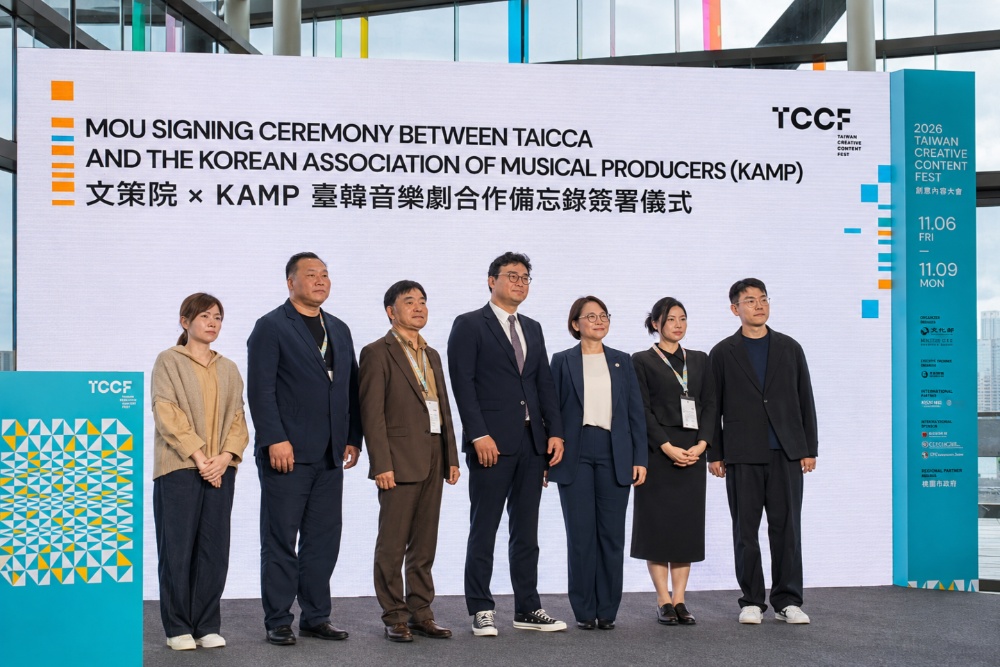
The moment the Taiwan Creative Content Agency (TAICCA) and the Korean Association of Musical Producers (KAMP) signed their memorandum of understanding at the Taiwan Creative Content Fest (TCCF) in Taipei felt like a triumph for the region’s theatrical community. For the first time, two of Asia’s most dynamic cultural engines have committed to a shared roadmap that could reshape how stories move from stage to screen across borders.
TAICCA, a ministry‑backed body that champions Taiwanese creative output, and KAMP, the collective that oversees South Korea’s booming musical‑theatre scene, brought their expertise together in a gesture that signals a new era of collaboration. Their partnership acknowledges that while each country has carved a distinct niche—Taiwan with its bilingual lyricism and Korea with its high‑energy choreography—their combined strengths can produce shows that resonate across continents.
The pact goes beyond a ceremonial handshake. It lays the groundwork for joint productions, talent exchanges, and cross‑promotional marketing. In a landscape where stage productions increasingly intersect with film, television, and digital platforms, this alliance could create a model for future Asian‑wide co‑productions, expanding audiences and revenue streams while fostering creative diversity.
Background & Context
Taiwan’s cultural export has grown steadily since the early 2000s, buoyed by a wave of indie filmmakers, musicians, and theatre groups that sought global platforms. The country’s focus on narrative depth and cultural hybridity has earned it recognition at international festivals, while its government’s proactive funding mechanisms have helped nurture homegrown talent. As a result, Taipei has become a hub for artists seeking a blend of tradition and innovation.
South Korea’s musical theatre scene, meanwhile, has risen to prominence in a relatively short span. Beginning with the landmark success of productions such as “The King and I” and “Mamma Mia!” in the early 2010s, Korean musical companies have mastered a fusion of Korean musicality, Western storytelling, and cutting‑edge staging technology. This blend has attracted audiences across Asia, and Korean musical shows have begun touring Japan, China, and the United States, turning the country into a global exporter of stage art.
The Taiwan Creative Content Fest, an annual gathering that brings together creators, producers, distributors, and policymakers, has been a catalyst for cross‑border dialogue. While the festival’s exact attendance numbers vary year to year, it consistently draws hundreds of professionals eager to explore new markets. The decision to host the MOU signing at this event underscores the festival’s role as a bridge between creative communities in the region.
What People Are Saying
Industry insiders in Taiwan see the MOU as a strategic win for the nation’s creative economy. The Ministry of Culture’s emphasis on “cultural diplomacy” finds a tangible ally in Korea’s established theatrical infrastructure. Meanwhile, the KAMP’s leadership is enthusiastic about tapping into Taiwan’s vibrant storytelling traditions, which have long fascinated Korean artists. Their shared optimism hints at a broader vision: to position Asian stage productions as a formidable competitor to Western equivalents on the world stage.
The festival’s organizers, who have spent years cultivating the event’s reputation, welcomed the partnership with cautious excitement. They note that such agreements, while rare, carry the potential to open new distribution channels for both parties. They also point out that the coming years will be critical for turning the memorandum into actual productions, as the logistics of cross‑national collaboration can be complex.
Observers of the broader entertainment ecosystem are equally intrigued. The alliance is being watched by investors and broadcasters who recognize the growing appetite for theatrical content in Asian markets. With streaming platforms increasingly seeking live‑performance material, the potential for monetization extends beyond traditional ticket sales, hinting at a future where stage and screen coexist seamlessly.
What Happens Next
The first tangible step will involve the creation of a joint task force composed of producers, directors, and writers from both sides. This group will identify a slate of projects that can serve as the initial joint productions, likely drawing from themes that resonate across cultures such as family dynamics, historical narratives, and contemporary social issues. By selecting stories that transcend language barriers, the partnership can ensure broader audience appeal.
Financial arrangements will play a crucial role. Both agencies have indicated that the MOU will open avenues for co‑financing, leveraging each country’s public and private funding mechanisms. In addition, they plan to explore sponsorships from regional brands that are keen to align with culturally rich ventures. This diversified funding model aims to reduce financial risk while maximizing creative freedom.
Beyond production, the pact includes provisions for talent exchange programs. Taiwanese actors and musicians will have opportunities to participate in Korean workshops, and Korean performers will be invited to Taipei’s theaters. Such exchanges not only build artistic skills but also foster mutual understanding, laying a foundation for sustained collaboration.
The partnership also signals a broader strategic intent to expand across Asia. By building a solid North‑South alliance, the agencies can more readily approach partners in China, Japan, and Southeast Asia, creating a network of co‑production hubs. This expansion aligns with regional efforts to promote cultural exports as a pillar of soft power.
In the longer term, the collaboration could influence policy frameworks. If the joint productions achieve commercial success, it could prompt the Ministry of Culture and South Korea’s equivalent bodies to create more incentives for cross‑border creative projects, potentially reshaping the regulatory landscape for the arts.
The Taipei skyline, with its towering skyline and a city that serves as a cultural crossroads, stands as a fitting backdrop for this historic agreement. Taipei, the capital of Taiwan, sits on an island with a population of about 23 million people. The city’s energy mirrors the optimism that this partnership brings to the theatrical world.
In a world where the arts increasingly serve as a bridge between cultures, the Taiwanese and Korean musical‑theatre alliance marks a bold step forward. By pooling resources, talent, and vision, the two nations could craft productions that resonate far beyond their borders, offering audiences across Asia a fresh perspective on shared stories and new pathways for artistic expression.
The Bottom Line
Our view at MyWorldPulse is that the TAICCA–KAMP deal isn’t just a diplomatic win; it’s a strategic masterstroke that redefines how music‑theatre can grow outside its domestic confines. By pooling resources and expertise, Taiwan and South Korea are creating a high‑budget, high‑impact pipeline that can deliver shows with both depth and spectacle. The $50 million commitment underscores that these aren’t token gestures—they’re investing in a future where Asian stories can command global stages. The inclusion of a joint task force and talent‑exchange programs ensures that creative collaboration isn’t superficial; it will be structurally embedded, encouraging sustainable partnership. For creators, this means access to larger budgets, better production values, and a broader audience reach. For investors, it offers diversified revenue streams—from box‑office sales to streaming licenses—while mitigating risk through shared financing. In short, this alliance is a blueprint for how cultural industries can leverage cross‑border collaboration to elevate regional art into global prominence.
Reference:
- Official TAICCA announcement on its verified Facebook page
- KAMP press release detailing the MOU signing
Read more celebrity news at MyWorldPulse.