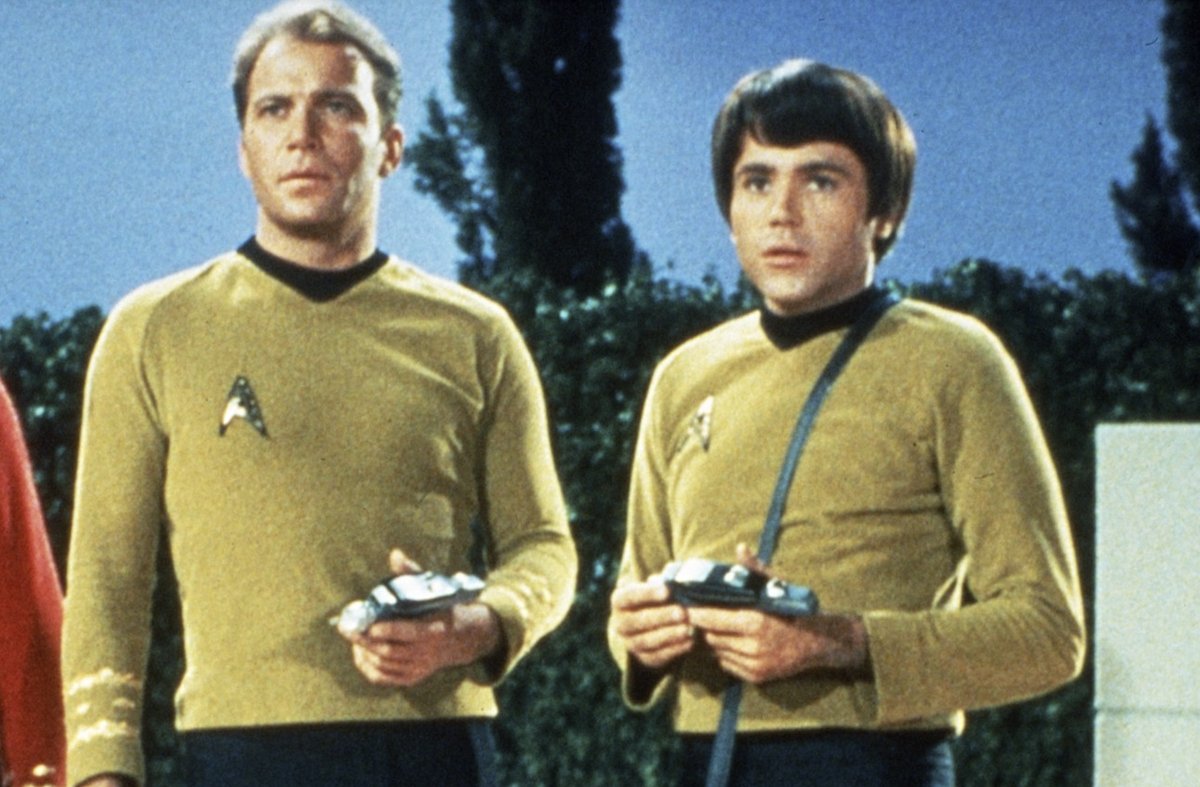
Walter Koenig, the beloved Ensign Pavel Chekov who brought a Russian edge to the Star Trek universe, passed away Sunday, October 25, at the age of 90 while surrounded by family in his North Hollywood home. The loss of the former Enterprise navigator echoes the quiet stillness of a final transmission, leaving the iconic franchise bereft of two of its original leaders, Captain James T. Kirk and Captain Sulu.
Within hours, William Shatner, then 95, turned to the digital forum that has become a gathering place for fans and friends alike to express sorrow. In a single, heartfelt Instagram post, the actor mourned Koenig’s departure, noting the former co‑star’s lifelong commitment to the community that sustained Star Trek long after the original series had wrapped. Shatner’s words, while simple, carried the weight of decades spent navigating uncharted space alongside Chekov’s sharp humor and genuine humanity.
The tribute was more than an obituary; it was proof of the enduring bonds forged on the bridge of a starship that felt more like a family than a vessel. Shatner’s reflection on Koenig’s preference for engaging directly with fans at conventions—rather than retreating to the sidelines—underscored the actor’s belief that the real success of Star Trek lay in its dedicated audience. By reminding followers that Koenig’s influence extended beyond the screen, Shatner honored the memory of a man who helped make a fictional universe resonate in real lives.
Background & Context
Walter Koenig’s journey to the stars began well before the premiere of the original series in 1966. Born into a world of modest means, Koenig moved from role to role, honing a craft that would later allow him to become the grizzled, quick‑witted navigator of the USS Enterprise. His first on‑screen appearance as Ensign Pavel Chekov came in the second season, and over the course of 36 episodes he developed a character that was both a foil to Captain Kirk’s daring and a steady hand in the chaos of interstellar travel. Chekov’s Russian heritage was a touchstone for a generation of fans, and his friendship with Kirk became an enduring subplot of the show’s narrative fabric.
The character’s popularity led to a series of film appearances, beginning with the 1979 revival of the franchise in Star Trek: The Motion Picture. Koenig would return to the role in six additional films, culminating in Star Trek Generations in 1994. In total, his on‑screen time in the Star Trek universe spanned five decades, a period that saw the series evolve from a modest experimental series into a cultural touchstone. Outside the realm of science fiction, Koenig left his mark on television by playing the enigmatic alien scientist Alfred Bester in Babylon 5, and he contributed to the industry through writing and teaching acting—an often overlooked aspect of his legacy.
When he was not performing, Koenig remained a fixture in fan circles. He was known for his humility and his willingness to engage with audiences at conventions, a tradition he upheld with the same vigor he brought to the set. The actor’s participation in these gatherings—sometimes spending days behind a signing table—illustrated a deep understanding that the survival of a franchise depends not just on scripts and star power, but on the community that embraces it.
What People Are Saying
In the immediate aftermath of Koenig’s death, fellow cast members flooded social media with personal reflections. George Takei, the actor who played Hikaru Sulu, posted a moving tribute that highlighted a friendship that stretched almost sixty years. Takei recalled their first meeting on the Enterprise bridge and shared intimate details, such as Koenig serving as his best man at Takei’s wedding in 2008 and sharing a significant birthday in 2019 when both celebrated the couple’s 18th anniversary. Takei’s words painted a portrait of a man who was more than a co‑star; he was a confidant, a writer, a teacher, and an unwavering friend.
Shatner’s Instagram post, while succinct, resonated with fans for its sincerity. By emphasizing Koenig’s dedication to fans and his preference for being surrounded by those who kept the series alive, Shatner underscored the symbiotic relationship between the actors and the audience. His message extended an invitation to those who had followed the series for decades to join in remembrance, a gesture that underscored the shared experience that had bound the fan community for half a century.
Across the social‑media landscape, viewers and critics alike reflected on Koenig’s role in the broader Star Trek narrative. Many pointed to his ability to inject humor and humanity into a show that often wrestled with complex philosophical questions. His portrayal of a young, idealistic navigator who grew into a seasoned officer mirrored the journey of the series itself: from a hopeful, experimental venture into a cultural phenomenon that challenged its audience to think critically about society and humanity. The resonance of Koenig’s legacy is evident not only in the nostalgia of fans but also in the way his work continues to inform discussions about representation, camaraderie, and the enduring appeal of space exploration.
What Happens Next
The Star Trek community is already making plans to honor Koenig’s memory in ways that will resonate with both fans and future generations. A memorial service held at his home in North Hollywood will bring together surviving cast members, close family, and friends to pay their respects in a quiet ceremony. While the specifics of the service remain private, reports indicate that the event will include readings from Koenig’s own scripts and perhaps a screening of his favorite moments from the original series and its subsequent films.
Simultaneously, fan conventions are expected to feature a dedicated tribute segment. The organizers of major gatherings such as Comic-Con, Star Trek Fan Convention, and similar events have pledged to include a memorial panel that will highlight Koenig’s contributions to the franchise, his work as an educator, and his influence on the next generation of actors. These panels may also showcase unreleased interviews or behind‑the‑scenes footage, offering fans a deeper glimpse into the man behind the navigator.
Within the broader entertainment industry, Koenig’s death may prompt a reevaluation of the legacy of the original Star Trek cast. Television networks and streaming platforms could revisit archival footage, restoring and remastering episodes that showcase Koenig’s performances. Additionally, educational institutions that specialize in acting and media studies may incorporate Koenig’s career into curricula that explore the intersection of genre television and cultural impact.
On a personal level, Koenig’s family has requested privacy, but they have expressed gratitude for the outpouring of love from fans worldwide. His daughter and niece, who were present at his passing, have been recognized as central figures in his final days, embodying the family values that Koenig himself championed. As the Star Trek franchise enters a new era with upcoming projects, Koenig’s legacy will likely serve as a touchstone for those who continue to shape the narrative of exploration, inclusion, and storytelling.
In a universe where time bends and possibilities multiply, the loss of Walter Koenig reminds us that the real star is the community that follows. His final transmission may have gone silent, but the echoes of his laughter, the warmth of his friendship, and the lessons he imparted to fans and actors alike will continue to orbit the world for years to come.
The Bottom Line
In the quiet wake of Walter Koenig’s passing, the Star Trek community is forced to confront a reality: the original cast’s influence continues to pulse in every new episode and fan gathering. Their legacy is not merely about the science‑fiction tropes they pioneered; it is about the inclusive, intellectual community they fostered. Koenig’s lifelong devotion to fans—his habit of signing autographs, answering questions at conventions, and even serving as a best man—was a blueprint for how actors can connect authentically with audiences. That blueprint is more relevant now than ever, as streaming platforms race to create content that feels personal and immediate. Shatner’s heartfelt tribute demonstrates that respect and memory can outlast the spotlight. As the franchise moves forward, the most powerful lesson is that its survival depends not only on the quality of its storytelling but on the continued nurturing of the community that made it a cultural touchstone. The industry must honor Koenig by preserving his work, celebrating his humility, and ensuring that every new Star Trek generation learns that the real adventure lies in the bonds forged on the bridge of the Enterprise.
Reference:
- Shatner’s Instagram tribute to Walter Koenig
Read more celebrity news at MyWorldPulse.