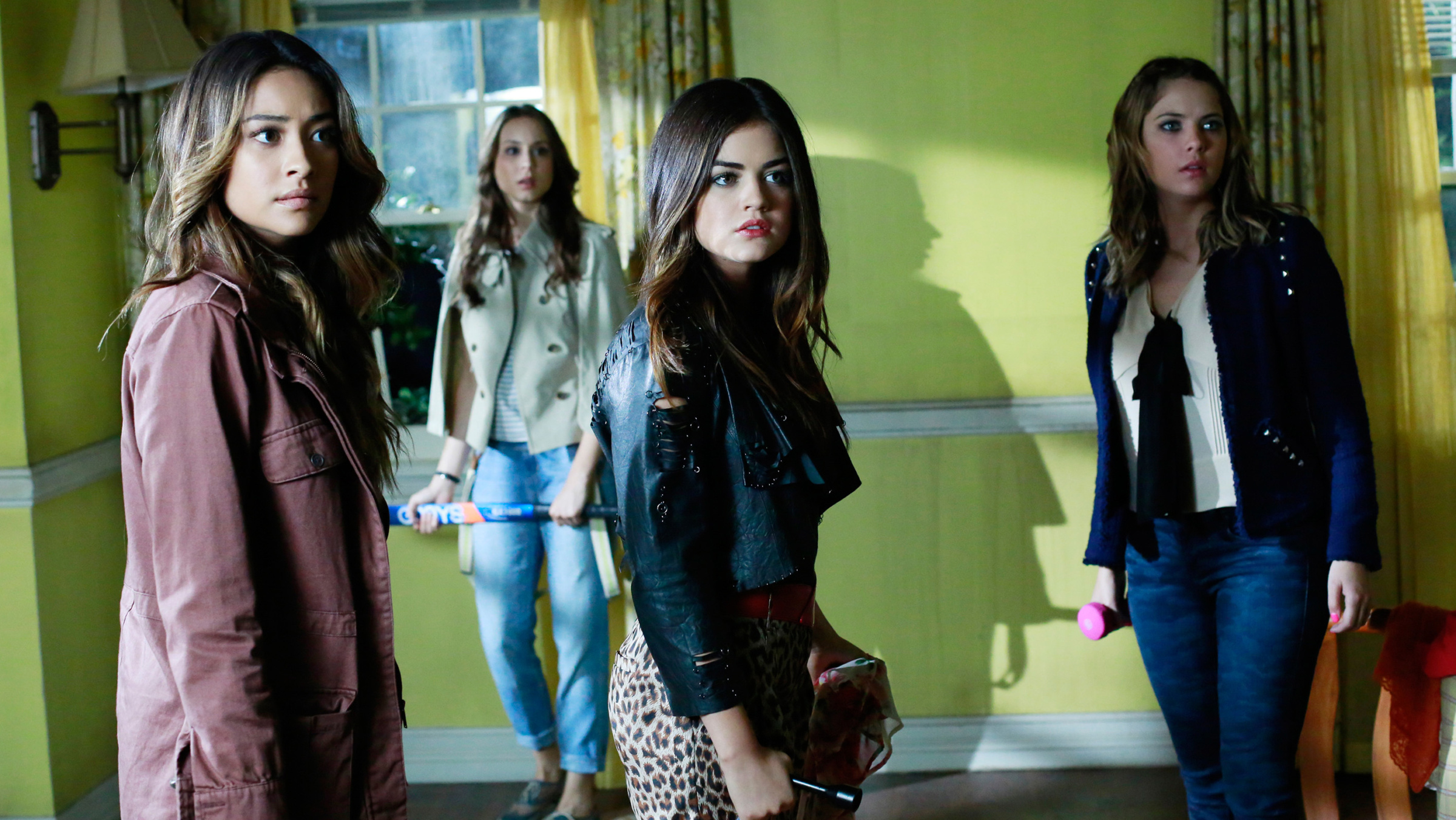
When Lucy Hale, who portrayed the fearless Aria Montgomery, stepped onto the set of the long‑forgotten Pretty Little Liars premiere and announced that the entire original crew is “willing and would want to” return, the fan base erupted, and the industry began to weigh a new wave of teen‑drama nostalgia.
In an interview with a glossy magazine, Hale said, “Everyone is willing and would want to reprise their roles for a revival.” She added a gleam of hope to the familiar mystery formula: “There’s gotta be a new version of ‘A’.” Those words—so much as they echo the show’s most ominous antagonist—set off a firestorm of speculation. Fans have been waiting since the 2017 finale for a fresh chapter that could revisit the tangled friendships, secret identities, and cryptic game‑plays that made the series a cultural touchstone for a generation of millennials.
For the entertainment world, this announcement signals more than a nostalgic return. Revivals are a burgeoning trend: streaming services are constantly seeking proven properties to secure a built‑in audience. A Pretty Little Liars reboot could sit comfortably on a platform like Netflix or Hulu, offering a built‑in fan base and the potential for binge‑worthy storytelling. And because the original cast has been in their 30s and 40s, there is a built‑in authenticity to the aging of the characters—something viewers want to see. The network must now decide whether to invest in a 10‑episode arc, a feature‑length movie, or a hybrid limited series that can explore deeper themes of trauma and redemption. Either way, the stakes are high for the creators and the audience alike.
Background & Context
Pretty Little Liars, created by I. Marlene King, first aired on Freeform in 2010. Over its seven‑season run, it followed five high‑school friends in Rosewood who faced an anonymous stalker known only as “A.” The show was a phenomenon, boasting viewership numbers that topped Freeform’s charts and a fan‑community that generated countless theories and fan‑art. The final season, which aired in 2017, ended with the revelation that “A” was in fact Mona Vanderwaal, a storyline that left many viewers stunned and some angry.
After the series finale, the cast—Lucy Hale, Sasha Pieterse, Troian Bellisario, Ashley Benson, and Marshall Manesh—continued to appear in other projects, but the PLL brand remained a nostalgic icon. Over the years, there have been rumours of a revival, and now the cast’s expressed willingness to return provides tangible momentum. Industry insiders note that the original creators are still involved, and that the concept of a “new version of ‘A’” suggests a more mature narrative. The revival could focus on how the characters dealt with the aftermath of Rosewood’s secrets while navigating adult responsibilities, a storyline that would appeal to the original fans now in their thirties and fifties.
The revival also reflects a broader shift in television: audiences increasingly crave continuity. When fans see familiar actors and storylines, they are more likely to commit to a series. That has led to the revival of shows such as Riverdale and The O.C. in recent years, proving that nostalgia can be a powerful engine for new content.
What People Are Saying
The social media response to Hale’s comment was immediate and electric. Twitter threads erupted with hashtags such as #PLLrevival, #NewA, and #AriaReturns, as fans speculated about the storyline and the logistics of bringing the original cast back together. Many commenters praised the show’s “unbreakable bond” and the way it taught “that friends can survive even the darkest secrets.” Others expressed excitement that a new “A” could bring fresh intrigue—some feared that the mystery might feel stale, but others welcomed a modern twist.
On the other end, industry blogs dissected the revival’s potential budget, noting that a 10‑episode revival would likely cost between $3 million and $4 million per episode, a figure that aligns with contemporary teen dramas. The blogs also pointed out that the network could use the project to attract a demographic that was traditionally hard to reach—teenagers who grew up during the 2010s but now have more disposable income and time to binge content.
The cast’s openness to returning also sparked discussions on casting and the dynamics of a reunion. Viewers appreciated that the actors had grown alongside their characters; their real‑world maturity could bring nuance to the reimagined story. Moreover, fans wanted to know whether the show would incorporate contemporary issues—social media addiction, mental health awareness, and the evolution of friendships—into the narrative. The “new version of ‘A’” could provide an opportunity to explore how technology has changed the way secrets spread.
Industry executives responded cautiously, hinting at the feasibility of a production that would honor the original series while keeping pace with current storytelling standards. The conversation also touched on the possibility of a streaming platform taking over the revival, which would grant it more creative freedom and the ability to release a full season at once—a format that has become the norm for audience engagement.
What Happens Next
The path from announcement to air date is still winding. First, the producers must secure a network or streaming partner willing to back the revival. Negotiations will involve a detailed budget, script development, and timelines for casting. Even though the original actors have expressed willingness, their current commitments—such as Hale’s ongoing projects—must be coordinated to align with a filming schedule.
Simultaneously, the creative team will likely revisit the original script and reimagine the core mystery for a new generation. The writers may choose to weave the original arc—Mona as “A”—into a new narrative thread or create an entirely fresh antagonist. A “new version of ‘A’” could be a composite character, a digital entity, or a secret society that reflects contemporary anxieties about privacy and surveillance.
Once the script is finalized, a casting process will begin. While the main cast is set, supporting roles might see new faces that reflect the current diversity of the teen demographic. Production will likely take place in Los Angeles or New York, with studio sets recreating Rosewood’s iconic locations. Filming is expected to last 20 weeks, depending on the episode count.
After production, the distribution phase will decide on release strategy. If the revival lands on a streaming platform, the show might drop all episodes simultaneously to capitalize on binge‑watching habits. Alternatively, a traditional network could release episodes weekly to maintain long‑term viewer engagement. Regardless, the marketing campaign will harness the buzz generated by Hale’s announcement, using social media, fan conventions, and strategic partnerships to create anticipation.
For fans, the next steps involve staying tuned to official announcements. Behind‑the‑scenes footage, cast interviews, and teaser trailers will gradually build the narrative that leads to the first episode. The community will continue to speculate about the identity of the new “A” and the fate of the beloved characters, turning every rumor into a story of its own.
In sum, Lucy Hale’s confirmation that the Pretty Little Liars cast is ready to return is more than a nostalgic nod; it’s a potential catalyst for a modern retelling that could reshape the teen drama landscape. The industry will watch closely to see if this revival becomes a new benchmark for how beloved shows can successfully navigate the gap between the past and the present.
The Bottom Line
We’re watching the future of teen drama unfold before our eyes. Lucy Hale’s bold promise that the original cast will step back into their roles is more than a nostalgic nod; it’s a calculated gamble on a generation that now has the power and the willingness to revisit their youth. Streaming giants know that a proven property like Pretty Little Liars is a low‑risk investment with high‑reward potential—especially when the series can be delivered in binge‑friendly chunks that keep viewers glued to their screens. Yet the stakes are not purely financial; the creators must also navigate a landscape where audiences demand authenticity and contemporary relevance. The proposed $3‑4 million per episode budget is sizeable, but it also opens doors to richer storytelling, diverse casting, and higher production values that can rival the cinematic standards we expect today. If the revival can successfully blend the original mystery with modern social issues, it could not only satisfy long‑time fans but also capture a fresh cohort of viewers. This isn’t just a return; it’s a reinvention. We’ll keep our eyes on how this project unfolds, because its outcome will shape how the industry approaches revivals for years to come. —MyWorldPulse.com
Reference:
- Lucy Hale's verified Instagram announcement
Read more celebrity news at MyWorldPulse.