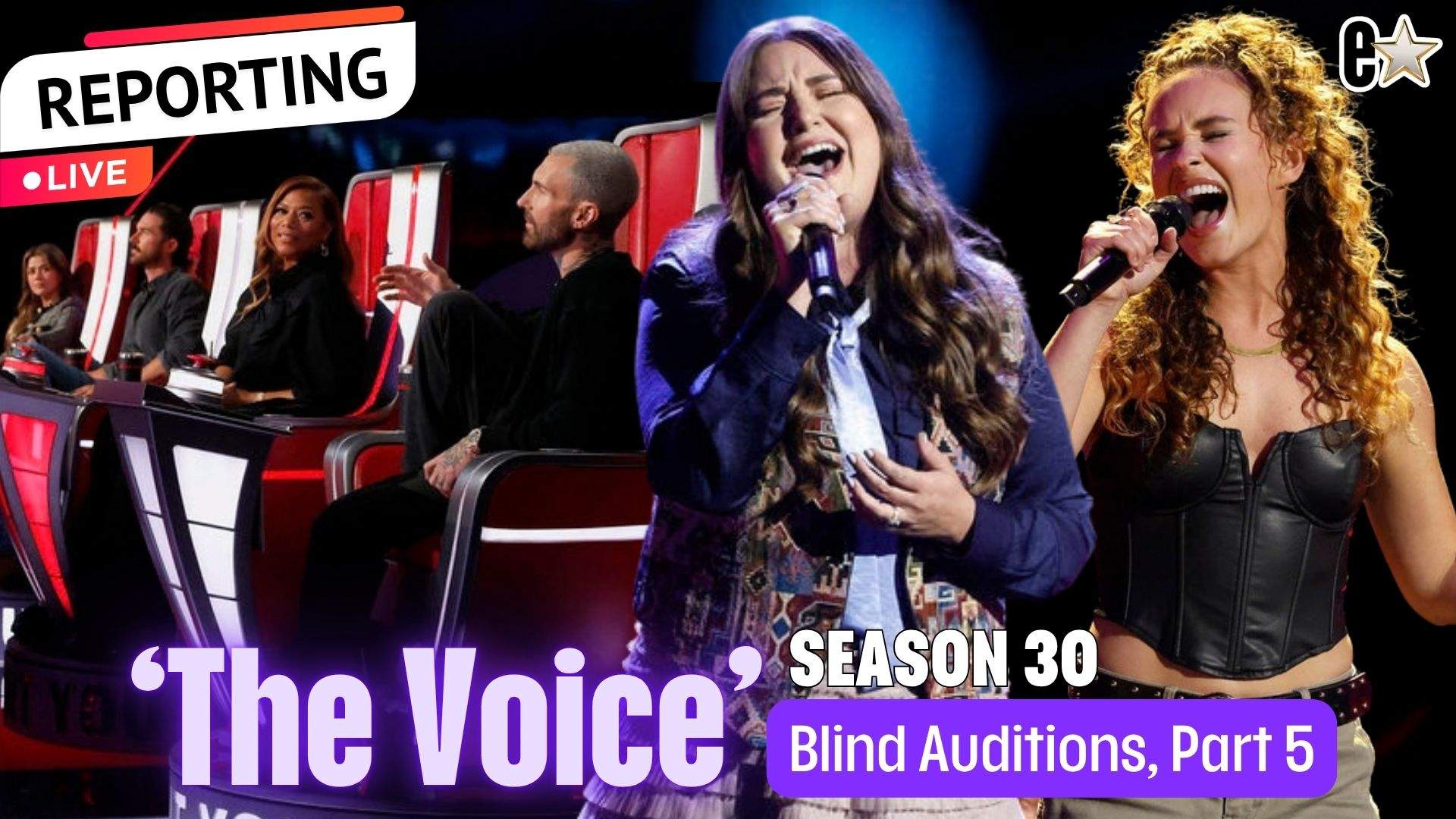
The newest talent on the “The Voice” stage, Nina Howland, made a record‑setting entrance when all four coaches pivoted in unison, a rare moment that stunned the audience and set the tone for a season that has already proven to be full of surprises. At just 24, the Washington‑born singer performed Bonnie Raitt’s “Love Me Like a Man,” her voice weaving a thread of raw emotion that resonated with every mentor in the room.
The episode that aired this week marked the beginning of the season’s third season of auditions, with the familiar click of the blinds opening to reveal new faces and fresh songs. While the show has traditionally been a showcase for seasoned singers, the latest cohort leans heavily on the raw, unpolished talent of the U.S., giving viewers a fresh narrative that extends beyond polished pop and rock covers. For many fans, the 4‑chair turn phenomenon has become a barometer of the stakes involved, and Nina’s performance was a reminder of why the blind auditions still matter.
The moment is part of a broader resurgence for the series. In its first week of availability, the Season 30 premiere pulled in 7.8 million viewers across linear broadcast and streaming platforms—a record for the show since its 27th season—and is already outperforming many contemporary reality competition broadcasts. The numbers underline the cultural weight of the show, which has remained a staple of daytime television for nearly a decade and a half.
Background & Context
“The Voice” has carved out a unique place in television by combining star power with a format that emphasizes talent over polish. Four coaches, each with a distinct musical perspective—Adam Levine, whose history as a pop icon and co‑founder of the series has shaped many seasons; Kelly Clarkson, a powerhouse vocalist who offers an ear for technique; Queen Latifah, a versatile performer known for her deep musical roots; and Riley Green, a country fresh face who brings a modern edge—rotate the blind auditions week after week. In Season 30, all four mentors have already begun assembling their rosters, each bringing a different style that fans anticipate will create a dynamic clash of genres in later rounds.
The format demands that singers perform while the coaches sit with their backs turned, ensuring that selection is based purely on vocal quality. The “chair turn” is a pivotal moment; a single standout performance can shift the narrative of the show, as it did when Nina Howland's soulful delivery prompted every coach to turn. Prior to this episode, other artists—such as Brandon Diaz from Ashburn, VA, who sang “Drink You Away” by Justin Timberlake and secured two chair turns, or Marilyn Hucek from Washington, D.C., who performed “La Tortura” by Shakira and attracted two turns—had already made waves. Each of these contestants added to the growing tapestry of diverse voices the show now showcases.
Meanwhile, the season has highlighted an intriguing mix of songs, ranging from country staples to hard‑rock classics. Dakota Cohen, a 25‑year‑old from Los Angeles, CA, chose “Changes” by Black Sabbath, earning a chair turn from both Adam and Riley. Luke Cope, from Kernersville, NC, delivered “Burning House” by Cam, which also secured two turns. These choices demonstrate that the show’s appeal is not limited to one genre, and the coaches seem willing to diversify their teams.
The 7.8 million viewers that have tuned in over the first seven days are evidence of the show’s ability to capture audiences in a media landscape increasingly dominated by on‑demand content. The success is partly attributable to the emotional storytelling the program offers—through both the contestants' backstories and the coaches' mentorship—creating a narrative arc that keeps viewers invested.
What People Are Saying
Fans on social media have been quick to react to Nina’s four‑chair moment, sparking a surge of conversation across multiple platforms. Many commentators note the sheer rarity of such an outcome; in the history of “The Voice,” only a handful of contestants have been afforded all four mentors’ attention. The excitement is compounded by the fact that Nina chose a song that, while widely known, is rarely performed in such a raw, emotional context, making her rendition feel both familiar and fresh.
Viewers have highlighted the way the coaches themselves reacted. Adam Levine, in particular, appeared visibly moved, which many fans interpret as a sign that Nina’s style might align with his pop sensibilities, but his eyes also flicked toward Queen Latifah, hinting at a possible cross‑genre collaboration. Meanwhile, Kelly Clarkson’s enthusiasm and Riley Green’s nod suggest a potential for a blend of traditional country roots with contemporary pop influences, a combination that could prove intriguing in later competition phases.
Beyond the immediate fan chatter, industry insiders have noted how the four‑chair turn reflects a broader trend: viewers increasingly value authenticity and storytelling over polished pop performance. Nina’s success in securing every mentor’s attention is proof of the enduring power of a strong narrative coupled with genuine vocal talent. Analysts predict that the season will continue to feature more unexpected pairings and genre‑mixing team compositions, driven in part by the diverse selection of songs and the distinct musical backgrounds of each coach.
The episode’s airing also coincided with a spike in the show's streaming numbers. The data from NBCUniversal’s Peacock platform revealed that more than half of the 7.8 million viewers accessed the show via the streaming service, underscoring the shift toward digital consumption of traditional broadcast programming. This trend has implications for future marketing and talent scouting, as producers may consider leveraging online platforms to discover and promote upcoming performers.
What Happens Next
As the season progresses, the coaches will begin narrowing their teams during the battle rounds, where each mentor pairs their contestants to compete head‑to‑head. The initial roster of artists—including the likes of Brandon Diaz, Marilyn Hucek, Keiyana Osmond, and Luke Curran—will face a new test: blending harmonies, showcasing versatility, and demonstrating growth under each coach’s mentorship. The strategic choices each coach makes will be critical, especially when deciding whether to retain a contestant who has already secured multiple chair turns or to focus on those who are still waiting for a chance.
The dynamic of the teams will also become more apparent during the knockout rounds. Here, the judges will assess the ability of each singer to reinvent their performances while maintaining their core identity. With Nina Howland already having a strong foundation, she will likely face the challenge of translating that early success into a polished, stage‑ready presence that can compete with seasoned performers who have been through similar processes in previous seasons.
The audience will also be watching for unexpected pairings in the live shows. The competition’s structure allows for mentors to collaborate, encouraging contestants to blend their styles with their teammate’s strengths. For instance, a pairing of a pop‑centric contestant with a country‑based mentor could yield a crossover hit, and the coaches have previously encouraged such experimentation. The 7.8 million viewers are poised to see how these partnerships develop, especially as the show moves toward its live final.
Meanwhile, the show’s producers may use the success of this season’s open‑eye, audience‑driven viewership to refine future seasons. The data indicates that viewers respond positively to contestants who bring personal stories and a strong stage presence, a combination that could shape the show’s casting strategy moving forward.
In the coming weeks, fans will likely anticipate the announcement of the next set of team compositions, the start of battle rounds, and perhaps a few surprise guest appearances. The show's ability to adapt to shifting viewer habits—especially its embrace of streaming—suggests that future seasons may offer even more interactive engagement for audiences.
As the story unfolds, the 4‑chair moment will remain a benchmark of the show’s capacity to surprise, inspire, and rally both mentors and viewers alike. For Nina Howland, it is the starting point of a journey that may well redefine what it means to be a star in the modern talent‑search landscape.
The Bottom Line
The Voice’s 4‑chair moment with Nina Howland proves that audiences are hungry for real, emotionally charged talent, not just polished performances. This shift matters because it challenges the franchise to prioritize authenticity over studio sheen, aligning the show with current consumer values. The 7.8 million viewer milestone, half of whom streamed the episode, signals that traditional formats can thrive by embracing hybrid distribution models. For the industry, the lesson is clear: talent shows must integrate genuine storytelling, diverse genre representation, and digital-first engagement to stay competitive. MyWorldPulse believes that future seasons will need to deepen this focus—evolving from mere entertainment to a platform that showcases authentic voices and fosters real connections between contestants, coaches, and fans. By embracing this trajectory, The Voice can sustain its cultural relevance and continue to be a springboard for diverse artists in an era that rewards honesty over polish.
Reference:
- Official Instagram post by Nina Howland announcing her four‑chair turn
Read more celebrity news at MyWorldPulse.