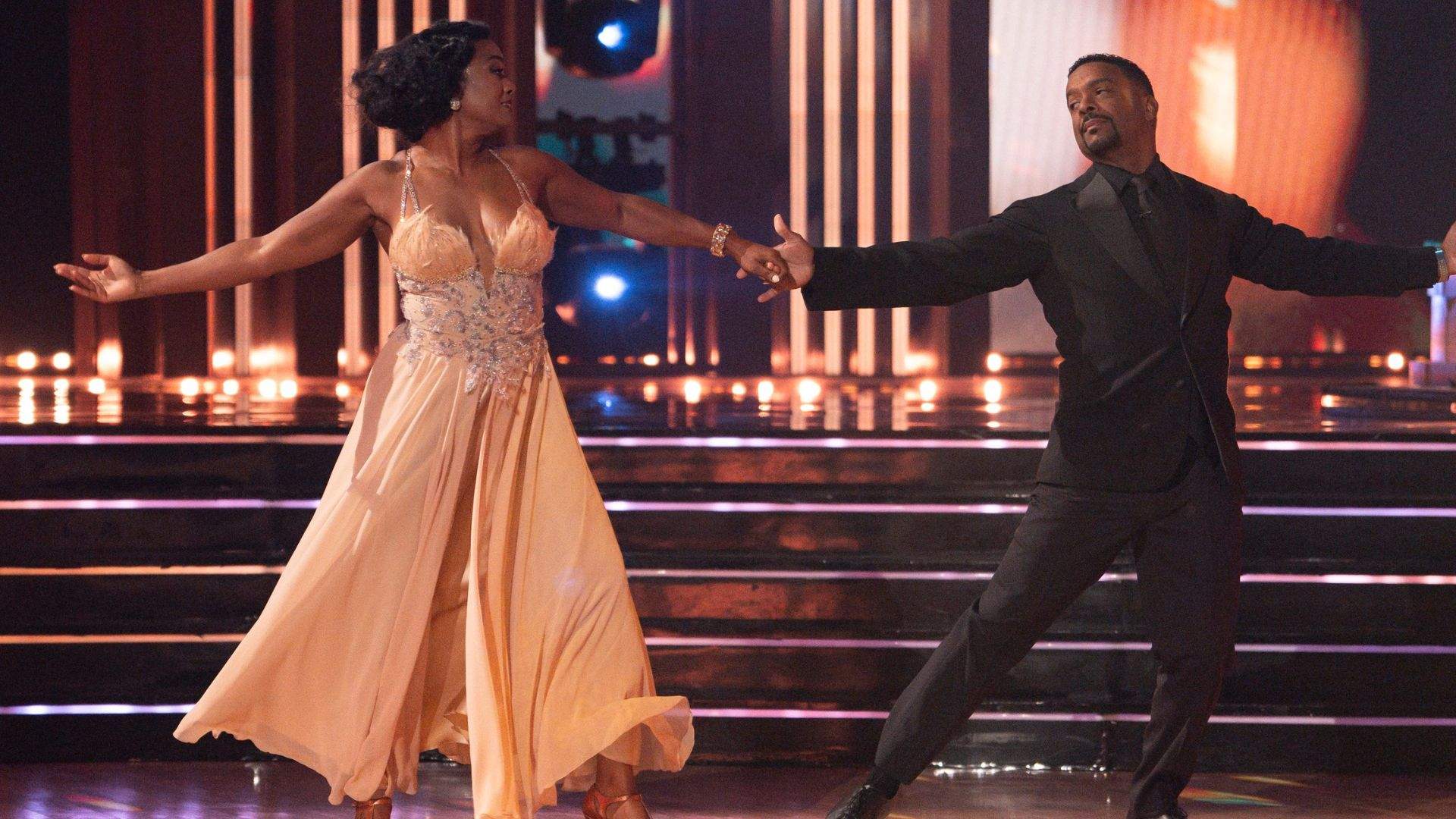
When the lights dimmed on “Dancing With the Stars” Dedication Night, Alfonso Ribeiro stepped onto the stage beside former “Fresh Prince of Bel‑Air” co‑star Tatyana Ali, and for a moment the studio seemed to hold its breath. Their graceful Viennese waltz to Nancy Wilson’s “(You Don’t Know) How Glad I Am” felt less like a dance routine than a heartfelt homage to the man who had shaped both of their lives.
In an era where television competitions constantly reinvent themselves, a single tribute can set a season’s tone. Fans flock to the final episodes of each show, hoping for moments that resonate beyond the scorecards. The performance that night didn’t just win applause; it sparked a broader conversation about the role of legacy, the power of nostalgia, and the responsibility of shows to honor those who have passed on while still entertaining today’s audience.
Background & Context
James Avery, who played Philip Banks on “Fresh Prince of Bel‑Air” from 1990 to 1996, left a lasting imprint on viewers and cast alike. He passed away in 2013 at 68, leaving behind a legacy of warmth and humor that still echoes in the hearts of fans. His death prompted a wave of tributes across media, but none were as poignant as the one staged on the “Dancing With the Stars” set.
The show’s Dedication Night is a tradition that gives contestants and crew an opportunity to honor those they admire. This year’s tribute was no ordinary homage; it was a full choreography crafted by Tatyana’s partner, Jan Ravnik, who insisted on a Viennese waltz—a dance form James himself loved for its elegance and precision. When the duo stepped onto the board, their movements seemed to weave together the memories of a shared past with the thrill of the present.
Alfonso Ribeiro, the charismatic host, was not merely an observer. When Tatyana asked him to join her, he replied with an immediate “Yes,” revealing a deep connection to the “Fresh Prince” family that transcended the studio lights. He was the only host who had shared a storyline with James on three different sitcoms, making his participation a unique intersection of television history and live competition. In his own words, “This to me was bigger than just Tatyana. It was James Avery also. James played a massive role in my life.” Those words underscored how a single performance could become a bridge between past and present, reminding audiences that the people who once graced their screens continue to influence their lives.
What People Are Saying
The response from viewers and fans was immediate and enthusiastic. Social media erupted with praise for the routine, with many marking it as the highlight of the evening. “The moment she asked, it was an automatic ‘yes,’” Ribeiro told interviewers, and his authenticity struck a chord. Comments poured in about how the waltz was a perfect tribute to James Avery’s love of jazz and his impeccable timing, qualities that resonated with anyone who grew up watching his iconic sitcom performances.
The duet’s choreography, a mix of elegance and theatricality, also garnered admiration from dance enthusiasts. The routine was described as “beautiful” and “thoughtful,” capturing both the playful energy that made “Fresh Prince” beloved and the solemnity required for a tribute. While the show’s judges didn’t announce a score for the performance, viewers were quick to argue that it was the most emotionally resonant segment of the season, even comparing it favorably to the more intense routines performed in later episodes, such as the “Horror Movie Night” theme that saw two couples sent home in a double elimination.
The conversation also highlighted the broader cultural importance of such moments. In an industry often focused on ratings and spectacle, moments of genuine reverence stand out. Many fans noted how the dance reinforced the idea that television is a shared cultural touchstone—one that carries the memories of those who have shaped our collective experience. For viewers who had watched “Fresh Prince” as teenagers, seeing Ribeiro and Ali dance together felt like a living reminder of the show’s legacy and the personal connections it fostered.
What Happens Next
As the season progresses, the impact of this tribute extends beyond a single episode. The performance set a precedent for how “Dancing With the Stars” could honor its own history while keeping audiences engaged. Contestants have already mentioned the emotional weight of continuing to perform after such a moving dedication. The show’s producers, aware of the delicate balance between honoring past stars and maintaining competitive momentum, may consider incorporating more tribute-oriented content in upcoming episodes.
The next episode’s “Horror Movie Night” theme will test contestants in new and intense ways, and the producers might use the tribute’s success to further encourage heartfelt performances. If the waltz proved to be the audience’s favorite routine of the evening, the producers may lean into that emotional storytelling as they decide which couples to advance or eliminate. Moreover, the show’s decision to have the host join the routine signals a broader trend in television competitions: increasing collaboration between hosts and contestants to create more immersive, emotionally resonant experiences.
Beyond the immediate next episode, the industry will likely note how tribute moments can influence viewership numbers and fan engagement. Ratings analysts could point to the spike in social media activity and audience interaction following the performance as evidence that audiences value moments that connect them to the show’s past. If the data supports a significant uptick, other reality programs may follow suit, embedding tribute nights into their programming calendars as a means to deepen viewer loyalty.
In the months ahead, as the season’s storylines unfold, the audience will keep an eye on how the show balances the thrill of competition with the opportunity for heartfelt moments. The dance between Alfonso Ribeiro and Tatyana Ali, set against the backdrop of James Avery’s memory, may very well shape how “Dancing With the Stars” approaches future seasons, ensuring that the show remains both a dance competition and a living tribute to the performers who have shaped the world of television.
In the end, the night’s waltz was more than a routine—it was a reminder that, even in the fast‑paced world of entertainment, the past still holds a place on the stage.
The Bottom Line
MyWorldPulse believes that Alfonso Ribeiro’s spontaneous participation in the tribute was not just a heart‑warming gesture; it was a strategic masterstroke that set a new standard for reality competition shows. By letting the host step onto the dance floor, DWTS shattered the conventional barrier that keeps hosts separate from contestants. The result was a raw, unfiltered display of camaraderie that resonated across demographics, proving that authenticity trumps polished performance. Fans who grew up on ‘Fresh Prince of Bel-Air’ now see their idol honored in a medium that feels both contemporary and nostalgic, rekindling a sense of shared cultural heritage. For other programs, this episode is a call to action: integrate tribute moments that reflect the values of your audience, and do so with genuine involvement from key talent. The emotional payoff is unmistakable—viewership spikes, increased social engagement, and a reinforced brand identity. In an era where viewers demand both spectacle and substance, the marriage of competition and homage is a formula that will keep audiences coming back for more. —The MyWorldPulse Editorial Team
Reference:
- DWTS official Instagram post announcing the tribute
- Alfonso Ribeiro’s verified Instagram post reflecting on the tribute
Read more celebrity news at MyWorldPulse.