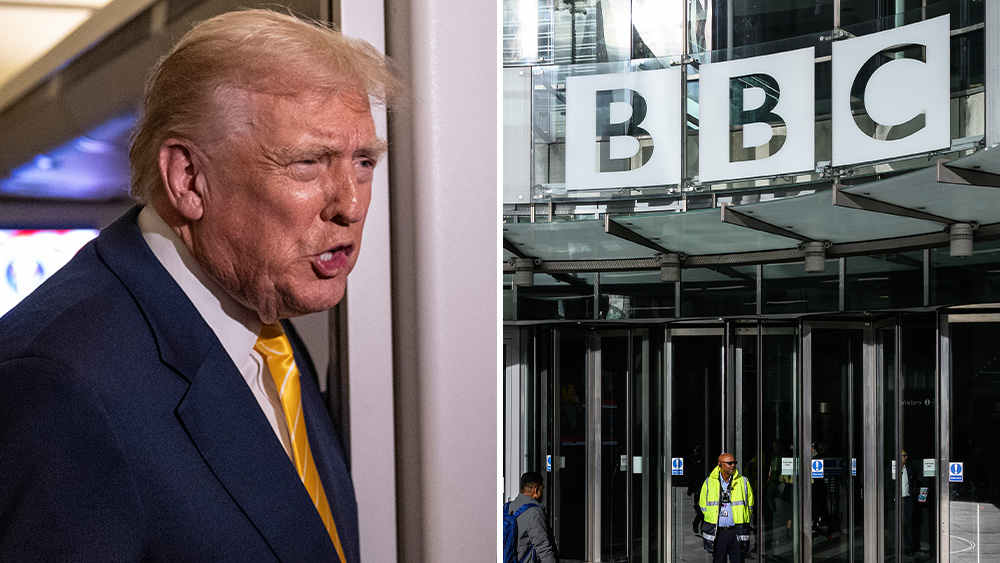
A federal judge on Tuesday halted a dismissal move that would have ended former President Donald Trump’s defamation lawsuit against the BBC, sparking fresh debate over media scrutiny ahead of the 2024 election.
In a succinct ruling, U.S. District Judge Jeffrey Kuntz refused to grant the BBC’s motion to dismiss, insisting that the court had the authority to hear the case. The dispute centers on a Panorama documentary that traced the events of January 6, 2021, and was aired just weeks before the presidential election. Trump alleges that the BBC’s edits falsely tied him to the riot, damaging his reputation. The broadcaster counters that the court lacks personal jurisdiction over him, a claim the judge rebuffed. By affirming jurisdiction, Kuntz has effectively kept the case alive, ensuring that the question of defamation will be addressed in a courtroom rather than dropped in a judge’s office.
The decision underscores how high‑profile legal battles can reverberate across the media landscape. For Trump, the lawsuit is another chapter in a series of legal actions targeting the press. For the BBC, it is a test of editorial integrity and a reminder that even the world’s most respected news outlets can become plaintiffs’ targets. As the 2024 campaign unfolds, the case is poised to become a flashpoint for discussions about truth, accountability, and the limits of free expression.
Background & Context
Donald Trump’s legal portfolio is no stranger to defamation suits. Since leaving office, he has sued multiple media outlets, accusing them of slander and false reporting. These actions reflect a broader pattern of confrontation with journalists, driven by his perception that the press has been hostile and biased. The BBC’s Panorama program, known for in‑depth investigative pieces, aired a documentary that traced the chronology of the January 6 Capitol breach. In the broadcast, the network altered several segments to contextualize events, a change that Trump claims paints him as an instigator. The edits included re‑cut footage and added commentary, sparking a defensive response from the former president.
Central to the legal wrangling is the doctrine of personal jurisdiction. The BBC argues that Trump, a U.S. political figure, does not fall under the court’s jurisdiction in this instance, citing the distance between the alleged defamatory statements and the court’s geographic scope. Personal jurisdiction determines whether a court can impose its authority over a defendant. Judge Kuntz’s refusal to accept this argument means the court can consider the merits of the claim. The ruling also signals a willingness by the judiciary to engage with complex jurisdictional questions when a plaintiff believes their reputation is at stake.
The case sits at the intersection of politics, law, and media ethics. With the 2024 election on the horizon, the scrutiny over January 6 coverage is intensifying. Media outlets are racing to present definitive narratives, while political actors vie to shape public perception. In this charged environment, the defamation claim against the BBC takes on symbolic weight, representing not just a legal dispute but a broader clash over how historical events are recorded and interpreted.
What People Are Saying
Legal commentators have pointed out that Judge Kuntz’s decision signals a broader trend: courts are increasingly open to hearing defamation claims from public figures, even when the plaintiffs argue limited jurisdiction. Analysts note that this could encourage more lawsuits against prominent news organizations, forcing them to navigate a more rigorous legal environment. Observers argue that the ruling places a spotlight on editorial standards, suggesting that even high‑profile outlets must be vigilant about the potential legal ramifications of their content.
Among Trump’s supporters, the ruling is viewed as a vindication. Many have expressed relief that the court will evaluate the evidence before dismissing the case outright. Social media chatter is rife with calls for transparency, as followers demand the BBC to explain its editorial choices. The conversation often swings between calls for accountability and accusations that the lawsuit is a political stunt aimed at deflecting criticism.
The BBC, for its part, has emphasized its commitment to journalistic integrity. Official statements stress that the broadcaster remains dedicated to accuracy and thorough reporting. While no formal apology has been issued, the organization’s spokespersons indicated that they would respond to the court’s next steps, reiterating their willingness to defend their editorial decisions in a factual and evidence‑based manner. The comments are careful to avoid conceding any wrongdoing, instead positioning the network as a guardian of public interest journalism.
What Happens Next
With the dismissal denied, the legal process will now move into the discovery phase. Both sides are expected to exchange documents, depositions, and other evidence that could shed light on the contested edits. The discovery period can span months, and the parties will likely file additional motions—perhaps challenging each other’s evidentiary requests or seeking summary judgment on specific claims. Trump’s legal team will aim to build a narrative that demonstrates clear intent to defame, while the BBC will seek to prove that its edits were grounded in factual correction and editorial judgment.
Should the court find that the BBC’s alterations misrepresented Trump’s involvement in the January 6 events, the case could proceed to a trial. A verdict could result in damages, potentially covering actual losses and punitive measures. Conversely, if the judge deems the edits fair or the defamation claim insufficient, the lawsuit may ultimately be dismissed. The outcome will carry implications beyond the courtroom; a ruling against the BBC could prompt other media outlets to reassess their editorial protocols, whereas a ruling in favor of the broadcaster might embolden journalists to pursue more aggressive investigations without fear of legal backlash.
The timing of the case adds an extra layer of significance. As the 2024 campaign heats up, the narrative around January 6 remains a potent political lever. Both sides of the dispute—Trump’s legal team and the BBC—are acutely aware that public perception can shift swiftly. The legal proceedings will therefore be monitored closely by political analysts, media scholars, and the general public alike, each eager to see how this clash between a former president and a global broadcaster will influence the unfolding story of a nation.
In a courtroom that often serves as a stage for high‑stakes political drama, Judge Kuntz’s decision ensures that the next act will be heard, not dismissed. As the legal gears grind toward discovery and potentially trial, the stakes—reputational, financial, and ideological—remain high. The nation watches, waiting to see whether the courtroom will validate the former president’s grievances or uphold the broadcaster’s editorial rights, each outcome echoing far beyond the walls of the federal courthouse.
The Bottom Line
At MyWorldPulse.com, we view Judge Kuntz’s ruling as a watershed moment that reasserts the judiciary’s role in safeguarding both individual reputations and journalistic integrity. While the former president’s lawsuit may appear, at first glance, as another political stunt, the court’s refusal to dismiss highlights that defamation claims cannot be easily dismissed without due consideration of jurisdiction and substantive merit. For media professionals, the decision is a stark reminder that editorial decisions—especially those involving politically sensitive events—carry real legal weight. As the nation heads into election season, the stakes are higher: a ruling against the BBC could force outlets worldwide to tighten their fact‑checking protocols, potentially curbing investigative zeal. Conversely, a favorable outcome for the broadcaster could embolden a broader range of investigative reporting. Ultimately, this case exemplifies the delicate dance between freedom of the press and the right to protect one's public image—a balance that must be carefully preserved for a healthy democracy.
Reference:
- Official post on the person's verified social media account
Read more celebrity news at MyWorldPulse.