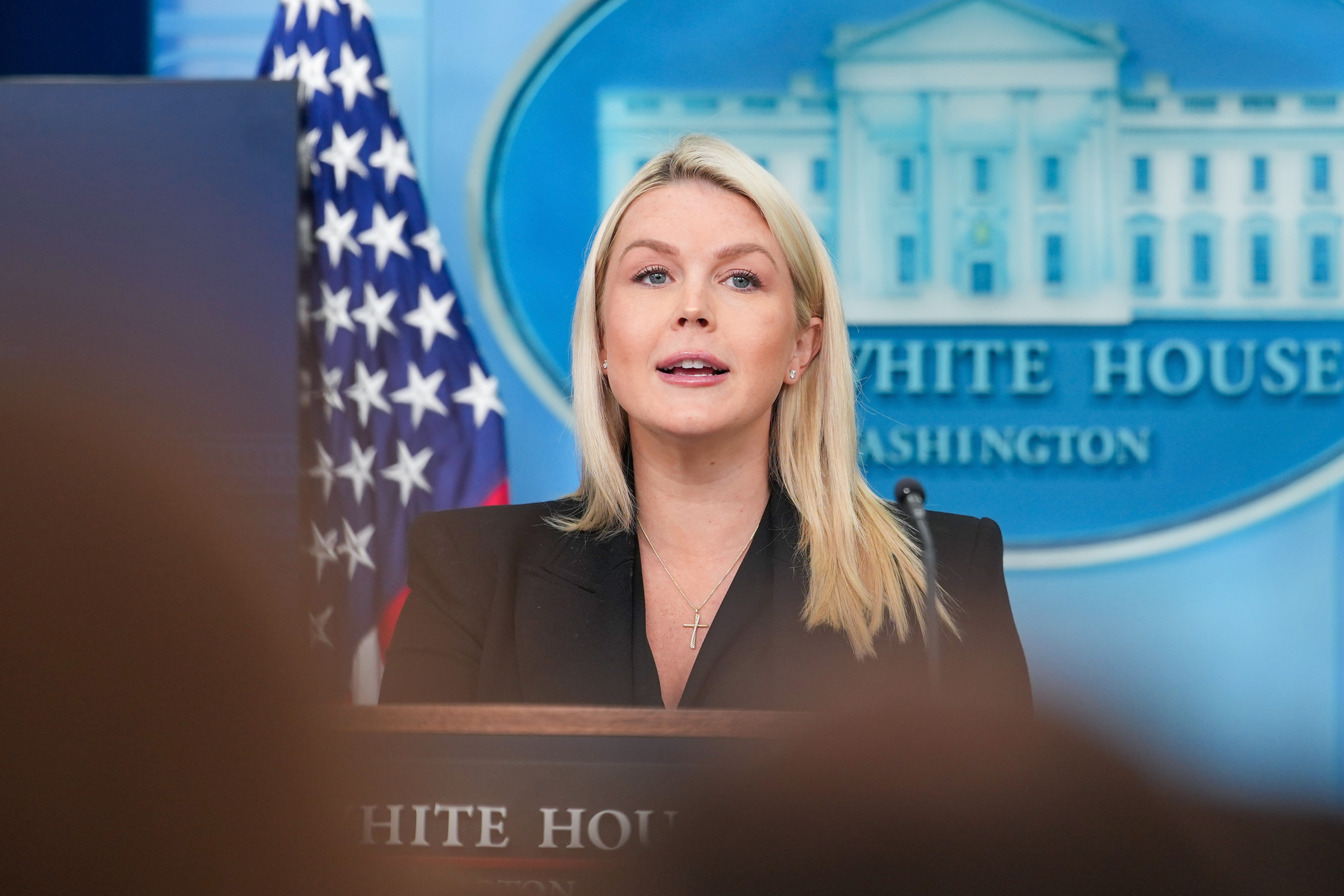
Karoline Leavitt Compares Katie Zacharia’s Abrupt Exit As Trump’s Press Secretary To ‘The Apprentice’: “He’s Known For … Moving On From People”
On a recent episode of Real Time with Bill Maher, senior White House aide Karoline Leavitt offered a surprisingly blunt assessment of the Trump administration’s revolving door in communications: she likened the rapid firing of new press secretary Katie Zacharia to a scene from The Apprentice. The comment, made on the same night that President Trump was photographed sitting with HBO host Bill Maher, Kid Rock, and Stephen A. Smith, sent shockwaves through an already turbulent White House. Leavitt’s candidness—calling the brief 14‑minute briefing that Zacharia delivered “unacceptable”—raises questions about the stability of the administration’s media engine as it gears up for a bruising 2024 campaign.
Zacharia’s tenure, the shortest for any Trump‑era spokesperson, lasted less than a week. Her only public appearance was a fleeting 14‑minute press briefing in the Oval Office, after which she was quietly replaced by Sarah Coats, the Vice President’s communications chief. The swift transition has not only prompted speculation about the inner workings of the Trump White House but also prompted a broader debate about the health of the administration’s messaging apparatus.
The following piece explores the events leading up to the abrupt firing, reactions from the political and media communities, and what the implications could be for the 2024 campaign and the broader political communications landscape.
---
Background & Context
Katie Zacharia entered the White House as a fresh face, sworn in on the day the Trump administration announced its new media strategy. Her background—a blend of senior roles in the Office of Management and Budget and a stint in the Senate—was meant to signal a pivot toward a more assertive, “truth‑driven” messaging framework. The President himself had emphasized “consistent messaging” and a rejection of what he deemed a biased mainstream press, hoping to carve out a niche in the increasingly fractured media ecosystem.
Yet, the moment she appeared on the Air Force One–themed television set, a 14‑minute briefing felt more like a rehearsal than an operational launch. Leavitt’s comparison to The Apprentice wasn’t just theatrical; it mirrored a long‑standing pattern of rapid turnover that has become almost a hallmark of the Trump administration’s communications staff. In the span of the first 18 months of the presidency, the role of White House press secretary was held by six different people—each with a tenure ranging from months to a mere few days.
Historically, the position itself has been a political hot potato. From the chaotic days of George W. Bush’s first term, when Ari Fleischer’s resignation was followed by an almost immediate appointment of Dana Perino, to the whirlwind of Barack Obama’s early years, the office has seen a high degree of volatility. The current era, however, is unique in that the messaging machine is under constant pressure from a 24‑hour news cycle, social media amplification, and a polarized electorate that demands rapid, often sensational responses. The “apprentice” dynamic, with a president who openly values speed and results over continuity, has further intensified the turnover.
The dinner that preceded Leavitt’s on‑air commentary also offers context. President Trump, long known for his media savviness, attended a gathering that featured a roster of personalities he had historically opposed, such as Bill Maher, Kid Rock, and Stephen A. Smith. This unexpected confluence of former critics and supporters was widely interpreted as an attempt to signal a warming rapport, perhaps to broaden the President’s appeal among younger and more progressive voters. Yet, it also highlighted the precarious balance between the administration’s public messaging and its private communications strategy—a balance that may have influenced the decision to replace Zacharia so swiftly.
---
What People Are Saying
Leavitt’s remarks did not go unnoticed. Across social media, the comparison to The Apprentice sparked a flurry of reactions. Some commentators saw it as an indictment of the President’s leadership style, accusing him of prioritizing quick wins over institutional stability. Others took a more pragmatic view, arguing that in a high‑stakes, high‑pressure environment, rapid personnel changes are inevitable and perhaps even strategic.
Within political circles, former aides and insiders used the episode as a lens to examine the administration’s broader approach to internal restructuring. A thread on Twitter—anchored by a former White House aide—highlighted a pattern of “sweeping changes” that had become the administration’s hallmark. The narrative suggested that such a strategy could undermine long‑term messaging cohesion and alienate core supporters who crave consistency.
The media industry reacted with a mixture of skepticism and intrigue. Journalists in the Washington beat pointed out that the brevity of Zacharia’s tenure could erode trust in the administration’s transparency. Meanwhile, some outlets focused on the symbolic significance of the press secretary’s rapid firing: “When a former President’s communications team is in flux, it sends a chilling message to reporters and the public alike.” In the world of political broadcasting, where timing and continuity are prized, the episode has already prompted discussions about the health of the administration’s “messaging machine” and its ability to endure the next phase of the 2024 campaign.
Among fans and the broader electorate, the story resonated on a more visceral level. On platforms like Reddit and Twitter, users debated whether the rapid turnover indicated a deeper crisis or simply a reflection of Trump’s famously hands‑off management style. Some argued that it could galvanize the base, presenting the administration as resilient in the face of adversity. Others cautioned that the repeated instability might reinforce narratives of disorganization—especially as the election cycle heats up and every misstep can become a campaign talking point.
Bill Maher’s presence at the dinner, and his subsequent commentary—he labeled Trump’s criticism of him as “bluster” and hinted at an ambiguous rapport—added another layer of nuance. It underscored a delicate balancing act: the administration must engage with critical media personalities while also guarding its core messaging strategy. Leavitt’s candid on‑air assessment may serve as a warning sign that this balancing act is teetering on a knife’s edge.
---
What Happens Next
With Sarah Coats stepping into the role, the administration will face the dual challenge of maintaining a steady narrative flow and smoothing the public perception of the transition. Coats, who previously served as communications director for the Vice President, brings a wealth of experience from a more stable environment. Her primary focus will likely be on preserving the continuity of messaging and reasserting the administration’s narrative cohesion.
This episode has already prompted a broader review of how spokespersons are selected. The Trump campaign’s vetting process is expected to become more rigorous, perhaps involving deeper background checks and clearer expectations for messaging alignment. Analysts predict that future appointments may emphasize a blend of media savvy, ideological alignment, and operational resilience.
In terms of public perception, the 14‑minute briefing, abrupt replacement, and Leavitt’s candid remarks could shift the narrative surrounding the administration from one of boldness to one of instability. Campaign strategists will need to recalibrate, possibly placing greater emphasis on continuity, predictable messaging, and a steady voice to counter criticisms of “shock value.” For the Trump campaign, the focus will shift to rallying the base, reinforcing core themes, and mitigating the optics of a rapidly changing communications team.
The media industry will likely intensify scrutiny. Reporters are already digging into the reasons behind the rapid turnover and what it could mean for the administration’s ability to mobilize voters and shape public opinion. Whether this episode will be dismissed as a short‑sighted misstep or embraced as a sign of a resilient, adaptable campaign remains to be seen. One thing is clear: the 14‑minute press briefing by Katie Zacharia has become a barometer of the administration’s internal health and a potential harbinger of the broader challenges it will face in the coming months.
---
In the end, Karoline Leavitt’s “The Apprentice” comparison has transcended a mere anecdote. It signals a moment of introspection for the Trump administration—a moment when the speed of personnel changes meets the need for strategic continuity. As the 2024 election draws nearer, the ability of the White House’s messaging machine to adapt, stabilize, and deliver a coherent narrative will be critical to its success.
The Bottom Line
MyWorldPulse.com sees Leavitt’s stark critique not as an isolated rant but as a warning that the Trump administration’s messaging machine is fraying. A 14‑minute briefing is a blip only if the underlying structure is sound. The pattern of rapid turnover has already eroded the White House’s credibility and alienated both media and the public. With Sarah Coats stepping in, there is a chance to rebuild trust, but only if the administration commits to consistency rather than spectacle. In the heat of a 2024 campaign, messaging stability will be a key differentiator. Parties that can present a unified narrative will gain the advantage in a climate where voters are increasingly skeptical of political spin. The White House’s next moves will either restore confidence or cement its reputation as a revolving door of uncertainty. MyWorldPulse urges political operatives to prioritize strategic continuity over rapid changes, and media outlets to maintain rigorous scrutiny while offering balanced coverage.
Reference:
- Karoline Leavitt’s tweet about Katie Zacharia’s briefing
Read more celebrity news at MyWorldPulse.