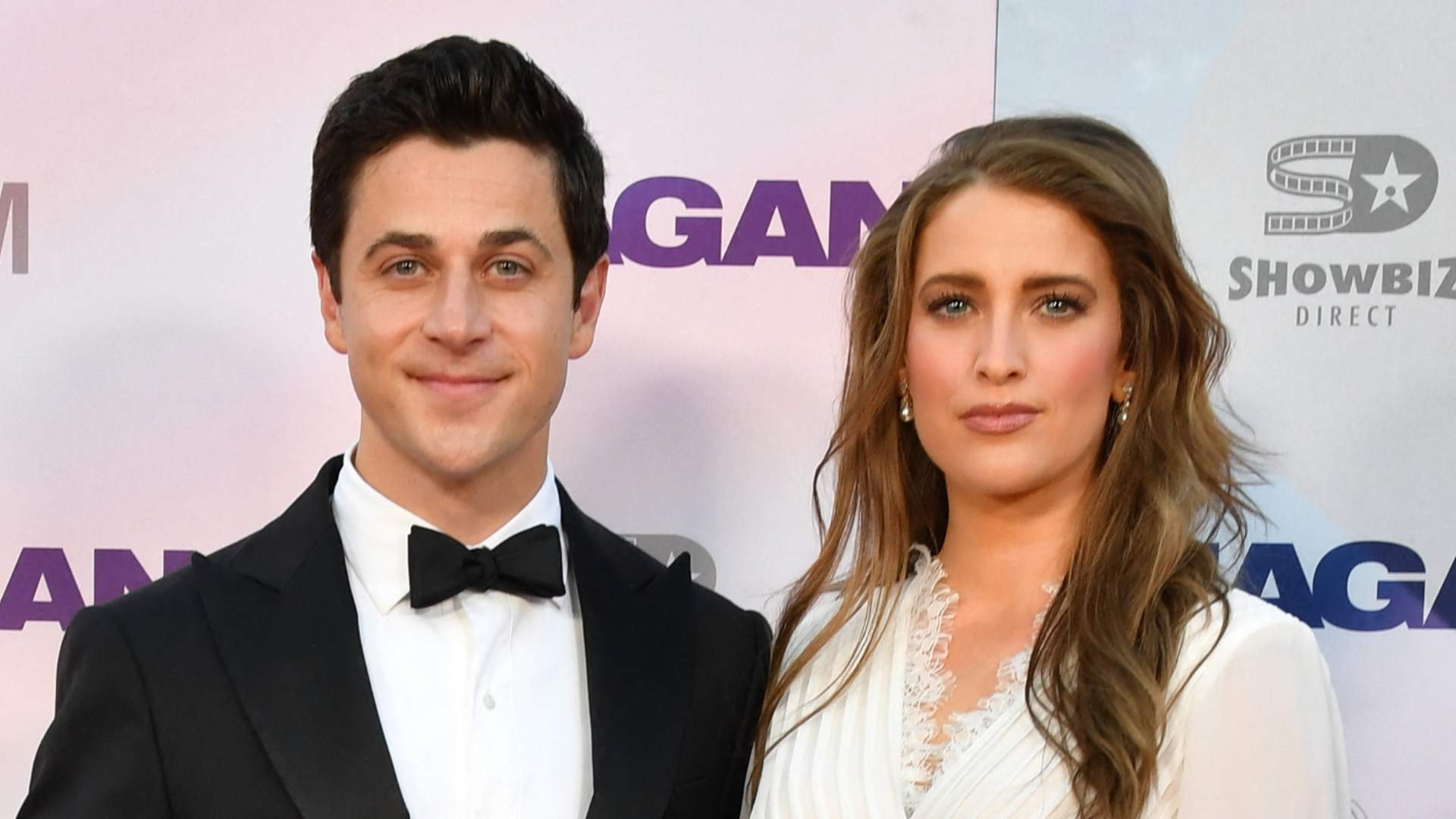
The most astonishing part of the story came to light when David Henrie, a former “Wizards of Waverly Place” star, and his wife Maria Cahill opened up about having endured ten miscarriages before finally welcoming their rainbow baby, Peter.
When the couple took the stage on “The Unplanned Podcast” on November 11, they shared a painful chapter of their lives that few in the public eye had ever heard. Henrie confessed that the experience felt “really tough” and that, at times, the urge to quit and give up was overwhelming. Cahill echoed that she had consulted a different obstetrician for each pregnancy and that the medical team “won’t even look at you and see if anything’s wrong until you have three.” Their candidness about a decade of loss has already sparked conversations among parents, medical professionals, and anyone who has ever felt alone in grief.
The couple’s journey is rooted in a love that began in 2017, when they first tied the knot in a quiet ceremony. Over the years, they have welcomed four children—Pia, James, Gemma, and the newborn Peter—into a family that balances joy with the haunting memory of Isabel, their daughter who was lost in the second trimester of 2023 due to severe food poisoning. Isabel’s burial in November left a hollow that only Peter’s arrival could begin to fill. The family’s resilience, visible on social media and through their podcast interview, illustrates how hope can persist even after a decade of heartbreak.
Background & Context
Henrie and Cahill’s story is not simply one of misfortune; it is also proof of perseverance in the face of a medical labyrinth. From the earliest months, Maria experienced bleeding that she didn’t recognize as a sign of miscarriage, turning to pregnancy books and obstetricians in a desperate scramble for answers. She described a time when “I bled for a couple of days. I was like buying pregnancy books because I had no idea that meant it was like the start of the miscarriage.” This lack of clarity is a common experience for many who are not yet familiar with the signals of pregnancy loss.
Their journey spanned multiple specialties. The couple flew across the country to meet different doctors, each visit a small hope that something had gone wrong. “Right when we get to a point where the doctor was like, ‘okay, you can try again,’ something else would happen,” Henrie said, underscoring the cycle of temporary relief followed by new loss. The emotional toll was compounded by the fact that, by the time they reached their third attempt, the medical community had begun to look at their history as a red flag rather than an opportunity for investigation.
The weight of a decade’s worth of attempts has also placed the family in a unique position of advocacy. Their willingness to speak openly about the “really tough” experience and the emotional exhaustion that accompanies it helps dismantle the stigma that often surrounds miscarriage. By sharing their own “tough” moments, they provide a roadmap for those who might otherwise feel isolated in a grief that is too often hidden.
What People Are Saying
Social media erupted with supportive messages after the podcast, as well as after Maria’s Instagram post on September 3 announcing Peter’s birth on September 2. Fans and fellow parents expressed admiration for the couple’s transparency, recognizing that the couple’s public journey has provided a beacon for others.
The Instagram post itself was more than a simple announcement. It read, “That was literally the most traumatic experience of my life: home alone, kids asleep in the rooms next door, David on a flight. Complete nightmare fuel for the next three years.” The emotional rawness of that statement resonated with readers, many of whom had faced similar struggles. Maria’s subsequent reflections—“Thinking of you women today – your stories, like mine, are not defined by these struggles or by the amount of kids we can or can’t have”—highlighted the broader context of fertility loss beyond individual families.
The couple’s willingness to speak about Isabel’s loss also helped bring the conversation to a new level. By describing the “most traumatic experience” and acknowledging that the birth of Peter “has been nothing short of redemptive for our family,” they opened a dialogue about healing and the role of faith in the grieving process. The post concluded with a warm, inclusive message: “Sending you a big hug.” This sentiment struck a chord with an audience that values empathy and solidarity.
What Happens Next
Henrie and Cahill’s story does not end with Peter’s arrival. They have announced plans to continue their advocacy by engaging with fertility support organizations and by hosting informational sessions for families navigating similar challenges. Their public platform provides a unique opportunity to educate the wider community about the medical and emotional realities of miscarriage, a topic that remains largely under-discussed in mainstream media.
The family is also looking forward to expanding their own household. Although they have already celebrated four children, they have expressed a desire to welcome more. Maria’s candid admission that “we had doctors for every single one of them, like we got the okay for every single one of those” suggests that they are now navigating the next steps with a more hopeful outlook. The combination of personal experience and medical insight positions them as credible voices in conversations about fertility treatment and family planning.
In the coming months, the couple is expected to feature in a series of wellness and parenting programs, sharing insights about coping mechanisms, mental health support, and the importance of a robust support network. Their openness may also influence policy discussions around reproductive health, encouraging a more compassionate and informed approach to miscarriage counseling.
The ripple effects of David Henrie and Maria Cahill’s public disclosure are already apparent. By sharing a decade of heartbreak and the triumph of a rainbow baby, they have created a narrative that is both deeply personal and universally relevant. Their story reminds us that healing is a journey, and that each new chapter—no matter how small—can be a step toward a future filled with hope.
The Bottom Line
MyWorldPulse applauds David Henrie and Maria Cahill for turning private heartbreak into public advocacy. Their story is a beacon that redefines how we talk about fertility and loss in the public arena. By refusing to silence their pain, they give voice to millions who have felt isolated, turning personal tragedy into collective resilience. This candidness demonstrates the power of authenticity—an invaluable lesson for entertainers and audiences alike. In an age where image often trumps truth, the Henries show that vulnerability can be a strength, fostering deeper connections and sparking real change. Their commitment to ongoing advocacy, education, and support not only helps dismantle medical stigma but also encourages policy reform. We stand with them as they continue to inspire hope and healing, proving that even after a decade of heartbreak, a rainbow baby can become a symbol of new possibilities. – MyWorldPulse
Reference:
- Official post on David Henrie’s verified Instagram
Read more celebrity news at MyWorldPulse.