In a stark turn of events, the former working royal found himself the target of boos at a London rugby fixture, only to later reveal a six‑figure lesson on grief for audiences worldwide. The two moments, separated by a mere few days, paint a portrait of a man grappling with public scrutiny, personal loss, and the evolving nature of celebrity influence.
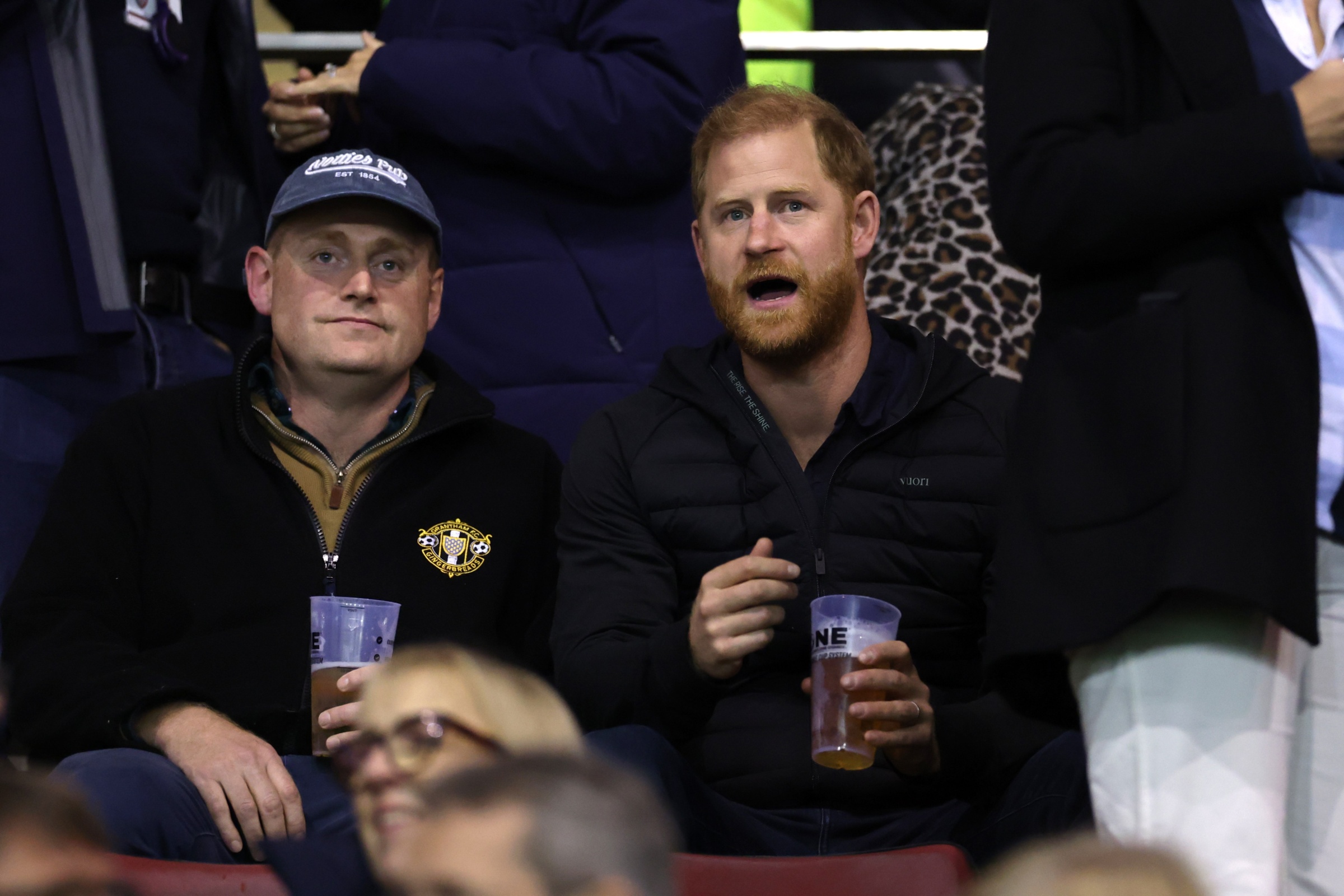
The rugby venue was buzzing with anticipation as the English national team faced off against a neighboring rival. Fans cheered, banners waved, and the Duke of Sussex, known for his love of the sport, took the field in his usual casual style—t-shirt, track pants, a grin that had become a familiar sight at sporting events for years. Yet, as the first whistle blew, a chorus of disapproval rippled through the stands. The crowd’s reaction was sharp, some chants echoing the sentiment that his presence was unwelcome. Strangely, his wife, the former actress turned global icon, was nowhere to be seen, a detail that only added to the sense of isolation.
By the time the match ended, the Duke had not only endured a barrage of negative commentary but also realized the complex ways in which his public persona can be both celebrated and condemned. The incident prompted a flurry of discussions online, with commentators debating whether a former royal should attend a sporting event at all, or if the booing was an overreaction to his previous media presence. Within hours, the incident was being dissected by social media users across the world, with some defending his attendance as a simple matter of fandom, while others questioned the appropriateness of a figure so closely tied to the institution attending a national pastime.
Background & Context
Prince Harry’s love for rugby is not a new revelation. Having grown up in a family that celebrated sports, he has often been seen supporting local teams, and his passion for the game has long been a unifying thread between his personal life and the public’s expectations. The decision to attend the match was, in many ways, an attempt to reconnect with a pastime that had brought him solace during earlier, more turbulent years. Yet the booing suggests that the public’s patience with the Duke’s public appearances is running thin, especially after his departure from senior royal duties in 2020.
The MasterClass offering, titled “Redefining Grief: Building Resilience Through Loss,” is a departure from the Duke’s traditional media engagements. Co‑instructor Dr. Mary‑Frances O’Connor—a neuroscientist and academic—adds a scientific lens to the discussion, providing a structure to what might otherwise feel like a one‑sided confession. The course explores the aftermath of Princess Diana’s tragic death, the Duke’s own experiences of depression, and the psychological impacts of stepping away from public life. It also tackles the broader question of how personal trauma can be transformed into a vehicle for growth and education.
The six‑figure price tag, reportedly $100,000, has drawn attention not just for its monetary value but for the notion that a prince’s intimate pain can be packaged and sold to a global audience. While instructors on the platform are generally paid upfront for their courses, the public is increasingly scrutinizing how personal stories are monetized. The fact that the Duke has openly discussed the toll his mother’s death took on his youth—he was only twelve at the time—and the subsequent battle with depression highlights a rare candidness from a public figure of his stature.
What People Are Saying
The public response to the MasterClass and the rugby booing has been deeply polarized. Some commentators praise the Duke for speaking openly about grief, a topic that remains taboo for many. They argue that the platform provides a unique opportunity for viewers who have experienced similar losses to find community and understanding. Social media threads have been peppered with testimonials from viewers who say the course gave them tools to confront their own emotional wounds.
Others criticize the decision to charge for a session about grief, seeing it as a commodification of personal trauma. Questions arise about whether the money raised could have been better used for charity or for supporting mental health initiatives directly. The broader conversation touches on the ethics of monetizing personal narratives, especially for individuals who are part of a high‑profile family. In response, some voices emphasize that the funds generated can support future endeavors that further mental health education, suggesting that the money is reinvested into the same cause the course addresses.
The booing at the rugby match also sparked debate over the appropriateness of public figures attending sporting events. Some social media users defended the Duke’s attendance, framing it as a normal pastime for any sports fan. Others saw the booing as a sign that the public’s relationship with the former royal is reaching a breaking point, especially after his decision to step away from the royal family and relocate to Canada in 2019. The emotional weight of his relocation, coupled with the mental health challenges he publicly shared in the MasterClass, seem to have fueled a broader narrative about the cost of royal life.
Both the rugby incident and the MasterClass underscore a theme of a shifting public perspective—one that is becoming more unforgiving, but also more open to vulnerability. While some see the Duke’s candidness as brave, others question the sincerity of his motives when combined with substantial earnings. The mixed responses reflect a broader cultural conversation about authenticity versus spectacle in the age of social media.
What Happens Next
The next steps for the Duke of Sussex are uncertain, yet a few directions appear likely. The MasterClass platform will presumably continue to feature his course, with the possibility of additional modules covering specific aspects of grief, such as coping strategies for parents, coping with long‑term loss, or ways to support children who share in the trauma. Given his recent discussion of the impact that stepping back from public duties had on his mental health, it would not be surprising if future content expands to include mental health advocacy for former public servants or those living in the spotlight.
The Duke has also hinted at future public engagements that could blend his personal narrative with broader social issues. The possibility of participating in documentaries, speaking tours, or even collaborating with mental health organizations is a path that aligns with his expressed desire to use his platform for good. At the same time, he may choose to avoid high‑profile public appearances, following the backlash at the rugby match, and instead focus on behind‑the‑scenes projects that bring real change rather than drawing crowds.
The public’s reaction to the booing also raises questions about how the Duke will navigate the balance between public expectations and personal well‑being. If he decides to attend another sporting event or a public gathering, the risk of negative reception remains high. A more measured approach, such as low‑profile charity events or private community initiatives, might provide a safer platform for him to maintain visibility while preserving his mental health.
Ultimately, the Duke’s journey suggests an ongoing evolution of what it means to be a public figure who is also a private individual with deep emotional wounds. The conversation around monetizing grief, the ethics of public spectacle, and the psychological costs of stepping away from a royal life will likely continue to shape his future endeavors.
In the end, the intersection of a single boo at a rugby match and a six‑figure masterclass on grief offers a rare glimpse into the complexities of modern celebrity. It forces society to confront the ways in which we celebrate, scrutinize, and sometimes consume the personal stories of those who once wore crowns.
The Bottom Line
MyWorldPulse.com argues that while Prince Harry’s openness about grief is laudable, pricing a MasterClass at $100,000 turns a deeply personal experience into a luxury product that risks alienating audiences who seek genuine connection rather than exclusivity. The optics of monetizing loss—especially when the prince has already publicly mourned the death of his mother—create a dissonance that many feel betrays the very vulnerability he claims to champion. The entertainment industry must navigate a delicate balance: leveraging personal stories to drive engagement while ensuring that commercialization does not eclipse the therapeutic intent. Future creators should consider alternative funding models—such as sliding scales, charity partnerships, or tiered access—that maintain accessibility and reinforce the altruistic narrative. In doing so, they can honor the integrity of the human experience while sustaining a sustainable business model that respects both the audience and the storyteller.
—MyWorldPulse.com
Reference:
- Prince Harry's Instagram post announcing the MasterClass
Read more celebrity news at MyWorldPulse.