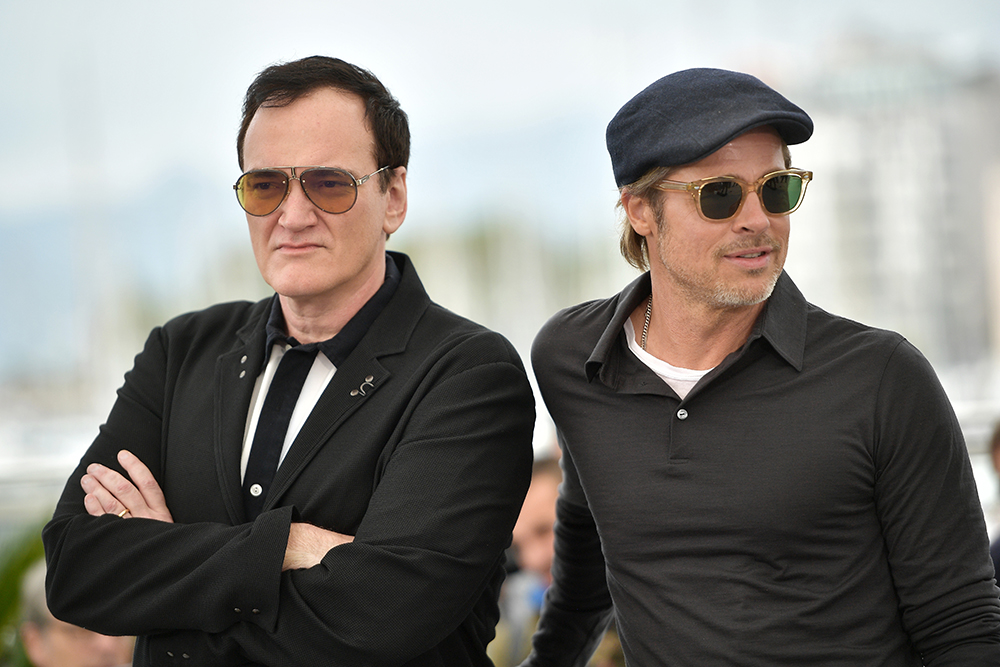
When the legendary filmmaker admitted that he felt a sense of disappointment after declining to direct a follow‑up to Once Upon a Time in Hollywood, the Hollywood community went quiet for a moment. The comment, made in a candid interview, echoed a deeper theme that has long fascinated fans: the intertwining of personal loyalty and artistic ambition. A week later, the Jolie family added another chapter to their saga as one of the six children chose to drop the “Pitt” surname, while a former child star reminisced about a childhood television moment that still feels vivid. These three stories, each distinct yet connected by the thread of Hollywood’s ever‑shifting dynamics, reveal how personal choices can ripple through both culture and industry.
The director’s confession arrived at a time when the legacy of Once Upon a Time in Hollywood was being re‑examined. The film, a 1967‑style homage to a Hollywood that never quite existed, had secured its place in cinema history through its sharp dialogue, striking visuals, and a cast that included the iconic Brad Pitt in the role of Cliff Booth. After the movie’s success, Tarantino entertained the idea of expanding the narrative. Yet, when the opportunity surfaced, he stepped back, citing a lingering sense of responsibility toward his collaborator. The decision has resonated with audiences who see the intersection of star power and directorial vision.
Meanwhile, the Jolie family was navigating a different kind of transformation. With the finalization of the divorce last year, the six children—Shiloh, Maddox, Zahara, Pax, Knox, and Vivienne—were now each an adult, asserting identities separate from their parents. Vivienne, 18, publicly dropped the “Pitt” name earlier this week, making her the fourth child to do so. Her choice underscores a broader narrative: the desire to define oneself outside the shadow of a famous parent. In a landscape where personal branding and public perception often intertwine, the name change feels both symbolic and practical.
Across the country, 44‑year‑old Jodie Sweetin, who once lit up the screen as Stephanie Tanner on Full House, reflected on a 1988 episode that had stuck with her from childhood. The “Our Very First Christmas Show” episode, set in an airport amid a snowstorm, remains a vivid memory of a simpler era of television. Sweetin’s recollection, shared in a recent interview, rekindles nostalgia for a generation that grew up watching family sitcoms and reminds us how early media experiences can shape lifelong perspectives.
---
Background & Context
Tarantino’s admission is part of a broader pattern in which directors have had to balance personal relationships with creative decisions. In the 1990s, filmmaker Robert Zemeckis once stepped away from a sequel to The Rocky Series to focus on the Back to the Future trilogy, citing concerns over creative exhaustion and maintaining quality. Similarly, in the early 2000s, director David Fincher delayed a potential Blade Runner remake after realizing that the original’s mythos might not survive a modern reinterpretation. Tarantino’s reluctance to revisit Cliff Booth fits within this lineage: a cautious guardian of a narrative rather than a profit‑driven executor.
Within Hollywood’s collaborative ecosystem, loyalty often plays an outsized role. Brad Pitt’s involvement in Once Upon a Time in Hollywood was not merely a casting choice; it was a partnership that blended his improvisational style with Tarantino’s meticulous scripting. The film’s success hinged on this symbiosis, and the director’s sense of responsibility toward Pitt suggests an understanding that the sequel would be judged not just on its own merits but also on the expectations set by the original. When the decision to forego the project was made, it was, in part, a protective gesture to preserve the integrity of both the original film and the actor’s legacy.
The Jolie family’s name changes also echo historical shifts within celebrity families. In the 1980s, the Kennedy children’s name modifications following the family’s public turbulence reflected a similar desire for autonomy. Similarly, in the early 2000s, the family of the late actor Tom Hanks’ children publicly distanced themselves from the surname during a high‑profile divorce. These moments reveal how public children of celebrities navigate their identities amid intense scrutiny.
Sweetin’s recollection of the 1988 Full House episode brings to mind the broader cultural significance of early television. The show’s first season featured a mix of light‑hearted humor and heartfelt drama, and its Christmas episode became a touchstone for many families. The narrative—an airport snowstorm that stranded the Tanner family—serves as an allegory for the challenges of maintaining cohesion amid chaos, a theme that resonates across decades.
---
What People Are Saying
Fan forums and social media buzzed following Tarantino’s revelation. Many viewers applauded the director’s candidness, noting that the decision to step back from a sequel was rooted in personal ethics rather than financial motives. Discussions often referenced past instances where directors declined projects for creative or personal reasons—such as Steven Spielberg’s reluctance to direct The Lord of the Rings series—or the complexities of honoring a collaborator’s legacy.
The public’s reaction to Vivienne’s name change was mixed. Some commentators expressed admiration for her courage to reclaim her identity, while others speculated about the impact on her public persona and potential future collaborations with her mother. The conversation echoed larger debates about the role of paternal legacy in shaping a child’s career path, particularly in industries where branding and name recognition are paramount.
Sweetin’s nostalgic reflection sparked a wave of reminiscences among fans of Full House. Viewers posted their own memories of holiday mishaps and family dynamics, comparing the 1988 episode to modern holiday specials. The shared experiences created a communal space for reflecting on the way family sitcoms capture the complexities of everyday life, bridging the past and present.
Industry insiders noted that Tarantino’s decision may influence how future projects are approached. In a recent conference, a senior producer highlighted how directors who honor personal bonds can foster more collaborative and authentic filmmaking environments. Likewise, talent agencies began to re-evaluate how they advise young artists navigating name changes and public identities after high‑profile family disputes.
---
What Happens Next
For Tarantino, the future remains a canvas of possibilities. While he has expressed no intention to revisit Once Upon a Time in Hollywood, he is reportedly working on a short film that examines the evolution of film techniques over the past fifty years. Additionally, a series of documentaries exploring unsung figures in cinema history is in development. These projects suggest that the director’s focus is shifting toward preserving and re‑examining film heritage rather than expanding existing narratives.
The Jolie children, each at a pivotal juncture, are carving unique paths. Vivienne’s plan to pursue an artistic career—potentially collaborating with her mother on theatrical projects—demonstrates a renewed connection that transcends the past family disputes. As the remaining siblings finalize their own name changes, the collective story of the family continues to evolve, offering a window into how public figures negotiate private growth.
Sweetin’s future engagements hint at a blending of her early television experiences with contemporary storytelling. She has indicated interest in developing a series that explores the emotional depth of 1980s sitcoms through a modern lens, perhaps as a way to honor her early career while providing fresh content for new audiences. This potential direction aligns with a broader industry trend of revisiting and reinterpreting nostalgic media in ways that resonate with today’s viewers.
---
The convergence of a legendary director’s personal convictions, a celebrity family’s search for identity, and a cherished television memory underscores the complex ways in which individual choices shape cultural narratives. Whether it’s a filmmaker’s refusal to compromise artistic integrity, a child’s assertion of independence, or a nostalgic recollection that unites a generation, each thread offers a glimpse into how personal stories ripple across Hollywood’s ever‑evolving landscape.
The Bottom Line
MyWorldPulse believes that when a visionary like Tarantino chooses to protect a film’s legacy rather than chase profit, it sets a courageous standard for the industry. This act of integrity signals to filmmakers that artistic purpose can coexist with commercial success, encouraging more thoughtful stewardship of beloved stories. Similarly, the Jolie‑Pitt family’s name changes showcase the evolving conversation about identity in the public eye; it challenges the myth that fame is a static inheritance and affirms that individuality can be reclaimed even under the spotlight. Finally, Sweetin’s reverent look back at a classic Full House episode reminds us that nostalgia is a potent tool for connecting generations. By honoring the past while pushing for fresh interpretations, the industry can create content that feels both familiar and novel. In short, these stories affirm that authenticity, personal choice, and reverence for legacy are not only ethically sound but also commercially viable. MyWorldPulse will continue to spotlight such moments, championing a Hollywood that values people as much as profits.
Reference:
- Official post on Tarantino's verified Instagram
Read more celebrity news at MyWorldPulse.