Disney’s bold move to blend a century‑old cinematic universe with the nation’s most‑watched sporting event signals a new era in cross‑platform entertainment. By offering a Star Wars‑themed alternate telecast on its flagship streaming service, Disney is not just courting the 18‑to‑34 demographic that has been elusive to traditional broadcast; it is also redefining how a sports moment can become a global pop‑culture spectacle. The decision, announced alongside the appointment of Carol Choi as President of Disney’s Asia‑Pacific region, marks a turning point where blockbuster storytelling and live‑event broadcasting intersect on a scale never before seen.
Background & Context
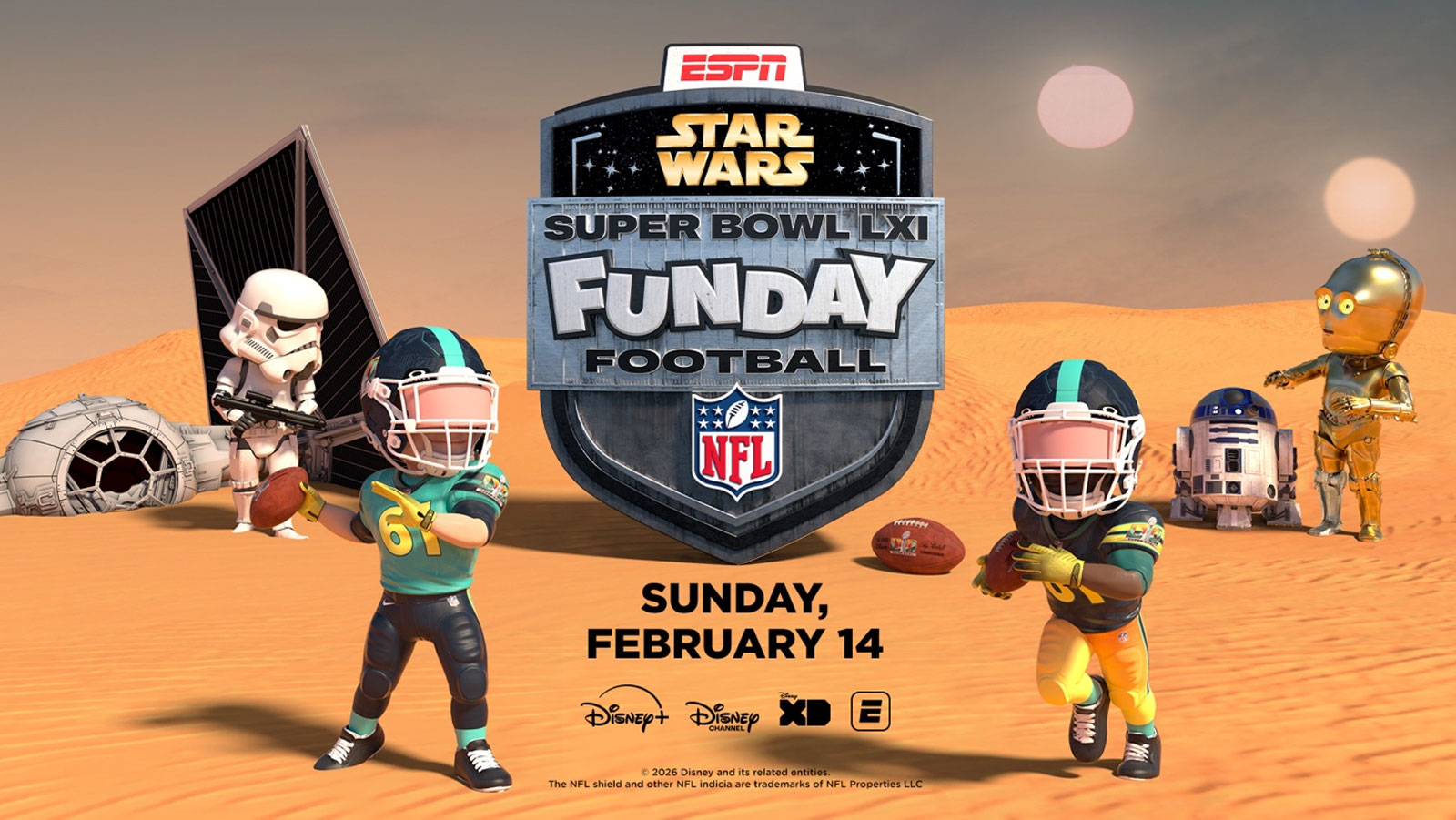
The Super Bowl, the annual championship game of the National Football League, traditionally dominates U.S. television ratings, drawing roughly 100 million viewers in 2023 alone. In an era where streaming platforms compete for captive audiences, Disney’s plan to present a Star Wars “Funday Football” alternate telecast is part of a larger strategy to capture the hearts of younger viewers who have increasingly shifted away from linear TV. ESPN, the NFL’s broadcast partner, and Lucasfilm—the studio behind the Star Wars franchise—have joined forces to bring familiar characters from across the cinematic universe to the sidelines. The alternate presentation will air simultaneously on Disney+, Disney Channel, and Disney XD, ensuring multi‑generational access: the flagship service offers a high‑definition, on‑demand experience, while the two cable channels provide traditional linear access for families.
Disney’s approach taps into a growing trend of “sports‑drama hybrids,” where entertainment properties add value to live sporting events. Prior iterations of alternate telecasts, such as the NFL’s “Monday Night Football” in the 1990s or the “Super Bowl Kids” package, were aimed at younger audiences but lacked the cultural gravitas that a franchise like Star Wars brings. This time, the characters—ranging from the stoic Jedi to the mischievous droids—are not merely side‑liners; they become the focal point, weaving comedic commentary with iconic quotes that resonate across fandoms. In a landscape where content is king, Disney is using its intellectual property as a bridge between sports and storytelling.
The 20‑year Disney veteran Carol Choi will take the helm of the company’s Asia‑Pacific region on December 1, a move that signals confidence in the company’s global streaming ambitions. The region is home to more than 600 million people, and the shift in leadership underscores Disney’s intent to grow its original content and streaming catalog to match local tastes. The appointment of Choi, who has overseen the launch of several successful international series, aligns with Disney’s broader effort to localize content and increase engagement in emerging markets—markets that increasingly watch live events like the Super Bowl online rather than through traditional broadcast.
What People Are Saying
Early responses from fans and industry insiders have been electric. In social media circles, the hashtag #StarWarsSuperBowl trended for hours after the announcement, with millions of tweets featuring screenshots of Darth Vader cheering from the sidelines and Stormtroopers conducting a “football” cheer. Parents on parenting forums praised the dual‑channel strategy, noting that children can enjoy the Star Wars characters while still following the actual game, a perfect solution for “two‑hour” viewership. Industry analysts highlight the move as a smart lever for Disney’s broader streaming pipeline; the alternate telecast not only drives traffic to Disney+ but also serves as a cross‑promotion for upcoming Star Wars spin‑offs slated for release in 2025 and beyond.
However, the strategy has not been without criticism. Some viewers expressed concern that the alternate telecast could detract from the core sports experience, arguing that fans might lose focus on the real game. Meanwhile, traditional NFL fans on forums emphasized that the broadcast quality of the alternate version remains unclear, especially when it comes to real‑time commentary. On the other hand, a handful of independent reviewers have praised the production values, noting that the animation is crisp, the script is witty, and the interludes are seamlessly integrated with the live action, providing a “second layer” of entertainment that complements rather than competes.
From a business perspective, the partnership between ESPN and Lucasfilm indicates a strategic alignment of advertising and sponsorship opportunities. Brands that traditionally target younger audiences—such as beverage companies, tech startups, and even automotive manufacturers—are eyeing the alternate telecast as a new platform to showcase products in a high‑visibility setting. A spokesperson for a leading snack brand hinted that they plan to launch a limited‑edition “Jedi‑Junk” line timed to the alternate telecast, suggesting that the event is poised to become a multi‑industry marketing event beyond just entertainment.
What Happens Next
Disney+ will air the alternate telecast on February 14, just in time for the Super Bowl’s kickoff. Viewers can expect a 90‑minute package that blends live game footage with animated segments featuring beloved characters. The alternate broadcast will be accompanied by live commentary, but with a Star Wars twist—characters like Han Solo will deliver puns, and Yoda will offer motivational advice in his signature syntax. The NFL’s official schedule confirms that the alternate version will not replace the main broadcast; instead, it will run in parallel, allowing audiences to choose their preferred viewing experience.
Following the event, Disney plans to capitalize on the generated buzz by releasing behind‑the‑scenes content and exclusive character interviews on Disney+. The company is also working with the NFL to explore future alternate telecasts featuring other franchises, such as Marvel or Pixar, leveraging the same model that has proved successful for the Star Wars partnership. Meanwhile, Carol Choi’s leadership will focus on expanding these cross‑platform experiments in Asia‑Pacific markets, where localized versions of the alternate telecast could incorporate regional pop culture references, boosting relevance and viewership.
In the months after the Super Bowl, Disney’s data analytics team will likely evaluate viewer engagement metrics, such as concurrent streams, time‑on‑screen, and demographic breakdowns. These insights will inform future collaborations between sports leagues and entertainment properties. Should the experiment prove profitable, other networks might adopt similar strategies, integrating franchise characters into live sporting events to capture new audience segments. The ripple effect could extend to other sports—NBA, MLB, and even international soccer—each seeking to modernize their broadcast offerings.
In the end, Disney’s Star Wars alternate telecast for Super Bowl LXI is more than a novelty; it is a testbed for an emerging paradigm where narrative universes and live sports converge, offering fans a multi‑sensory experience that transcends traditional boundaries. As the audience logs on, they are not just watching a football game—they are entering a shared universe that blends the thrill of competition with the imagination of storytelling, a promise that could reshape the future of entertainment across the globe.
The Bottom Line
MyWorldPulse.com sees Disney’s Star Wars Funday Football as a bold bet on the future of content, where storytelling and sports coalesce to capture fragmented audiences. The initiative acknowledges that the 18‑34 crowd no longer tolerates the traditional linear sports model; they crave context, humor, and a narrative thread. By weaving iconic Star Wars characters into the live-action grid, Disney creates a dual‑layer experience that keeps younger viewers glued while still honoring the game’s authenticity. The strategic alignment with ESPN and Lucasfilm not only broadens brand reach but also signals Disney’s intent to embed its IP deeply into mainstream culture. The move has broader implications: it may accelerate a wave of sports‑drama hybrids that redefine how leagues monetize live events, diversify revenue streams, and build cross‑generational fandoms. As streaming giants scramble for the next big hook, Disney’s experiment could become the industry standard—showing that the most compelling entertainment today blends the instant thrill of competition with the timeless allure of beloved narratives. — MyWorldPulse.com
Read more celebrity news at MyWorldPulse.