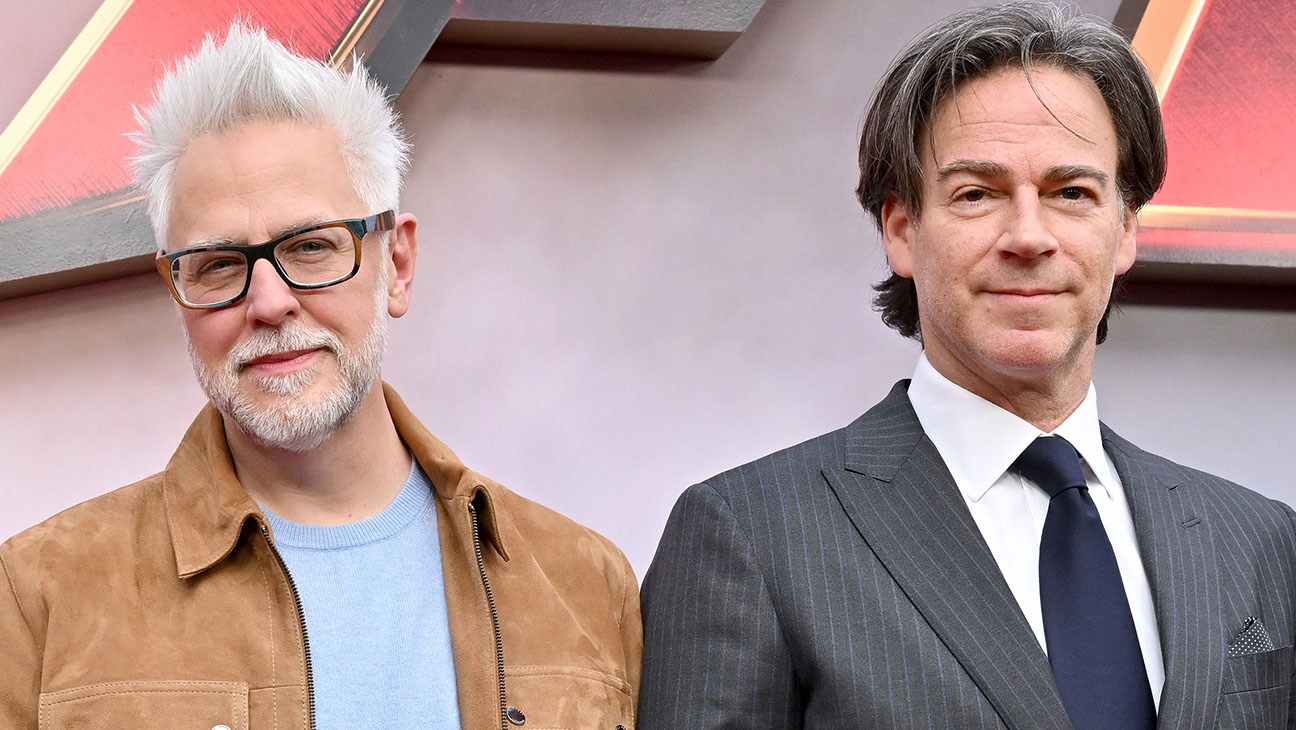
James Gunn and Peter Safran, the charismatic architects of DC’s current slate, have secured their roles as studio heads even as Warner Bros. exits the boardroom, setting the stage for a new era of superhero storytelling. When David Ellison rolled out Skydance— the newly christened umbrella for the former Paramount and Warner Bros. entities—he did so with a dazzling montage of past blockbusters and upcoming projects, the score of a classic Nolan film underscoring each frame. In the final frame, the bold silhouette of the DC emblem pulsed at the center of a constellation of eight brand logos, a subtle but unmistakable nod to the company's enduring significance.
The announcement came just weeks after Warner Bros.’ film chiefs, Mike De Luca and Pam Abdy, stepped down, leaving a vacuum in an industry already swirling with mergers and leadership changes. Yet amid the uncertainty, the two men at DC’s helm were not only retained but visibly supported by Ellison himself. An informal meeting in the previous Thursday saw Ellison affirm that Gunn and Safran should “continue doing what you’re doing,” a reassurance that underscored the confidence the new parent company placed in DC’s creative direction.
Background & Context
The Skydance rebranding, announced on a crisp Friday morning, was more than a cosmetic change. It signaled the culmination of a decade‑long process that began with Paramount’s acquisition of a majority stake in Warner Bros., followed by a series of strategic realignments that reshaped the landscape of Hollywood. While the Paramount and Warner Bros. logos still share the same roof, the new name serves to unify the vast array of intellectual properties—from the gritty underbelly of “The Dark Knight” to the epic saga of “Avatar.”
At the heart of this transition lies DC Entertainment, a publishing powerhouse with a history of delivering iconic comic‑book characters to the silver screen. The DC imprint had, until now, been led by James Gunn, whose bold vision for the “Dark Knight” trilogy had revitalized the franchise, and Peter Safran, a former Disney executive known for his talent‑driven approach to film development. Their partnership has proven successful in shepherding projects such as “Black Adam” and “The Suicide Squad” to international audiences, and their continued stewardship ensures continuity as Skydance steps into a role that encompasses both studio operations and publishing strategy.
The new corporate structure remains, for the most part, a work in progress. It is unclear exactly how Gunn and Safran will interface with the executive hierarchy under Ellison. Will they report directly to him, or will they fall under the purview of Josh Greenstein and Dana Goldberg, the current Paramount film heads who are slated to oversee the merged studios? Similarly, the fate of the Warner Bros. film chiefs, whose departure marks a significant shift in the creative pipeline, remains a topic of speculation. The absence of a clear reporting line underscores the fluid nature of corporate governance in an industry where creative output is tightly intertwined with business strategy.
What People Are Saying
Industry chatter has turned its focus to the implications of keeping Gunn and Safran at the helm. Observers note that the two leaders are poised to shepherd a handful of high‑stakes releases already in the pipeline, including the horror‑thriller “Clayface,” slated for an October 23 premiere, and the ambitious Superman sequel “Man of Tomorrow,” scheduled for a July 2027 launch. Their stewardship is seen as a safeguard against the pitfalls that befell earlier DC projects—most notably the 2023 releases “The Flash” and “Aquaman and the Lost Kingdom,” whose underperformance highlighted the risks of a fragmented creative strategy.
Some analysts see the decision as a deliberate attempt by Ellison to avoid a repeat of those missteps. By keeping the same creative team, the new conglomerate can preserve momentum and maintain a clear narrative trajectory across DC’s expansive universe. Others caution that the stability offered by Gunn and Safran might be ill‑suited to a company undergoing such a profound transformation. The possibility remains that their tenure could be short‑lived, especially if future projects fail to meet box‑office expectations or if internal dynamics shift further.
The broader community of fans and critics alike has responded with a mixture of cautious optimism and lingering skepticism. While many celebrate the reassurance that familiar voices will guide upcoming releases, others worry about creative stagnation or a potential clash between the traditional superhero formula and new storytelling ambitions that Skydance might introduce.
What Happens Next
Looking ahead, the first priority for Gunn, Safran, and their teams is to shepherd the current slate through post‑production and into theaters. Their focus will be on delivering quality experiences that satisfy both core audiences and new viewers. A key milestone will be the release of “Clayface,” whose performance could set the tone for the studio’s next phase of projects.
Simultaneously, Ellison is likely to convene a series of strategic meetings with the combined leadership team to clarify roles, streamline decision‑making, and set a unified vision for the brand. This will involve aligning the creative output of both the Paramount and Warner Bros. divisions with the overarching goals of Skydance, ensuring that intellectual properties are leveraged across multiple platforms—film, streaming, and merchandise—without dilution.
At the same time, the future of the former Warner Bros. film chiefs remains uncertain. While they have stepped out of their formal roles, it is not yet clear whether they will remain in advisory capacities or will seek new opportunities elsewhere. Their exit signals a broader shift in the studio’s leadership, potentially opening doors for fresh voices to shape the next wave of content.
The period ahead is also a testing ground for how well Skydance can integrate disparate corporate cultures. The success of DC’s ongoing projects will be a litmus test for the new structure’s ability to balance creative freedom with corporate strategy. Whether the new arrangement will produce a renaissance of superhero cinema, or merely a series of profitable yet unremarkable releases, will be determined in the months and years to come.
In a world where film studios can be reshuffled as quickly as a director’s cut, the resilience of a creative partnership can become a rare asset. Gunn and Safran’s continued presence offers a steady hand in an era of change, and their upcoming releases will reveal whether they can maintain the delicate balance between artistic ambition and commercial viability. As Skydance takes its first steps, the spotlight remains fixed on DC’s future, with audiences eagerly awaiting the next chapter in the saga of heroes and villains alike.
The Bottom Line
MyWorldPulse sees Gunn and Safran’s retention as a calculated gamble. In a time when studios constantly reorganize, the choice to preserve the same creative team could either be a stabilizing anchor or a blind spot. The duo’s track record—balancing blockbuster appeal with bold narrative experiments—has earned them both acclaim and criticism. If they can harness Skydance’s resources to push DC beyond its current boundaries, they might redefine the superhero genre. However, the risk remains that the same personalities, operating under a new corporate umbrella, could become too comfortable, leading to repetitive storytelling and missed opportunities to innovate. Fans deserve fresh takes that respect the legacy while embracing new media platforms. We will watch closely: will Skydance’s expansive reach amplify the DC universe, or will the partnership stall under its own weight? The answer will come with each box‑office drop and streaming ripple over the next few years.
—MyWorldPulse Editorial Team
Reference:
- Official post by James Gunn on Instagram
- Official post by Peter Safran on X
- Official press release from Skydance announcing studio leadership
Read more celebrity news at MyWorldPulse.