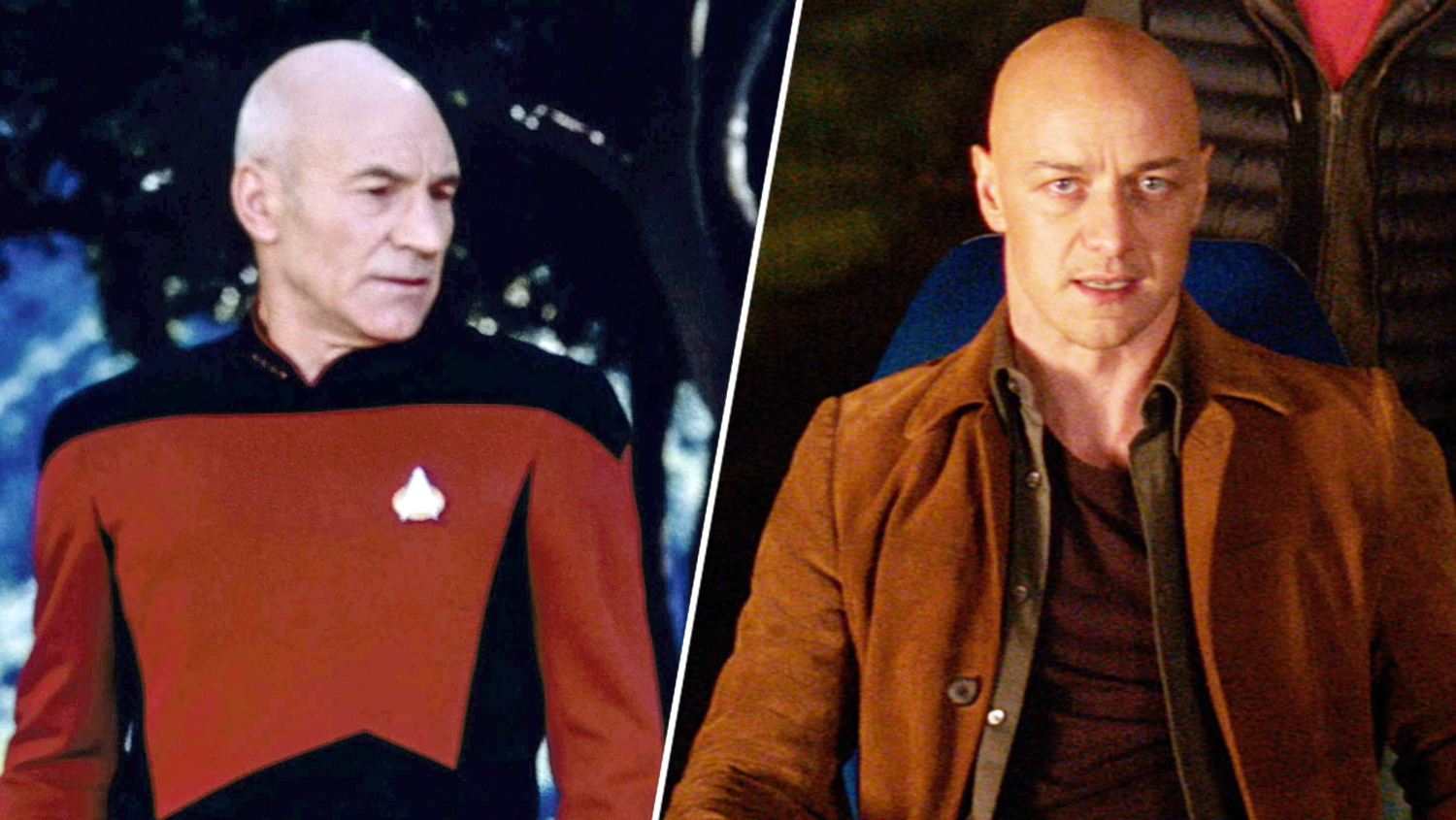
James McAvoy was the first to announce a bold new idea: a limited‑run Star Trek series that would trace the early days of a now‑legendary captain. He called it Mutiny on the Stargazer and claimed it “almost made it.” The actor, already a Golden Globe nominee for his roles in X‑Men: First Class and Atonement, said he “just wanted to play the young Patrick Stewart.” The project’s title and premise were revealed in a recent interview, and McAvoy’s enthusiasm hints at a future where he may steer a franchise he has admired for decades.
Beyond that, McAvoy’s recent musings turn to the financial side of a long‑running film. He noted that the only picture he still receives residuals from is M. Night Shyamalan’s 2016 horror Split. He explained that “you get the odd check for a couple of hundred quid,” and sometimes “you get checks for, like, a hundred and fifty,” pointing to the peculiar economics of the film industry where a single title can generate income for years after its release. The contrast between the creative ambition of a new Star Trek series and the modest, intermittent payouts from a decade‑old film paints a picture of an actor navigating both artistic and fiscal realities.
The convergence of these stories offers a snapshot of contemporary Hollywood. It’s a world where a talent‑heavy actor can simultaneously dream of helming a beloved franchise and, at the same time, count the small returns from a past success. It also highlights the often-unpredictable ways that revenue streams shift, especially as streaming platforms, licensing deals, and legacy film libraries continue to evolve. McAvoy’s narrative is not just about one project; it’s about the broader dance between ambition, opportunity, and the economics that underlie the industry’s creative decisions.
Background & Context
McAvoy’s career has long been defined by versatility. He first captured public imagination as a young Charles Xavier in the 2000s X‑Men series, then expanded his range into more dramatic territory with Atonement and the thriller The Dark Knight Rises. The actor’s work earned him a Golden Globe nomination for Best Actor in a Supporting Role for Atonement, cementing his status as a serious dramatic force. Yet, the actor’s penchant for high‑concept projects, like the Star Trek pitch, shows a desire to influence storytelling on a grand scale.
The Star Trek series idea, titled Mutiny on the Stargazer, would have explored the formative years of the character who would later be known as Captain Jean‑Luc Picard. McAvoy described the pitch as an attempt to give the franchise a fresh, younger lens while staying true to its philosophical roots. The project’s tentative title evokes the classic Star Trek trope of a mutiny, but with a narrative focus on character growth and early decision‑making that can resonate with new audiences. While the project did not move forward, McAvoy’s openness about pitching it suggests he remains a player in the universe’s expanding mythology.
The residuals from Split reveal another facet of a star’s financial life. Shyamalan’s 2016 horror film has earned acclaim and a dedicated fan base, yet McAvoy’s comments about receiving “couple of hundred quid” checks illustrate the fragmented nature of movie income. While blockbuster franchises often provide steady royalties, individual films can offer sporadic payouts that even successful actors must consider. These numbers provide a grounded reality to the glamorous world of television and cinema, reminding readers that even the most celebrated projects can generate modest, piecemeal income for years after their release.
What People Are Saying
While McAvoy has kept his comments fairly private, industry observers have noted his willingness to explore new territory. The Star Trek pitch has sparked conversation among fans who are eager for fresh stories within the franchise, and the idea of a younger Picard is a natural extension of the original series’ exploration of morality and leadership. Even though the project did not advance, it serves as proof of McAvoy’s ambition and the continued appetite for legacy storytelling in television.
Similarly, McAvoy’s disclosure about residuals from Split has led to speculation about the financial dynamics of independent films versus studio productions. Some industry analysts see the modest checks as evidence that even successful actors can rely on a diverse portfolio of projects for long‑term earnings. Others argue that residuals from niche films can still be surprisingly lucrative when aggregated over time. Either way, McAvoy’s candidness sheds light on a subject often cloaked in secrecy.
Beyond McAvoy, the entertainment scene has been marked by other actors navigating personal and professional crossroads. For example, KJ Apa has spoken about stepping into the shoes of historical figures like Jimmy Stewart, an endeavor that underscores the actor’s willingness to tackle complex, biographical roles. Meanwhile, Craig Conover, known from Southern Charm, revealed a new approach to relationships, describing himself as “dating with intent” after a high‑profile breakup. These stories together paint a picture of performers who are actively shaping their career trajectories, balancing creative challenges with personal life decisions.
Television fans have also been keeping a close eye on ongoing dramas. The Young & the Restless storyline this week has highlighted medical crises, weddings, and power struggles among the Abbott family, keeping audiences engaged with its classic soap‑opera twists. While seemingly unrelated, these narratives illustrate the broader landscape of episodic television that coexists with the high‑concept projects McAvoy is courting.
What Happens Next
McAvoy’s next steps remain unclear, but his recent disclosures suggest he is actively seeking projects that will allow him to bring fresh ideas to a wide audience. The Star Trek pitch’s cancellation may lead him to seek similar opportunities in other long‑running franchises or even to pursue original, high‑concept television with a similar thematic depth. In the interim, his continued work in film and stage will likely keep him connected to the industry’s evolving dynamics.
For McAvoy, the residuals from Split will probably continue to arrive sporadically, providing a steady, if modest, income stream that supports his creative pursuits. The actor’s acknowledgment of these checks may inspire fellow performers to reassess their own film libraries and residual strategies, potentially shifting the way contracts are negotiated.
In the wider realm, actors like KJ Apa and Craig Conover will likely continue to make bold career moves, reflecting an industry where personal authenticity and creative ambition can coexist. The Young & the Restless saga will keep viewers invested in the show’s intricate plotlines, reminding the audience that serialized drama remains a staple of daytime television.
In a world where the lines between the financial and the artistic blur, James McAvoy’s candid reflections on both a new creative venture and a long‑standing residual source underscore the complexities that modern performers must navigate. As the entertainment landscape shifts, actors who balance storytelling aspirations with practical realities will shape the future of film and television.
The Bottom Line
At MyWorldPulse, we see James McAvoy’s story as a clarion call for both actors and studios to recalibrate expectations around creative ambition and financial security. While a bold Star Trek pitch signals the hunger for fresh narratives within beloved franchises, the modest residuals from a decade‑old film remind us that even the most celebrated actors live in a financial ecosystem that is as unpredictable as it is lucrative. This duality should push studios to offer clearer, more generous residual structures, especially for mid‑tier projects that form the backbone of many performers’ incomes. For actors, McAvoy’s candidness encourages a pragmatic approach: pursue creative projects that align with personal vision, but also cultivate a diversified slate of roles and investments to buffer against the irregularities of residual income. Ultimately, the entertainment industry—and its audiences—must recognize that the pursuit of storytelling greatness and financial stability are not mutually exclusive but deeply intertwined. MyWorldPulse stands with artists who balance both, advocating for transparent revenue models that reward creativity while ensuring sustainable careers. —MyWorldPulse Editorial Board
Reference:
- James McAvoy’s Twitter post about residuals
Read more celebrity news at MyWorldPulse.