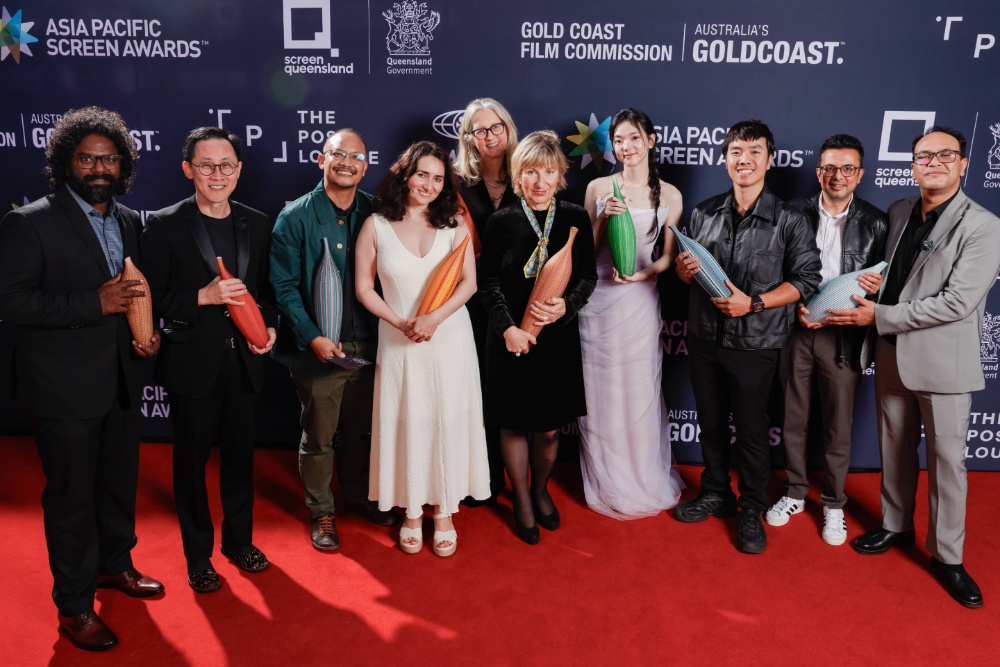
The Georgian screenwriter’s debut, Guria, emerged from a tapestry of seven nations to claim the most coveted prize at the 19th Asia Pacific Screen Awards.
In a glittering ceremony held on October 30th at Queensland’s The Star Gold Coast, Levan Koguashvili stood beside producers Olena Yershova and Boris Frumin as the trio accepted the Best Film trophy. Their work, shot across Georgia, Switzerland, Luxembourg, Bulgaria, Turkey, Norway, and Saudi Arabia, showcases the director’s ambition to blend diverse cultures into a single narrative thread. The awards ceremony itself drew a crowd of film lovers, industry insiders, and diplomats, underscoring the growing importance of cross‑border storytelling in the Asia‑Pacific region.
Shortly after the accolades, the world’s attention turned to the 2026 Daytime Emmy Awards, where the long‑running soap opera General Hospital took home Best Daytime Drama. The event also saw The Kelly Clarkson Show sweeping five trophies, while Beyond the Gates added four to its collection. Both ceremonies highlight the breadth of American television, from serialized drama to daytime music‑inspired talk shows. Together, the two award events paint a picture of a global entertainment landscape that values both artistic ambition and audience engagement.
Background & Context
The Asia Pacific Screen Awards, established in 2007, aim to celebrate cinematic achievements that reflect the region’s diverse cultures. Guria’s journey began when Koguashvili, an emerging Georgian filmmaker, secured funding and distribution support across seven countries. By weaving stories of ordinary people from disparate locales, the film offers a panoramic view of contemporary life in the Caucasus and beyond. Its production spanned over a year, with location shoots in bustling cities, quiet villages, and rugged mountains. The logistical challenges were compounded by differing language, customs, and legal frameworks, yet the team’s perseverance paid off when the film premiered at international festivals before landing in the Asia Pacific Screen Awards lineup.
The Daytime Emmy Awards, organized by the National Academy of Television Arts & Sciences, honor excellence in daytime television programming in the United States. General Hospital, which has been a staple of American daytime drama since 1963, has earned numerous accolades over the decades, but its 2026 win marks a pivotal moment as the series navigates new storytelling approaches and diverse cast representation. The Kelly Clarkson Show, launched in 2019, quickly became a favorite for its blend of musical performances, celebrity interviews, and heartfelt segments, culminating in a record five awards that underscore the show's impact on viewers and industry peers alike. Beyond the Gates, a documentary series spotlighting humanitarian efforts worldwide, added four awards, reflecting a growing appetite for socially conscious content in daytime programming.
What People Are Saying
Koguashvili’s acceptance speech was a quiet celebration of collaboration. He thanked his multinational crew, the local communities that welcomed him, and the awards committee for recognizing a film that transcends borders. Social media buzzed with congratulations from fellow filmmakers, fans, and cultural ambassadors, many of whom highlighted how Guria opened their eyes to stories that often remain underrepresented in mainstream cinema. Critics praised the film’s delicate balance between lyrical visuals and poignant storytelling, noting that its award win might pave the way for more projects that fuse multiple cultural perspectives.
In the world of daytime television, the announcement of General Hospital’s triumph sparked nostalgic reverence among long‑time viewers. On discussion boards, fans celebrated the show’s enduring relevance, especially its handling of contemporary social issues within its dramatic narrative. Industry analysts interpreted the win as a validation of the show's willingness to innovate while staying true to its roots. Meanwhile, the accolades for The Kelly Clarkson Show and Beyond the Gates were met with enthusiasm from their respective fan bases. Many viewers expressed excitement about seeing more high‑quality music‑centric programming and documentaries that shine a light on global humanitarian efforts. Press coverage highlighted the Emmy’s role in recognizing a broader spectrum of daytime content, hinting at a shift toward more diverse and meaningful storytelling.
What Happens Next
The success of Guria sets a promising precedent for Georgian cinema. With the Asia Pacific Screen Award as a benchmark, Koguashvili is already in talks to develop a sequel that could explore new regions, or to adapt a novel that delves deeper into the themes introduced in his first feature. Funding bodies from the participating countries have shown interest, suggesting potential for a co‑production that could boost the Georgian film industry’s visibility on the global stage. Moreover, the film’s recognition might inspire emerging filmmakers in the region to pursue ambitious, cross‑national projects, fostering a new wave of cinematic collaboration.
For General Hospital, the Emmy win could translate into a fresh investment in storytelling, with producers announcing plans to introduce more diverse characters and tackle contemporary topics such as mental health, climate change, and social justice. The series’ long history affords it a unique platform to influence public conversation while entertaining audiences. The Kelly Clarkson Show may leverage its new accolades to secure higher-profile guest line‑ups and broaden its musical repertoire, possibly expanding into a multi‑platform presence with web‑exclusive content and interactive fan experiences. Beyond the Gates, buoyed by its four awards, is likely to secure additional funding for future seasons, enabling it to spotlight more underreported humanitarian crises and give voice to grassroots activists.
As the Asia Pacific Screen Awards continue to spotlight innovative cinema, and the Daytime Emmy Awards recognize the evolving landscape of daytime television, the entertainment world stands poised for a wave of fresh narratives. Audiences can expect a future where stories cross borders—whether geographic, cultural, or medium—thanks to the courage of creators like Levan Koguashvili, the resilience of long‑running dramas, and the adaptability of new‑age talk shows.
The resonance of these awards underscores a universal truth: when storytellers commit to authenticity and collaboration, they not only win trophies but also inspire a generation of viewers and creators alike to imagine a world where every voice has a stage.
The Bottom Line
At MyWorldPulse we believe that Levan Koguashvili’s Guria is more than a film; it’s a statement that cinema can—and should—be a collaborative mosaic. The Asia Pacific Screen Award is a bellwether for a new era where stories are no longer confined by borders but are amplified by them. General Hospital’s Emmy win, meanwhile, reaffirms that serial drama can evolve without losing its heart. Together, these accolades remind us that authenticity, diversity, and cross‑cultural collaboration are not merely buzzwords—they’re the lifeblood of modern storytelling. As we move forward, we’ll keep championing projects that dare to mix cultures, genres, and voices, because that is where the most resonant narratives will emerge.
—MyWorldPulse
Reference:
- Official Asia Pacific Screen Awards press release
- Official Daytime Emmy Awards press release
Read more celebrity news at MyWorldPulse.