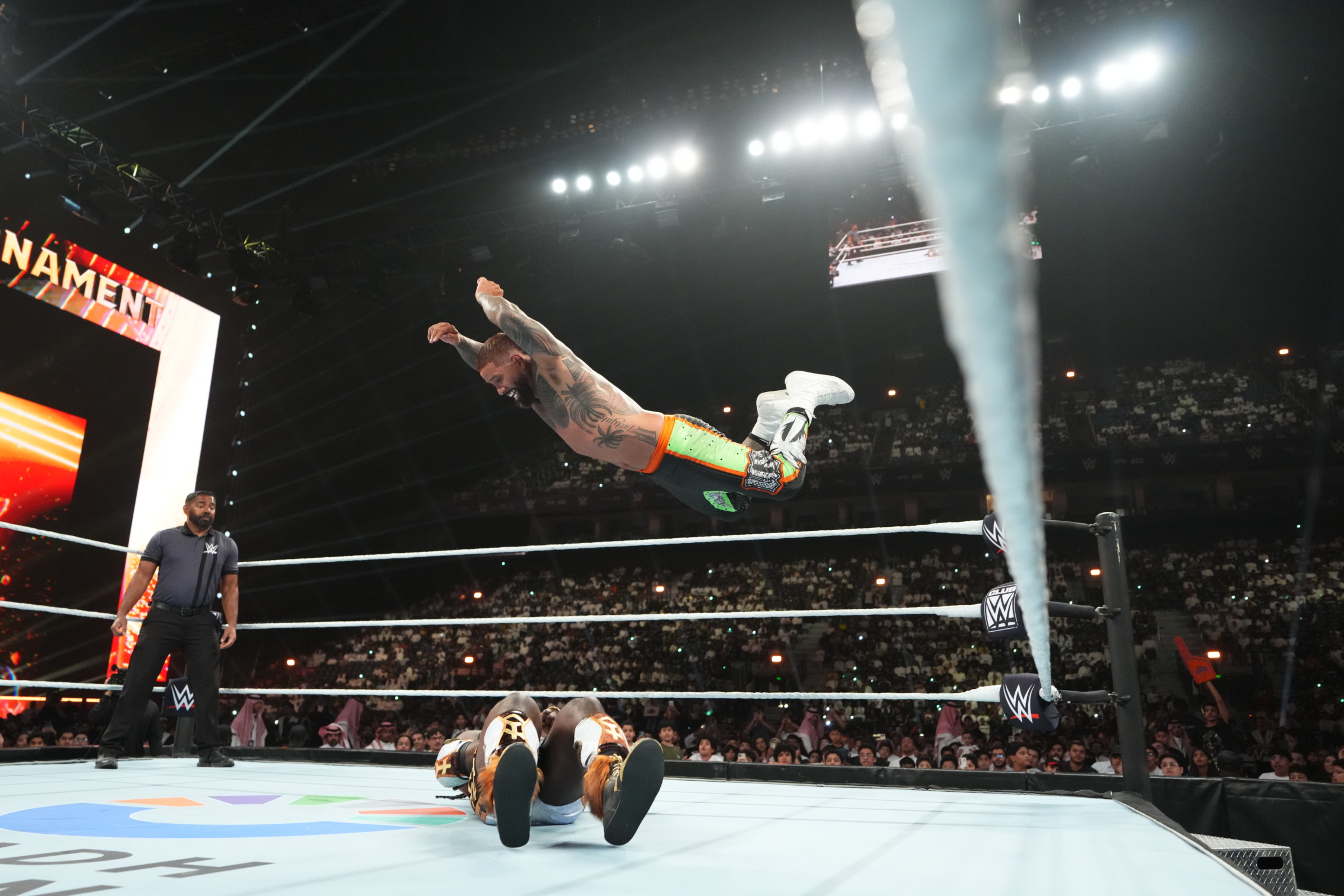
When WWE president and COO Mark Shapiro told the press that the Crown Jewel pay‑per‑view would proceed “firmly” this Saturday in Saudi Arabia, even as hostilities flare in nearby Iran, the world watched, jaws slackening at the audacity of the decision.
The announcement came in the wake of a month‑long pause that saw the Red Sea Film Festival and a raft of other cultural shows pulled from the calendar after bombings struck Saudi venues. In that tense climate, the wrestling federation’s commitment to a spectacle in Riyadh—a country that has partnered with WWE for a decade—was a stark reminder that sports and spectacle often outpace geopolitics.
---
Background & Context
The Crown Jewel event, the flagship of WWE’s Saudi Arabia tour, has become a marquee fixture on the company’s global calendar since its inaugural 2018 show. Unlike typical arenas, the Riyadh Superdome can host up to 18,000 fans, a number that dwarfs most WWE venues outside the United States. The partnership with Saudi’s Ministry of Sports, part of the kingdom’s broader Vision 2030 initiative, has seen the company broadcast live pay‑per‑views from Riyadh twice a year, each featuring marquee matchups that draw viewers worldwide.
Mark Shapiro’s remarks must be viewed against this backdrop of commercial ambition and cultural diplomacy. WWE has invested heavily in training local talent, building state‑of‑the‑art facilities, and crafting a brand image that appeals to both domestic audiences and the global diaspora. The Crown Jewel events serve as a showcase not only for wrestling entertainment but also for the kingdom’s willingness to host high‑profile international events.
In recent weeks, the region has been shadowed by escalating conflict in Iran, where a series of military engagements have rattled neighboring countries. Though Saudi Arabia is not a frontline state, the proximity of the fighting has amplified security concerns across the Gulf. The Red Sea Film Festival’s abrupt cancellation—its entire programming was scrubbed just days before kickoff—underscores the seriousness with which local authorities have treated potential threats. Bombings at several Saudi sites last month prompted a comprehensive review of public events, with many shows—concerts, sporting contests, and cultural festivals—scrapped or postponed.
The Crown Jewel’s return signals a calculated confidence from WWE and Saudi officials alike. In the weeks that followed the film festival’s cancellation, the wrestling company coordinated with security agencies to reinforce on‑site measures, while also offering flexible ticketing options for international fans wary of the risk. The event’s schedule—comprising a mix of title defenses, specialty matches, and an opening bout that highlighted a rising local star—was presented as a carefully curated experience that would uphold the company’s standards for safety and entertainment.
---
What People Are Saying
Reactions to Shapiro’s announcement have been mixed, reflecting the intersection of sports, politics, and public safety. Some wrestling enthusiasts celebrated the confirmation, eager for a return to the spectacle that Crown Jewel brings: high‑flying moves, dramatic feuds, and a global broadcast that can reach millions. They point to the robust safety protocols that WWE typically employs at live events—rigorous crowd control, emergency medical teams, and close coordination with local authorities—as evidence that the risk can be managed.
Others, however, have expressed concern. In an age where fan safety is paramount, the possibility of bomb threats or other acts of terrorism in the region has raised eyebrows. A few commentators on social media platforms noted that the Crown Jewel’s high profile might attract unwanted attention. They also cited the broader geopolitical climate, arguing that the presence of a massive American‑produced spectacle could be perceived as a provocation or as a distraction from the ongoing conflict.
In contrast, Saudi officials have used the event to emphasize the kingdom’s commitment to normalcy. Statements from the Ministry of Sports highlighted the rigorous security plan that included multiple layers of surveillance, checkpoints, and real‑time monitoring by both local and international security experts. They framed the Crown Jewel as proof of the nation’s resilience and its willingness to host world‑class entertainment even in turbulent times.
The wrestling industry’s own insiders have offered a pragmatic perspective. A former WWE talent, speaking to a well‑known wrestling blog, underscored that the decision to proceed is rooted in the company’s long‑term strategy of expanding its global footprint. He noted that the Saudi partnership has already yielded a significant revenue stream, and the Crown Jewel remains a key part of that contract. Moreover, he highlighted that WWE’s business model hinges on large‑scale live events; canceling one would set a precedent that could ripple through future international agreements.
---
What Happens Next
The days leading up to the Crown Jewel will be a test of coordination between WWE, Saudi authorities, and international partners. Ticket holders are encouraged to stay updated through the official WWE app, which will provide real‑time alerts on any changes to the schedule or venue. The event’s production team has reportedly implemented a contingency plan that includes rapid evacuation routes, secure backstage zones, and a dedicated medical team capable of handling mass casualty scenarios.
For fans, the experience is likely to be as grand as any WWE show has been in the past. The advertised lineup features a world title match that pits the reigning champion against a veteran challenger, a highly anticipated high‑octane tag team bout, and a special appearance by a retired legend who will make a one‑off appearance as a special guest referee. The event will also showcase local talent, giving regional wrestlers a platform that has rarely been available on such a stage.
Meanwhile, the WWE network will broadcast the pay‑per‑view to audiences worldwide, with commentary teams offering insights that blend technical analysis with the drama that has become synonymous with wrestling. The production crew has promised a cinematic presentation, featuring multi‑camera setups, advanced lighting, and a storyline arc that extends beyond the matches themselves.
In the broader context, the Crown Jewel could serve as a bellwether for how international sporting and entertainment entities navigate conflict zones. If the event proceeds without incident, it may embolden other promoters to consider similar ventures in geopolitically sensitive areas. Conversely, any security lapse would prompt a reevaluation of risk assessments and could strain the delicate balance between business interests and public safety.
---
While the stakes remain high, WWE’s decision to stage the Crown Jewel this Saturday reflects a confidence that sport, even in the most precarious settings, can persevere. The outcome will be watched closely not only by wrestling fans but also by those who study the complex dance between entertainment, politics, and security. As the curtain rises on this monumental event, the world will observe whether the spectacle triumphs over tension, or whether the looming shadow of conflict will finally tip the scales.
The Bottom Line
From the MyWorldPulse perspective, WWE’s decision to stage the Crown Jewel in Saudi Arabia amid Iran’s flare‑up is a calculated gamble that prioritizes business expansion over caution. While the company touts iron‑clad security measures and a lucrative partnership, the choice underscores a troubling trend: entertainment conglomerates increasingly treating geopolitical risk as a mere backdrop rather than a legitimate barrier. Fans deserve more than a show; they deserve assurances that their safety is paramount. The spectacle’s success may tempt other promoters to follow suit, but it also risks normalizing the exploitation of politically unstable regions for profit. We urge WWE to maintain transparent communication, bolster security beyond the baseline, and weigh the moral implications of leveraging contentious territories for entertainment. Only then can the Crown Jewel be celebrated as a triumph of global reach, not a risky stunt that blurs the line between commerce and conflict.
Reference:
- Official statement on Crown Jewel
Read more celebrity news at MyWorldPulse.