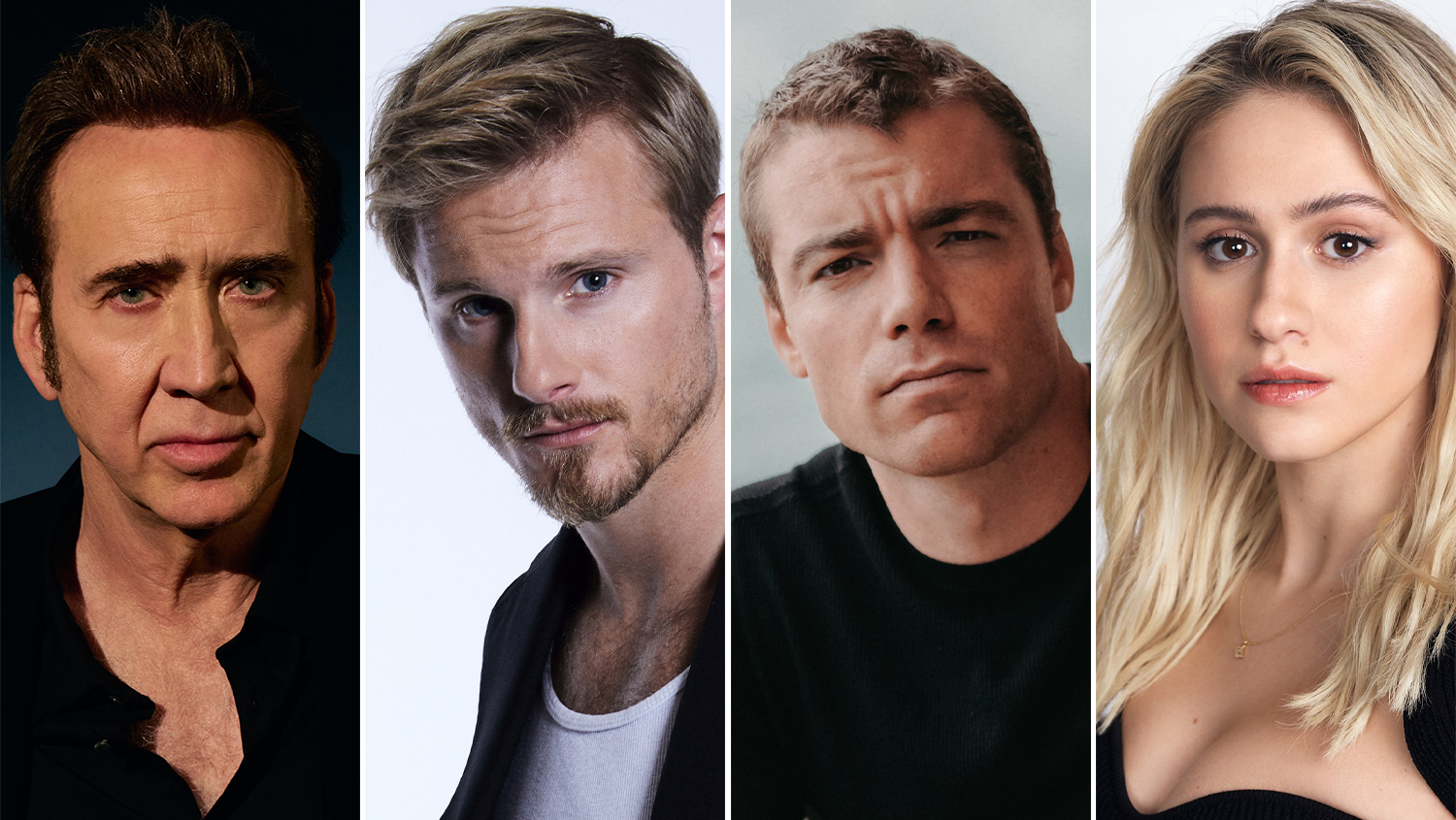
Nicolas Cage, once celebrated for his improvisational flair, vows to bring a raw, gritty intensity to The Brand, a true‑crime feature adapted from David Grann’s New Yorker exposé of the Aryan Brotherhood. The film joins four other Oscar‑winning or nominee actors—Alexander Ludwig, Gabriel Basso, and Maria Bakalova—who together form an unlikely but formidable ensemble. In a landscape where the public craves narratives that illuminate the darkest corners of society, this project promises to satisfy that appetite while testing the mettle of its star‑powered cast.
In the months leading up to production, the production team confirmed that the script will trace the violent history of the gang, focusing on the moral dilemmas faced by law‑enforcement agents and the ripple effects on the communities they protect. The film’s production company is targeting a mid‑2025 release, with preliminary marketing campaigns already hinting at a wide theatrical launch followed by a digital distribution strategy. By anchoring the project with a roster of talent whose careers have spanned genres from indie dramas to blockbuster franchises, the producers aim to broaden the appeal of a story that could easily feel niche.
For the industry, The Brand represents a convergence of several trends that have dominated recent years. High‑profile true‑crime productions—The Night Of, Mindhunter, and The Irishman—have proven that audiences are willing to engage with complex, morally ambiguous narratives when delivered by strong performances and meticulous craftsmanship. The presence of Oscar‑winning actors signals a willingness to invest heavily in projects that probe uncomfortable subjects, suggesting that studios believe the appetite for gritty storytelling remains robust. In this climate, The Brand could set a benchmark for how crime‑drama franchises evolve, potentially influencing the types of projects greenlit in the next few years.
Background & Context
David Grann’s investigative piece, which first appeared in The New Yorker in 2019, chronicles the rise and brutal influence of the Aryan Brotherhood, a white supremacist prison gang that has extended its reach beyond the confines of state penitentiaries. Grann’s narrative combines meticulous research with a narrative arc that exposes the systemic failures that allow such groups to thrive. By adapting this work, the filmmakers have a built‑in framework for exploring themes of institutional complicity, racial tension, and the psychological toll on both perpetrators and victims. The cast’s previous collaborations—Cage’s history of intense, unpredictable roles, Ludwig’s work in action‑driven films, Basso’s political thriller experience, and Bakalova’s bold performances—provide a diverse skill set that complements the story’s demands.
The decision to bring these four actors together underscores a broader shift in Hollywood where ensemble casts are increasingly leveraged to create multi‑layered narratives. The film also arrives at a time when audiences are more willing to scrutinize the moral complexities of the justice system. In a market saturated with biopics and true‑crime television series, the combination of a hard‑edge story with star power is poised to capture attention both domestically and internationally. Meanwhile, the production’s emphasis on authentic, on‑location shooting reflects a growing desire for realism in cinematic storytelling, a trend that has been amplified by the rise of streaming platforms seeking original, high‑quality content.
Beyond the film itself, the entertainment world remains a hotbed of drama. A court filing revealed that Paul Kemsley and Dorit Kemsley are negotiating a partial financial settlement in their divorce, yet disputes over co‑parenting decisions persist, with Kemsley claiming exclusion from school choices for their 12‑year‑old son and 10‑year‑old daughter. In the music arena, a headline‑making performance by Janet Jackson at the 2004 Super Bowl halftime show sparked a controversial wardrobe malfunction that prompted an FCC investigation and a flurry of public debate. Meanwhile, a model who attended an exclusive party in the Hollywood Hills recently reported that the event’s host was involved in a disturbing incident, a claim that has drawn attention from law enforcement and the wider public. These stories illustrate a media landscape where personal scandals, legal battles, and creative ventures coexist, each influencing audience perception and industry dynamics in subtle ways.
What People Are Saying
Industry insiders have reacted to The Brand with a mixture of anticipation and skepticism. A spokesperson for the film noted that the cast’s dedication to the material is “incredible” and that the production is committed to portraying the gang’s violence with a raw, unflinching lens. The decision to cast actors of varying backgrounds—Cage’s experience with intense, physical roles, Ludwig’s youthful vigor, Basso’s method acting, and Bakalova’s fearless approach to complex characters—has sparked conversations about the importance of casting choices that reflect the story’s emotional breadth. Critics are also intrigued by the potential for the film to serve as a cultural commentary on the systemic issues that allow extremist groups to flourish.
Meanwhile, the public’s response to the film’s announcement has been amplified by social media discussions. Viewers have taken to platforms to debate whether the story’s focus on a white supremacist gang is timely or exploitative. Some fans praise the decision to tackle an under‑represented subject, while others caution that the film must navigate its portrayal with sensitivity to avoid reinforcing harmful stereotypes. The intersection of intense storytelling and societal impact has become a focal point for many who argue that entertainment must balance profit with responsibility.
Outside of the film, the fallout from other high‑profile controversies continues to shape the industry’s narrative. Dorit Kemsley’s refusal to cooperate in a court filing over parenting decisions has prompted public debate about parental involvement and the media’s role in family disputes. In a separate incident, a model attending a Hollywood Hills party reported that the event’s host had engaged in a disturbing act, prompting police investigations that have yet to determine the extent of any wrongdoing. These stories reinforce the idea that the entertainment ecosystem remains highly sensitive to how personal conduct intersects with public personas, a reality that studios must weigh carefully when assembling casts and marketing projects.
What Happens Next
Pre‑production for The Brand is slated to begin in early spring, with principal photography scheduled for late summer. The filmmakers have announced a partnership with a major distribution studio, which will handle both theatrical and streaming releases. In the interim, the production team is expected to conduct extensive location scouting and collaborate with forensic experts to ensure the film’s depiction of the gang’s brutality is accurate and grounded in real evidence. The project’s timeline also suggests that post‑production will be expedited to meet the targeted mid‑2025 release window, a strategy that could influence the film’s competitive positioning against other upcoming crime dramas.
Simultaneously, the actors involved are preparing for the demanding roles that lie ahead. Cage, known for immersing himself deeply into characters, has indicated that he will be studying prison culture and speaking with former inmates to inform his portrayal. Ludwig, who often portrays youthful protagonists, will be focusing on the psychological strain of a character navigating moral ambiguity. Basso and Bakalova are reportedly attending workshops to refine their character arcs, ensuring that each performance contributes meaningfully to the film’s overarching narrative.
Beyond the film’s production, the surrounding industry drama continues to unfold. The Kemsleys’ divorce proceedings are expected to culminate in a finalized agreement, potentially setting a precedent for co‑parenting arrangements involving high‑profile couples. The controversial halftime show incident involving Janet Jackson remains a reference point in discussions about live event safety and broadcast standards. The ongoing investigation into the model’s alleged encounter at a Hollywood Hills party underscores the vigilance of law enforcement when high‑profile gatherings become sites of potential misconduct. Collectively, these events illustrate the interconnected nature of personal, professional, and legal arenas within the entertainment world.
In the months ahead, The Brand will likely capture the public’s imagination not only for its gritty narrative but also for the star‑powered ensemble that brings it to life. As the film moves from pre‑production to the screen, it will serve as a case study in how contemporary Hollywood can blend investigative journalism, complex character work, and high‑stakes storytelling to create a project that both entertains and prompts reflection on the darker facets of society.
The Bottom Line
The Brand isn’t just another crime‑film; it’s a cultural statement that asks whether Hollywood can confront uncomfortable truths without sensationalism. By pairing Nicolas Cage’s unapologetic intensity with an ensemble of Oscar‑winning talent, the project demonstrates that audiences crave narratives that delve deep into systemic issues while still delivering compelling drama. This film’s success could signal a shift toward more nuanced, socially conscious storytelling, proving that profitability and responsibility can coexist. If The Brand resonates, it may prompt studios to green‑light more projects that tackle real‑world injustices head‑on, setting a new benchmark for the genre.—MyWorldPulse.com
Reference:
- The Brand production company’s official press release announcing the mid‑2025 release date
- Nicolas Cage’s verified Twitter post confirming his role in The Brand
Read more celebrity news at MyWorldPulse.