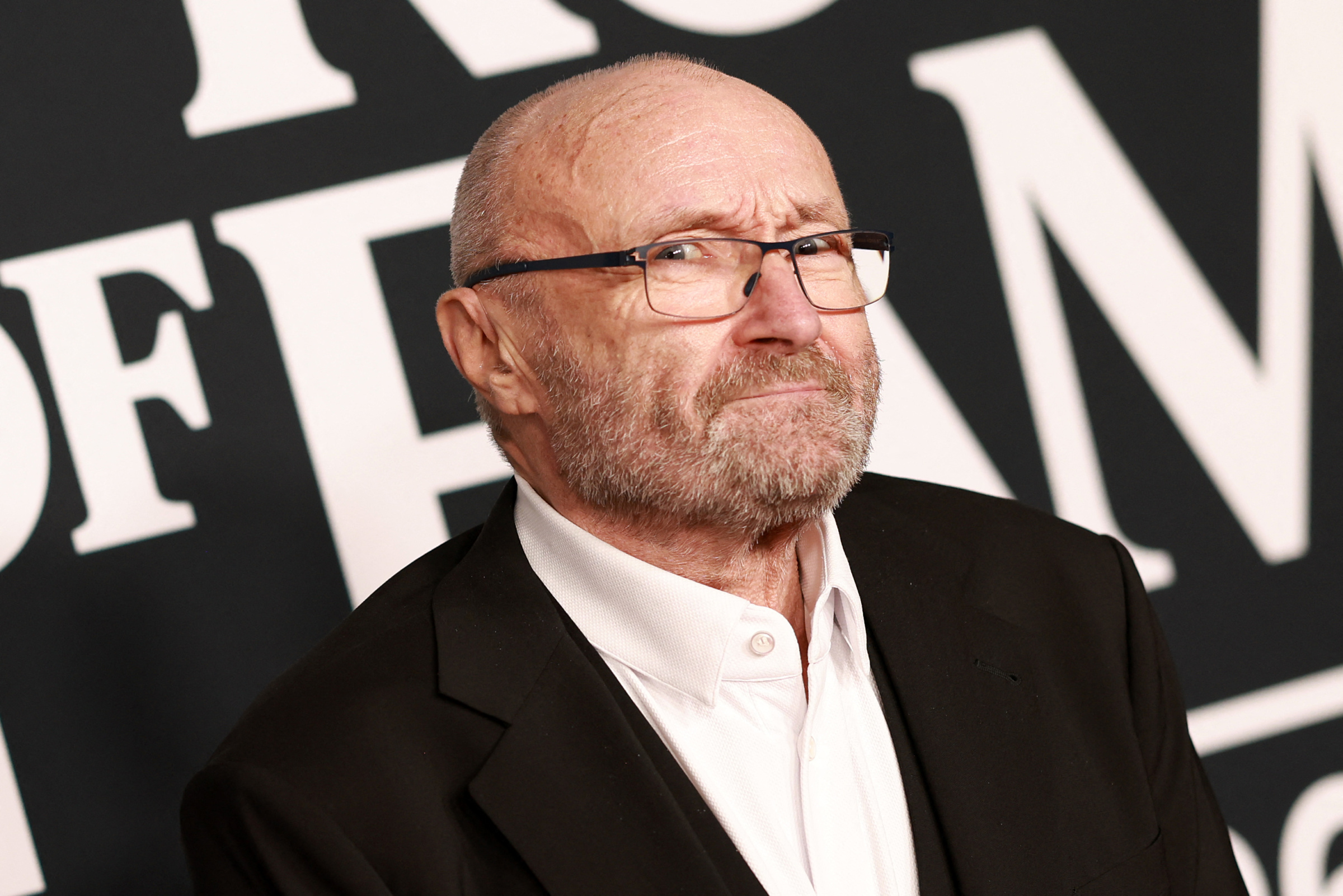
When Phil Collins appeared on the stage of Los Angeles’s Peacock Theatre, cane in hand and a faint smile tugging at his lips, the crowd rose in a thunderous ovation that left the singer on the brink of tears. The 75‑year‑old drummer‑turned‑vocalist had just been inducted a second time into the Rock & Roll Hall of Fame, a moment that seemed to stitch together a career that had spanned decades of musical evolution and personal battles. In a quiet, reflective address, Collins announced that he now considered himself a “well man,” a phrase that resonated with fans who have followed his journey from the drums of Genesis to the front lines of solo stardom.
The ceremony, held on November 14, was a full‑blown celebration of Collins’s impact on rock and pop. The lights dimmed, then burst into a slow swell as a medley of his hits—“In the Air Tonight,” “One,” and “Another Day in Paradise”—filled the hall. While Collins never performed that night, the tribute paid by drummer Travis Barker and actress Cynthia Erivo, who recreated the song’s iconic break, reminded everyone why his legacy endures. Behind the applause, the emotional crack in Collins’s voice was unmistakable, proof of the physical toll that has forced him to step away from the stage since 2022.
His declaration came amid a broader conversation about his ongoing health challenges. After a string of surgeries for back pain and knee problems, and a battle with nerve damage that has limited his mobility, Collins has been reluctant to give fans a definitive timeline for his return. Yet, the moment at the Hall of Fame hinted that he might be ready to answer that question—at least in part—while accepting that he may never perform the same high‑energy routine that defined his career.
Background & Context
Phil Collins first captured the world’s attention as the drummer of the British progressive rock band Genesis. He joined the group in 1975, replacing the previous drummer, and soon found himself fronting the band after the death of lead singer Peter Gabriel in 1979. Collins’s double‑role as drummer and lead vocalist was a rarity in the music world, and it set the stage for his prolific solo career that followed in the 1980s. His 1985 album “No Jacket Required” became one of the best‑selling albums of the decade, and singles like “Against All Odds” and “Sussudio” dominated radio waves worldwide.
Over the years, Collins earned eight Grammy Awards, chart‑topping hits, and sold‑out tours that turned him into a global icon. His influence on drummers and pop musicians alike is immeasurable, and his induction into the Rock & Roll Hall of Fame in 1993 recognized his contributions as part of Genesis. In 2026, the ceremony served as a second, personal recognition, celebrating his solo achievements and his broader impact on music history.
However, the physical demands of his past careers have taken a toll. In the early 2010s, Collins revealed that he was suffering from severe back pain, a condition that was later diagnosed as a spinal issue requiring surgery. In 2015, he underwent a knee replacement, and subsequent surgeries and rehabilitation have been ongoing. The most recent public statements, made during a private conversation with his fans, indicated that nerve damage in his hands and legs has made it difficult for him to play the drums in the same way he once did. These health concerns forced him to sit through the last leg of Genesis’s “Legacy of a Song” tour in 2022, with his son Nic taking the drummer’s seat.
The 75‑year‑old has therefore been largely off the stage, focusing instead on recording, television appearances, and the occasional small, seated concert. The Hall of Fame induction was not just a professional accolade; it was a moment of personal catharsis that allowed Collins to reflect on the trajectory of a career that began as a young drummer in the 1970s and evolved into an icon of the 1980s and 1990s.
What People Are Saying
The atmosphere at the Peacock Theatre was electric, but it was the collective reaction to Collins’s appearance that truly defined the evening. The audience’s standing ovation, which stretched on for several minutes, punctuated his quiet acknowledgment of the crowd’s support. As Collins stepped onto the stage, he was assisted by two canes—an unmistakable visual cue of his physical limitations—but he carried himself with the same confidence that had made him a household name decades earlier.
When Collins stepped forward to accept his plaque, he paused, looked out over the sea of faces, and shared a candid comment that seemed to bring the room to a hush: “I’m a well man now. I’m not as bad as it looks. I’m much better.” Those words, spoken with a mix of humility and reassurance, were widely interpreted as a hopeful sign for fans and industry insiders alike. The singer’s daughter, Lily Collins—an actress known for her work on “Emily in Paris”—was present in the front rows, a detail that added a personal layer to the event.
Musicians and fellow artists offered their own tributes during the ceremony. Travis Barker, famed for his work with Blink‑182, introduced Collins and praised his dual success as a drummer and a solo artist. Barker himself took over the drum kit to recreate the famous “In the Air Tonight” break, while Cynthia Erivo performed a powerful rendition of the same song. Neither performer could truly replicate Collins’s original performance, but their interpretations showcased the timeless quality of his work. In a quiet moment backstage, Collins reportedly told Barker that he would never again perform the signature drum sequence the same way he once did, but he would not rule out other forms of musical engagement.
The overall sentiment from attendees was one of admiration and awe. For many, the moment was a reminder of how music can transcend physical limitations and connect people across generations. Collins’s acceptance of the honor, his acknowledgment of his health challenges, and his subtle hint at future possibilities were all woven into a narrative that seemed to promise both closure and new beginnings.
What Happens Next
Collins’s statement about his health and the possibility of performing has sparked speculation about the trajectory of his career. While he openly admitted that he can no longer deliver the iconic drum break that fans have loved for decades, he hinted that he might still be able to "do some shows." This leaves room for creative approaches to performance—perhaps seated concerts, acoustic sets, or collaborations with other musicians that do not require intense physical exertion.
Industry insiders suggest that Collins may explore touring options that accommodate his current mobility. In recent interviews, he has discussed performing from a seat, using a drum set that can be played from a lower stance, or even playing as a solo vocalist with a backing band that can handle the percussion. The idea of integrating technology—such as drum pads or remote-controlled instruments—could also provide a way for Collins to maintain the feel of a live show without overstressing his body.
The possibility of a full return to touring remains uncertain. Collins’s medical team has emphasized the need for careful rehabilitation and monitoring of his nerves and joints. Even if he were to resume touring, the schedule would likely be far less demanding than his earlier career. Fans can expect a gradual, perhaps sporadic, appearance in future events, with a focus on maintaining the integrity of his performance while respecting his health.
In the months following the ceremony, Collins’s team is reportedly exploring opportunities for collaborations, guest appearances on television, and limited live engagements. These plans, if executed, would allow him to stay connected with his audience without compromising his well‑being. The artist’s candid admission that he is “not as bad as it looks” offers a hopeful sign that whatever path he chooses will be shaped by both his legacy and his present condition.
The music world is waiting with anticipation for the next chapter in Phil Collins’s storied career. Whether he will take the stage again, how he will adapt, or whether he will simply step back into a different role, remains to be seen. What is clear, however, is that the 75‑year‑old has turned a moment of vulnerability into a public affirmation of resilience. In a world that often celebrates the unbroken, Collins reminds us that even icons can evolve, adapt, and still leave an indelible mark.
The Bottom Line
The Hall of Fame ceremony for Phil Collins was more than a nostalgic celebration; it was a public statement that aging, talent, and health can coexist. Collins’ candid admission that he can no longer replicate the legendary drum break, but still considers himself a "well man," redefines the narrative around legacy artists. It reminds industry insiders that adaptability is essential—whether that means seated performances, technology‑augmented shows, or selective touring. Fans, too, should be prepared for a new kind of Collins experience, one that honors the past while embracing the present. The music world, at large, should take note: the golden era of rock can thrive even when its torchbearers step back from the spotlight, ensuring that influence and artistry endure beyond physical limits.
— The MyWorldPulse Team
Reference:
- Official post on Phil Collins' verified Instagram
Read more celebrity news at MyWorldPulse.