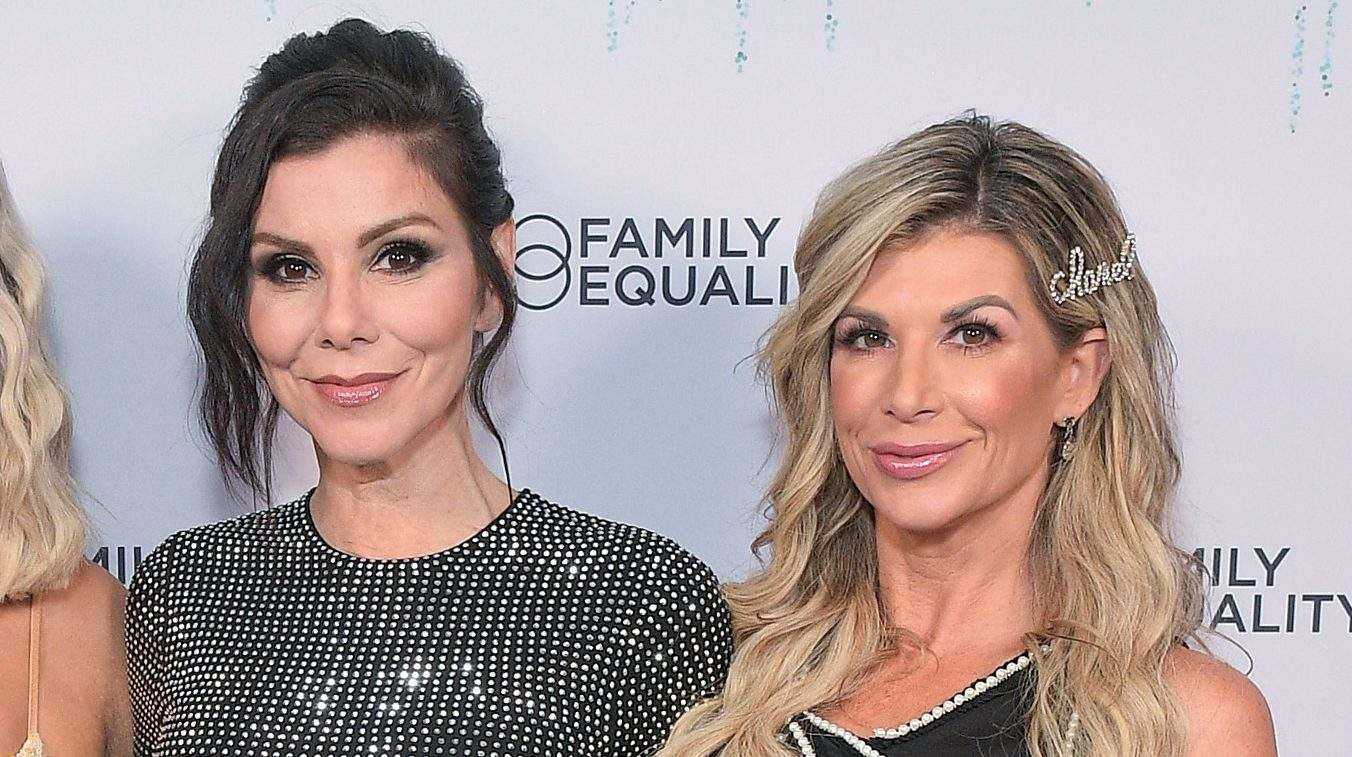
When Heather Dubrow called out a long‑standing feud on the “Real Housewives of Orange County” After Show, the clip immediately went viral. In the episode, the veteran cast member confessed that her seemingly innocuous reply to a fan on “Watch What Happens Live” had spiraled into a multi‑month drama involving her friend, Alexis Bellino, and even a high‑profile launch party hosted by Tamra Judge. Dubrow explained that a casual comment about attending Alexis and John Janssen’s wedding turned into a headline, prompting her to apologize and clarify that she never meant to hurt anyone. The fallout, she revealed, was not confined to the set but reached into a podcast appearance where Alexis labeled Dubrow “feckless.” The ripple effect of that exchange has become a case study in how a single word can fuel public speculation and damage friendships among reality‑TV royalty.
But the story isn’t the only one that’s turned personal matters into national headlines this week. Across the country, a very different drama has erupted over a $5 million lakefront mansion in Bratenahl, Ohio. Newlyweds Taylor Swift and Travis Kelce, who tied the knot last summer, have submitted plans to the local architectural review board for a six‑foot fence and a cluster of evergreen trees near a shared sewer line. Their neighbors—long‑time resident Katherine Bolton and her friend Chuck Bauernschmidt—have publicly decried the landscaping as “ridiculous,” warning that roots could damage plumbing and that deer could become trapped by the proposed fence. The couple’s attempts to protect their privacy and security have sparked a heated debate about property rights, community aesthetics, and the reach of celebrity influence in suburban America.
These two seemingly disparate incidents share a common thread: the intersection of celebrity and everyday life. In both cases, a private decision—whether a comment on a podcast or a tree placement—has been magnified by a media ecosystem that thrives on gossip. The fallout illustrates how reality‑TV personalities and pop‑star couples alike can become lightning rods for public attention, turning ordinary disagreements into social media spectacles. In a world where personal choices are instantly amplified, the line between the private and the public has never been more blurred.
Background & Context
Heather Dubrow’s story begins on the bright set of “Real Housewives of Orange County” in early October. When a fan on “Watch What Happens Live” asked if she would attend Alexis Bellino and John Janssen’s wedding, Dubrow’s response was both a schedule conflict and an unguarded remark: “I can’t, because it’s parent weekend.” The comment, she later admitted, was more revealing than she intended. Dubrow had known John primarily through his former relationship with Shannon Beador and had no intention of offending Bellino, yet the words echoed in the social media arena. Within a week, Bellino took to the “Two Ts in a Pod” podcast to call Dubrow’s behavior “characterless,” labeling her as “feckless.” The sting of those words pushed Dubrow to reach out, but tensions simmered.
The situation intensified further when Bellino and Janssen attended Tamra Judge’s Vena launch party, a gathering that also hosted Beador. At the event, Dubrow sensed a tensionful look from Bellino. She expected a private conversation to clear the air, but the moment turned into a heated exchange that left both parties feeling uneasy. Tamra Judge, a frequent mediator in RHOC dramas, later revealed she had spoken to Bellino two days before the party to mitigate any fallout. Despite these attempts, the public narrative continued to grow, fueling speculation about a deepening rift among the housewives.
In Ohio, the conflict between Taylor Swift and Travis Kelce and their neighbors began when the couple filed a proposal with the Bratenahl architectural review board. Their intent was simple: to secure a six‑foot fence and plant evergreen trees along the property line adjacent to a shared sewer system. The board initially approved the fence but required the couple to clear the existing shrubbery and ensure the sewer line would remain unimpeded. However, residents Katherine Bolton and Chuck Bauernschmidt expressed strong objections. Bolton warned that tree roots could cause costly plumbing problems and had already been quoted $75 000 to protect the line. Bauernschmidt criticized the removal of shrubbery and raised concerns about deer potentially injuring themselves against the new fence. The debate escalated as local community meetings became the backdrop for a larger conversation about how celebrity property upgrades can affect surrounding neighborhoods.
Both stories highlight the escalating pressure on public figures to manage their personal choices carefully. For Dubrow, a single comment on a live show triggered a cascade of rumors, leading to a confrontation that spilled onto a podcast and a high‑profile launch party. For Swift and Kelce, a landscaping plan became a public policy issue, with local residents voicing legitimate concerns about environmental impact and community aesthetics. In both cases, the boundary between private decision‑making and public scrutiny is starkly evident, offering a window into how modern fame can magnify even the most ordinary disputes.
What People Are Saying
Heather Dubrow’s confession was met with a mix of empathy and criticism. Fans who followed the RHOC drama noted that the housewives’ lives often intertwine, and a misunderstanding could easily snowball. A number of viewers congratulated Dubrow for her honesty, appreciating her willingness to own the mistake and admit that she had “should’ve shut up.” Others, however, questioned why the feud escalated so quickly, citing past conflicts that seemed to resolve more quietly. Social media threads ran with screenshots of the “Watch What Happens Live” segment and the “Two Ts in a Pod” episode, fueling a lively debate about accountability among reality‑TV stars.
On the Ohio front, residents of Bratenahl have voiced their concerns through town‑hall meetings and local forums. Katherine Bolton’s protest has become a rallying point for others who fear that the new trees might damage their own sewer lines or alter the neighborhood’s character. Chuck Bauernschmidt’s remarks about “ridiculous” clearing of shrubbery and deer safety have resonated with a subset of the community who feel that the couple’s plans disregard shared responsibilities. Meanwhile, supporters of Taylor Swift and Travis Kelce argue that the couple has the right to enhance their privacy and that the board’s approval of a six‑foot fence reflects a reasonable compromise. Twitter feeds have split along neighborhood lines, with hashtags trending both for “#ProtectOurSewer” and “#TaylorTravisPrivacy.”
The media’s role in shaping these narratives cannot be understated. While no official press releases have been issued regarding the RHOC drama beyond the After Show, a handful of entertainment blogs picked up on Dubrow’s statement, further amplifying the story. Likewise, a local news outlet covered the Bratenahl planning meeting in detail, noting the couple’s cooperation in jetting the sewer line and installing a gate for Bauernschmidt. Despite the differences in scale—one a television feud, the other a community dispute—the public’s reaction was uniformly dramatic, underscoring the appetite for stories that intersect fame with everyday concerns.
These voices converge on a single point: that the public demands transparency and accountability from those in the spotlight. Whether it’s a housewife’s on‑camera apology or a superstar’s property plan, audiences now expect swift, honest responses. The resulting pressure often leads to public statements, meetings, or even policy adjustments, reshaping how public figures navigate their private choices.
What Happens Next
The fallout from Heather Dubrow’s revelation is likely to continue unfolding on the RHOC After Show and in subsequent episodes. Viewers are eagerly awaiting a possible reconciliation or at least a definitive clarification from Alexis Bellino. Given the show’s format, a formal confrontation could serve as a pivotal episode, potentially boosting ratings and feeding into the larger reality‑TV narrative. Additionally, the social media backlash may push the production team to incorporate more behind‑the‑scenes footage, giving fans a clearer view of the motivations behind each cast member’s actions.
In Bratenahl, the next step will involve the architectural review board’s upcoming meeting, where the third proposal—detailing the final design for fencing and landscaping—will be presented. The board has indicated that it will consider the couple’s offer to clean the shared sewer line without cost to the neighbors, a move that could sway public opinion. Moreover, the couple’s planner, Jacob Kutz, has expressed a willingness to engage in further dialogue with residents, hinting at potential compromises such as a shorter fence or alternative tree placements. The outcome of this meeting will set a precedent for how celebrity real‑estate projects interact with local zoning regulations and community expectations.
In both cases, the stories highlight an evolving dynamic in which public figures are no longer insulated from the repercussions of their private choices. For the RHOC cast, the next episode could either mend or widen rifts, while for Taylor Swift and Travis Kelce, the outcome will determine how their personal property upgrades coexist with community interests. These narratives underscore the reality that fame brings both privilege and scrutiny, and that every decision—whether a comment on a live show or a landscaping proposal—can reverberate far beyond the individual’s immediate circle.
In an age where personal drama can be televised or livestreamed in seconds, the industry is learning that transparency is not just a moral obligation but also a strategic necessity. As viewers and residents alike demand accountability, the intersection of celebrity and everyday life will continue to shape the stories that dominate the headlines.
The Bottom Line
MyWorldPulse.com believes that the rapid spillover from private moments to public outrage isn’t just a new form of gossip—it’s a systemic change in the media ecosystem. When a single comment or property decision can ignite weeks of drama, the pressure on celebrities to be constantly on guard grows. This reality forces a reevaluation of how we, as consumers, respond to sensationalized stories. We must ask ourselves whether we are complicit in amplifying every misstep, or if we can demand a more nuanced conversation about human error and context. The RHOC and Swift‑Kelce cases remind us that the line between personal choice and public narrative is thinner than ever, and that accountability should come from intentional, thoughtful communication rather than reactive backlash. Ultimately, the industry’s future depends on its ability to foster responsible storytelling that respects both the individuals involved and the audiences who eagerly consume their narratives.
Reference:
- Heather Dubrow's Instagram apology
- Taylor Swift's Facebook post on the lakefront fence proposal
Read more celebrity news at MyWorldPulse.