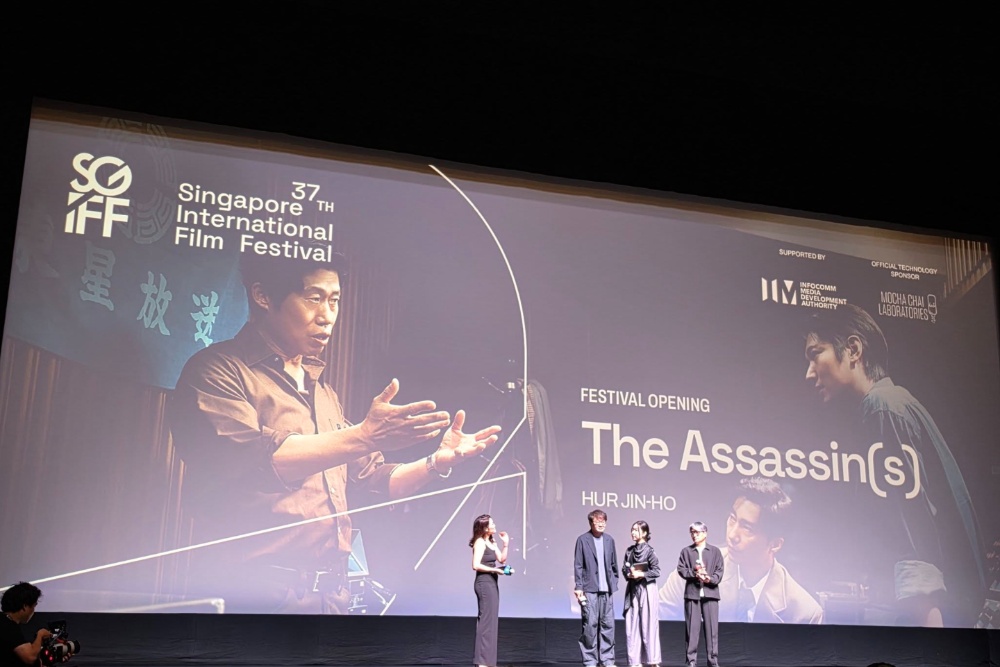
In a rare public thank‑you, South Korean filmmaker Hur Jin‑Ho applauded the Singapore International Film Festival for standing up for artistic liberty after conservative forces pressed it to pull his political thriller “The Assassin(s)” from the lineup.
Background & Context
Hur Jin‑Ho, whose career has spanned intimate dramas and bold political narratives, premiered “The Assassin(s)” at SGIFF’s 37th edition on Wednesday. The film, a tense thriller set against the backdrop of the late 20th‑century Korean peninsula, follows a network of covert operatives tasked with dismantling a powerful crime syndicate. Critics and audiences alike praised its razor‑sharp storytelling and the way it held a mirror to the political tensions of the era.
Two weeks earlier, members of Korea’s conservative opposition had reached out to SGIFF, demanding that the film be removed from the festival’s program. They argued that its content could inflame political divisions and potentially damage diplomatic relations. SGIFF Chair Boo Junfeng responded with a firm stance: “We refuse to show anything that has been censored.” The decision was met with widespread support from film communities worldwide, who saw it as a reaffirmation of the festival’s commitment to creative freedom.
Hur Jin‑Ho’s message, posted on the festival’s official channel, was succinct yet powerful. He thanked SGIFF for protecting artistic freedom, adding, “I am truly grateful to the film festival for defending our voices. This is a victory not only for cinema but for every artist who feels pressured to silence their truth.” The gesture underscored a growing trend of festivals stepping into the front lines of cultural debates, defending the right to showcase stories that might unsettle but ultimately enrich public discourse.
The event sits within a broader global conversation about the limits of art and the role of state and corporate power in shaping narratives. In recent months, filmmakers and writers from various countries have faced pressures to alter scripts or pull projects entirely. SGIFF’s action, and Hur Jin‑Ho’s public acknowledgment, signals that creative communities remain vigilant in protecting the sanctity of artistic expression.
What People Are Saying
The world’s film community reacted with a mix of support and caution. Prominent directors and producers took to their own platforms to echo Boo Junfeng’s message, praising SGIFF for its courage. A collective of international film societies issued a joint statement declaring that “creative works should not be compromised by external political agendas.” The statement emphasized the importance of festivals as safe havens where artists can present controversial content without fear of censorship.
In the realm of social media, audiences flooded the festival’s hashtag with supportive messages. Fans of the film expressed relief that “The Assassin(s)” would be shown in full, applauding Hur Jin‑Ho’s choice to speak openly about the issue. The director’s previous works—known for their sensitive portrayals of political history—had cultivated a loyal following eager to see the new thriller in its intended form.
However, not all reactions were unreserved. Critics of the film’s political undertones suggested that the narrative could perpetuate divisive stereotypes. Some analysts pointed out that the film’s release amid ongoing political tension in South Korea might have unintended consequences. Yet, many agreed that art’s role is to challenge, not to appease, and that restricting the film would have been a disservice to audiences who crave nuanced storytelling.
Beyond the immediate film world, literary circles took notice of Hur Jin‑Ho’s stance, linking it to broader conversations about freedom in the arts. The National Art Council released a brief commentary on the importance of preserving creative integrity, citing SGIFF’s decision as a case study in safeguarding artists against political interference.
What Happens Next
In the aftermath of SGIFF’s defense, Hur Jin‑Ho is set to travel to Berlin for the International Film Festival that will feature “The Assassin(s” in its “World Cinema” section. The Korean director plans to engage in panel discussions about censorship, freedom of expression, and the responsibilities of filmmakers in politically charged environments. His appearances are expected to spark conversations with journalists, activists, and fellow artists who share his commitment to unfiltered storytelling.
Meanwhile, the festival’s programming committee is revisiting its guidelines to ensure that future screenings uphold the same standards of artistic liberty. A review of the festival’s selection process is slated for early next year, with an emphasis on transparency and open dialogue between filmmakers and organizers.
The momentum generated by SGIFF’s decision has already inspired other film festivals in the region. The Taipei International Film Festival announced its intention to adopt a “no censorship” policy, and the Hong Kong International Film Festival is reportedly consulting with local artists to safeguard creative content from political pressures.
At the same time, another story of artistic versatility has emerged from the United States, where Hallmark actress Bethany Joy Lenz is juggling a novel project while filming a new series. Lenz’s behind‑the‑scenes video, posted on Instagram earlier today, captures her typing vigorously on a laptop amid the chaos of a Hallmark set. Her latest book, “The Betrayal of Cora Wexford,” debuted on Tuesday, October 20, and plunges readers into a romantic psychological suspense set in Victorian‑era London during the Jack the Ripper murders.
Lenz’s dedication caught the attention of fans who marveled at her multitasking ability. “True story about how I wrote a big chunk of #thebetrayalofcorawexford 😂 @hallmarkplus #hopevalley1874 Thanks @benjaminayres for the video!” she captioned the clip. The video showed her wearing full costume while the camera crew prepared for a new scene, illustrating the seamless blend of on‑set duties and creative writing.
The Hallmark series “Hope Valley: 1874,” a prequel to the beloved “When Calls the Heart,” premiered its first season on Hallmark+ from March 21 to May 7, 2026. Lenz portrays Rebecca Clarke, a determined woman who relocates from Chicago to a fledgling Canadian frontier town with her daughter. The series explores themes of resilience and community, and Lenz’s performance has been praised for its depth and authenticity. Fans of the series have already shown enthusiasm for the forthcoming return of the eight‑episode show, hoping for more layers of story that Lenz’s novel may add to her on‑screen character.
While “The Assassin(s)” grapples with political intrigue on the international stage, Lenz’s simultaneous projects highlight how creators continue to push boundaries in different arenas. Whether defending artistic expression against external forces or balancing dual careers as actress and novelist, the shared thread is a dedication to storytelling that refuses to be confined.
The adaptation of Rebecca Yarros’s “Fourth Wing” adds another layer to this mosaic of creative ambition. The book’s surge in popularity following its May 2023 release has led to its television rights being optioned just before the second book, “Iron Flame,” hit shelves in November 2023. Though the series remains in early development stages, industry insiders are optimistic that its blend of high‑stakes adventure and strong character arcs will resonate with audiences who have grown accustomed to YA fantasy’s nuanced storytelling. No official casting or production timeline has yet been announced, but the announcement alone has sparked anticipation among readers and fans of the series.
Looking forward, each of these projects illustrates the resilience and adaptability of artists in a rapidly shifting cultural landscape. Whether confronting censorship, multitasking between writing and acting, or transitioning a popular novel to the screen, creators are proving that the pursuit of compelling narratives transcends any obstacle. As new films, books, and series roll out in the coming months, audiences can expect fresh conversations about freedom, creativity, and the enduring power of stories that challenge, inspire, and entertain.
The Bottom Line
MyWorldPulse believes that SGIFF’s defiance is more than a symbolic victory; it is a practical statement that film festivals can—and must—stand as bulwarks against censorship. In an era where political narratives increasingly try to co-opt cultural platforms, the decision to preserve Hur Jin‑Ho’s vision sends a clear message: artistic truth cannot be traded for political appeasement. This stance empowers creators, encouraging them to tackle difficult subjects without fear of institutional retaliation. For audiences, it offers richer, more nuanced stories that challenge assumptions and provoke thoughtful conversation. The ripple effect—other festivals embracing a “no censorship” ethos—signals a shift toward a more liberated film culture. We see this not as an isolated incident but as part of a larger movement toward safeguarding creative integrity. It is imperative that we continue to champion venues where art thrives free from external pressures, ensuring that cinema remains a catalyst for dialogue, empathy, and societal progress. — MyWorldPulse
Reference:
- Hur Jin‑Ho's official Instagram post thanking SGIFF for defending artistic freedom
- SGIFF Chair Boo Junfeng's official Facebook post refusing to censor the film
Read more celebrity news at MyWorldPulse.