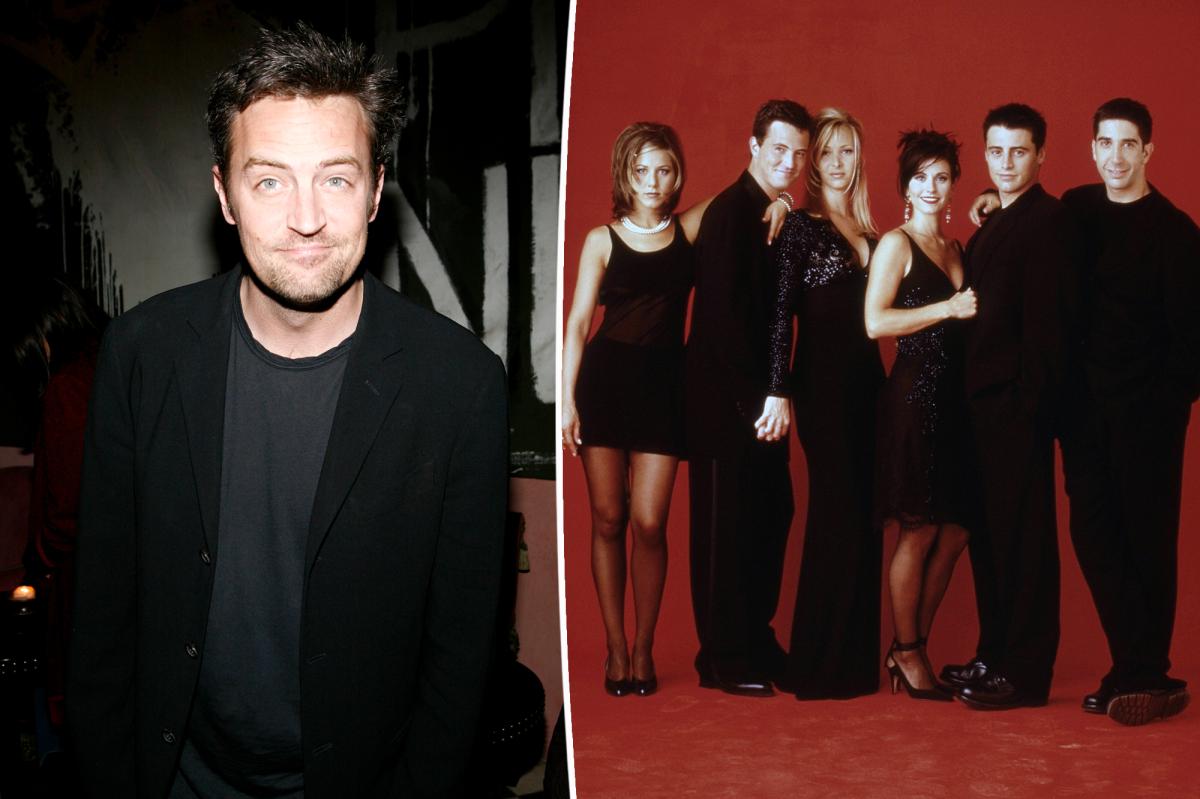
At 11:32 a.m. on Tuesday, a simple notification on a streaming platform sent a wave of disbelief through the fandom. Matthew Perry’s three‑part documentary, quietly titled “The Matthew Perry Story” on the Netflix catalog, appeared with a splash screen that read simply, “In memory of a legend.” Within minutes, Twitter threads erupted, memes about “The One Where Friends Are Missing” went viral, and millions of followers scrolled for answers, their curiosity sparked by a glaring absence: none of the beloved characters from the hit sitcom showed up.
The doc’s premiere drew fans into a quiet, reflective space where the actor’s sister, Mia Perry Bowick, and a handful of his closest friends share intimate recollections of his life and career. Yet the silence surrounding the co‑stars—Jennifer Aniston, Courteney Cox, Lisa Kudrow, Matt LeBlanc, and others—quickly turned the conversation from admiration to speculation. Why did these figures, whose collective star power had defined a generation, not appear in a film that should, by design, celebrate their shared journey? The question, and the answer—or lack thereof—has become the headline of a new cultural moment.
Background & Context
Matthew Perry first entered the public eye in the early 1990s as the manic, misfit Chandler Bing, a role that earned him three Golden Globe nominations. He remained a cultural touchstone for over two decades, with his work on “Friends” cementing him as a household name. After a battle with addiction, the actor returned to the spotlight, gracing the stage, appearing in indie projects, and even returning to the sitcom for a brief cameo. His untimely death in 2023 left fans grieving and industry insiders reassessing his legacy.
Netflix’s decision to produce a three‑episode retrospective was announced two years ago, with the intent of capturing the essence of the actor’s journey from his modest beginnings in Michigan to his Hollywood peak. Mia Perry Bowick, who has long been an advocate for her brother’s memory, was given a central role in the narrative. The documentary also features close friends—colleagues from theater, indie films, and beyond—who recount moments that shaped Perry’s personal and professional life. These voices provide a mosaic of perspectives: the quiet humor that kept him grounded, the resilience that allowed him to recover, and the humility that earned him lifelong friends.
What is unusual, however, is the absence of the co‑stars who shared the screen with Perry for 10 years. The production team reportedly reached out to the actors, offering interviews and archival footage. The replies varied: some accepted the invitation with enthusiasm, while others, citing scheduling conflicts or other contractual constraints, declined. The final cut of the film reflects this uneven participation, leading to the stark absence of characters who were integral to the series that defined the actor’s public image.
The narrative structure of the documentary—relying on third‑person storytelling, voice‑over narration, and archival clips—intended to craft a comprehensive tribute. Yet fans argue that this approach, while respectful, leaves a gaping hole where the ensemble’s collective energy should reside. The director’s choice to focus on the actor’s personal circle, rather than the broader cast, appears to be a deliberate creative decision, one that has not resonated with every viewer. The result is a film that, while heartfelt, feels incomplete to those who cherish the collaborative magic that made “Friends” a cultural phenomenon.
What People Are Saying
On social media, the conversation has been a whirlwind of shock, speculation, and nostalgia. Many followers shared clips from the doc, noting the poignancy of Mia Perry Bowick’s testimony, and praising the candid moments with close friends. These posts were often paired with “Throwback Thursday” memes featuring iconic scenes from “Friends,” juxtaposing the present tribute with past memories. While the majority of comments were supportive, a significant portion expressed frustration at the absence of the co‑stars.
A common thread of sentiment has emerged: the belief that a true homage to Matthew Perry must include those who shared the screen with him. Users lament that the documentary’s narrative feels like a single‑sided conversation, missing the collaborative spark that defined the show. Some speculated that the co‑stars were unwilling to participate out of fear of being typecast or because they wanted to focus on their own projects. Others pointed out contractual hurdles—such as the complex licensing agreements that govern the use of “Friends” footage and the rights of the actors’ agents—that may have prevented inclusion.
Despite the criticism, many fans remain appreciative of the documentary’s focus on personal anecdotes. They highlight how the stories from close friends and Mia’s interviews humanize the actor beyond his on‑screen persona. A trending hashtag, #PerryDocTalk, saw thousands of tweets in the first 48 hours, with users debating whether the film should have included more archival footage from the show or extended interviews with the co‑stars. The dialogue has been lively but respectful, reflecting a shared grief that has found an outlet in communal conversation.
Industry insiders—though not directly cited—have noted that the director’s vision was to present an intimate portrait rather than a star‑studded retrospective. This approach aligns with other recent biographical documentaries that prioritize the subject’s inner circle. Yet the public’s expectations differ; fans, raised on the collective energy of “Friends,” view the absence as an incomplete tribute. The divide between creative intent and audience expectation has become a focal point of the discussion, illustrating the evolving relationship between content creators and their audiences in the streaming era.
What Happens Next
Netflix’s release window is slated for the first week of November, with a premiere date announced for Friday, November 2nd. The platform has not yet confirmed whether additional interviews or behind‑the‑scenes footage will be added to the streaming catalog. Industry chatter suggests that the production team has retained the rights to further interviews, meaning that fans could potentially see additional content in the future.
The documentary’s promotional campaign has been modest. A series of short teaser videos, featuring snippets of Mia’s testimony and the director’s remarks, have circulated on social media. These teasers hint at deeper conversations about the actor’s journey and hint at future projects that may expand upon the current narrative. If the audience response pushes the demand for more comprehensive coverage, Netflix could release a companion series—perhaps a short-form web series—digging into the experiences of the co‑stars and other industry peers.
In the broader context of film and television retrospectives, Matthew Perry’s documentary serves as a case study in balancing artistic vision with audience expectations. Producers and streaming platforms may take note of the fervent discussions that have erupted over the absence of key figures, leading to new strategies that either incorporate broader perspectives or clearly communicate the documentary’s focus to audiences ahead of time. The dialogue surrounding this release will likely influence how future biographies of beloved actors are crafted and marketed.
Fans, meanwhile, will await the premiere with a mix of anticipation and curiosity. Whether the documentary meets the expectations of those who remember the laughter it sparked or falls short of their nostalgic desires, the conversation it has already ignited is proof of Matthew Perry’s lasting impact on pop culture. As the release date approaches, the community remains united in its desire to honor the man who, through his humor and humanity, became a defining figure of an era.
The Bottom Line
The Matthew Perry doc is a poignant reminder that tribute is not just about celebrating an individual, but also honoring the collective that helped shape that individual’s legacy. Netflix’s choice to focus solely on Perry’s personal circle, while understandable from an artistic standpoint, neglects the communal energy that fans remember from Friends. As a result, the documentary feels incomplete to those who cherished the ensemble’s chemistry. We believe that any retrospective of a cultural icon must strive to balance intimate storytelling with the broader context that made the icon resonate. If Netflix wishes to honor Perry’s memory fully, future updates or companion pieces should include perspectives from the Friends co‑stars, offering fans the holistic narrative they yearn for. Until then, the doc remains a heartfelt, but ultimately fragmented, tribute.
Read more celebrity news at MyWorldPulse.