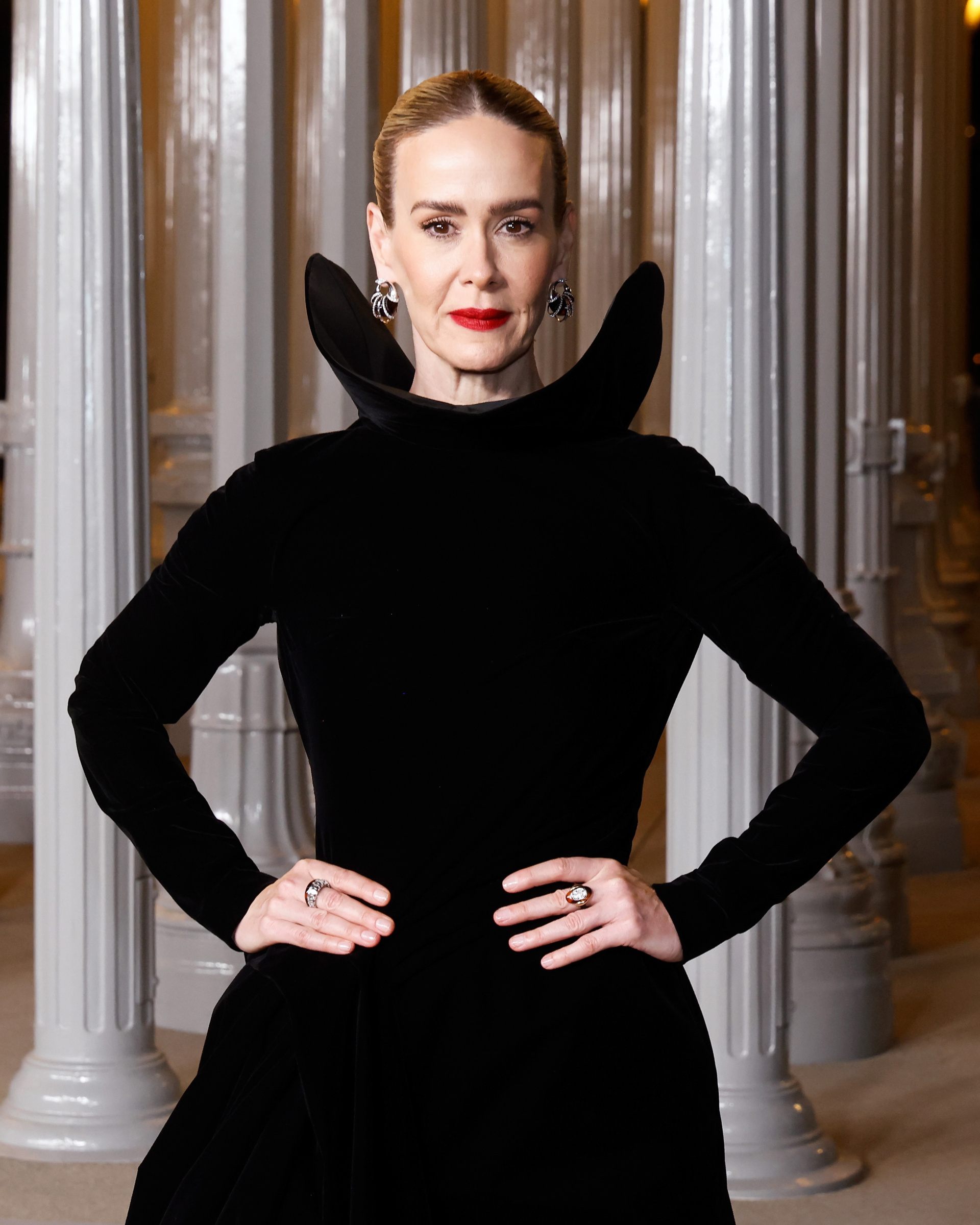
Sarah Paulson, the 51‑year‑old powerhouse of American Horror Story, cut through the chatter with a blunt, “I have no goo in there.” Her words, delivered on the Dear Chelsea podcast, have set off a ripple of questions across Hollywood, sparking a fresh debate about the myth of the always‑perfect celebrity face and the growing discomfort with rumors that paint the aging process in a harsh light.
In a world where the “real” face is increasingly rare in the glossy pages of magazines and the glossy glare of Instagram, Paulson’s forthright admission is more than a self‑protective shrug. It is a bold statement that authenticity is now a currency—one that some actors gamble with by confessing to cosmetic interventions, while others, like Paulson, insist that their beauty is earned not injected. The conversation is timely, arriving just months after the public’s growing appetite for transparency from the stars they adore, and it invites a deeper look at how Hollywood deals with aging, beauty standards, and the relentless scrutiny of the internet.
Background & Context
The rumors that led to Paulson’s latest public statement are not new. Over the past year, speculation that she had filled lips, softened lines, or even had a minor facelift had swirled on social media threads and in gossip columns. While a single, discreet nip‑and‑tuck is common in the industry, the pressure to maintain a flawless visage can feel oppressive, especially for a woman in her fifties who has already made a name for herself in horror and drama.
In November, during her guest spot on Chelsea Handler’s Dear Chelsea podcast, Paulson directly addressed the topic. She noted that one side of her face appears slightly softer, describing it as “just less sharp.” When Handler suggested that Paulson had done something to her face, Paulson replied that she had never put “anything in my face” and insisted “I have no goo in there.” The banter continued with a playful jab at Handler—“I can tell you’ve done nothing because you look like an old bag”—highlighting the ease with which casual commentary can be misinterpreted in the age of meme culture.
Her past denials, however, were more nuanced. In April, when co‑star Pedro Pascal asked her about aging during an interview with Interview, she humorously reflected on the inevitable lines that come with living, noting that “returning to the theater would keep me young.” She made it clear that she sees the theater as a “rapid aging” experience, a metaphor for the emotional labor that comes with constant performance. This conversation, peppered with jokes and candid observations, underscored a recurring theme in Paulson’s public life: a rejection of the notion that one must resort to surgical or injective interventions to stay relevant or appealing.
Beyond the silver screen, Paulson’s personal life also adds layers to the discussion. Her longtime partner, Holland Taylor, is three decades her senior—a relationship that challenges conventional expectations about age, beauty, and partnership. Paulson’s embrace of her age is evident not just in her refusal to undergo cosmetic procedures, but also in her vocal defense of the natural aging process. “It’s proof of our rapid aging,” she told Pascal, a reminder that the industry’s relentless push toward youth can sometimes feel at odds with the lived reality of its creators.
What People Are Saying
The internet’s reaction to Paulson’s candidness has been mixed. While some applaud her authenticity, others latch onto the same rumors with renewed vigor, creating a cycle of speculation that can be hard to break. The comments from the Dear Chelsea episode sparked a flurry of social media posts that either praised her for staying true to herself or continued to question whether her “softness” was a natural aging cue or the result of hidden procedures.
Chelsea Handler herself, who prompted the discussion, appeared to endorse Paulson’s stance. She remarked that Paulson looked like herself, not “someone who needs anything.” Handler’s casual tone made the situation feel like a joke rather than an earnest inquiry, but it also highlighted how easily a celebrity’s word can become a meme when the conversation turns to sensitive topics like bodily autonomy.
Fans of Paulson have been supportive. Many of her followers shared stories about their own experiences with aging and the stigma of going against societal expectations. The actress’s comments resonated with a demographic that often feels marginalized by an industry that prizes a certain look. In contrast, some viewers took to social media to question her claims, citing “familiarity” with her roles as evidence that she might be concealing her true appearance. These arguments reveal a broader tension in entertainment: the line between maintaining artistic integrity and confronting a public that often demands proof.
The conversation extends beyond fan reaction into broader industry speculation. Producers, casting directors, and other actors have expressed interest in Paulson’s stance as a potential shift in how age is handled on screen. When a seasoned actress openly denies cosmetic surgery and embraces the visible signs of aging, it could influence casting choices, especially for roles that require authenticity over stylized perfection. The ripple effects of this debate could reshape the expectations of how aging actresses are perceived in both film and television, encouraging a more inclusive and realistic portrayal of the human experience.
What Happens Next
Paulson’s next projects will likely become a testing ground for her refusal to conform to industry beauty standards. She has already indicated a continued commitment to theater, a domain where the physical demands of performance can accelerate the aging process, as she described in her interview with Pascal. By prioritizing live acting over film, she underscores her belief that the art form itself can be a form of “rapid aging,” proof of how the craft shapes the performer.
Beyond the stage, Paulson’s future roles may reflect a new wave of character casting that values depth over appearance. The actress has previously shown a penchant for playing complex, nuanced characters—whether in American Horror Story, American Vandal, or Midsommar—and her insistence on a natural look could encourage producers to seek talent that brings authenticity to the screen. This shift could extend to younger actors, who might feel less pressured to rely on cosmetic enhancement to secure roles.
Industry insiders are watching closely. In a period when studios are under scrutiny for diversity and representation, Paulson’s stance may serve as a model for other actors navigating the intersection of personal choice and public expectation. If her upcoming projects demonstrate that a natural, aged appearance can still command audience attention and critical acclaim, it may push studios toward more inclusive casting practices.
For fans, the conversation invites a broader reflection on how society perceives aging, beauty, and authenticity. Sarah Paulson’s refusal to indulge in cosmetic procedures is not merely a personal choice; it becomes a public statement about agency, self-acceptance, and resistance to a culture that often prioritizes youth over experience. Whether her approach will influence a broader shift in Hollywood or remain a personal anecdote, it undeniably opens a dialogue that is long overdue.
In the end, Sarah Paulson’s latest revelation underscores a truth that resonates beyond Hollywood’s glittering surface: the real measure of an actor’s worth lies not in the absence of “goo,” but in the depth of their craft, the honesty of their persona, and the authenticity they bring to the roles that shape our cultural narrative.
The Bottom Line
We at MyWorldPulse see Sarah Paulson’s forthrightness as a watershed moment for the entertainment industry. By rejecting the myth that a flawless face is the key to success, she dismantles a long‑standing, age‑ist narrative that has pressured countless actors to conceal their natural selves. Her words remind us that authenticity is a powerful currency—one that commands respect from audiences who are tired of watching stars hide behind a glassy veneer. For the industry, the ripple effects are clear: casting will need to prioritize narrative truth over aesthetic perfection, and studios will have to confront the financial and creative costs of perpetuating an unrealistic beauty standard. As viewers, we should celebrate Paulson’s honesty and advocate for a media landscape that values the richness of real human experience over polished facades. This is a cultural shift that deserves our support and our attention. —MyWorldPulse editorial
Reference:
- Official post on Sarah Paulson's verified Instagram account
Read more celebrity news at MyWorldPulse.