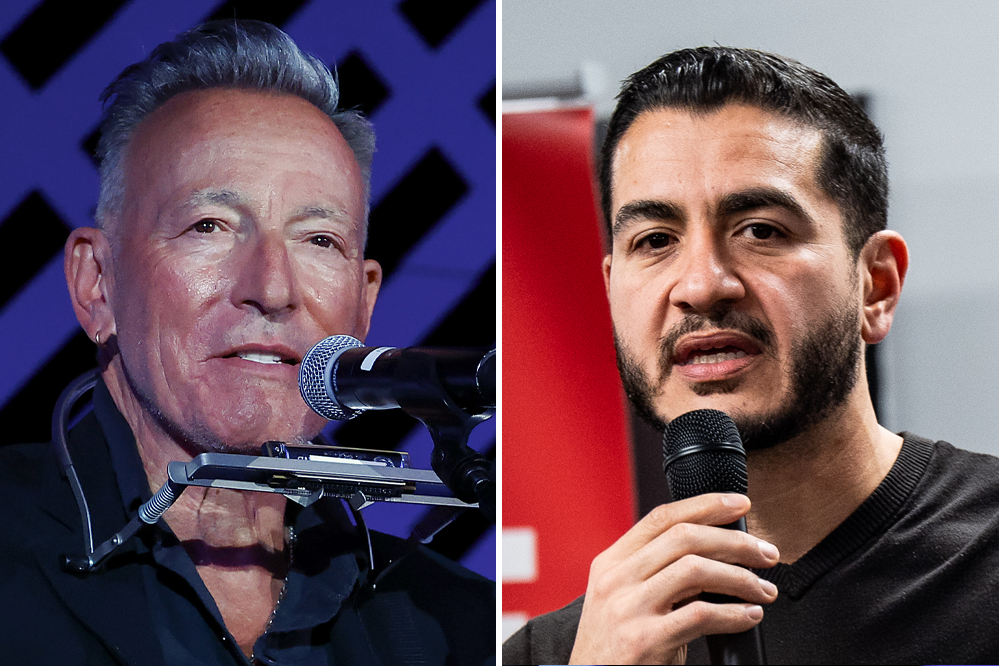
When the news broke that Bruce Springsteen had officially thrown his weight behind Dr. Abdul El‑Sayed in Michigan’s 2026 Senate race, social‑media feeds lit up with a chorus of surprised emojis, hopeful hearts, and a flurry of memes. The “Boss” – a figure whose name has become almost synonymous with American rock and folk‑rock narratives – took to his own platform in the early hours of Monday, announcing that he was in “his corner 100 percent.” The statement came at a critical juncture, the eve of a midterm election that promises to be as heated as any historical battle. Fans of the singer‑songwriter, who have long followed his political activism, flooded comment sections with praise, while political pundits and local reporters speculated about the impact of a celebrity endorsement in a tightly contested swing state.
The endorsement signals more than a celebrity shout‑out. Dr. Abdul El‑Sayed, a family‑practice physician and former assistant U.S. attorney, is running as the Democratic nominee for the U.S. Senate seat currently held by Republican Senator Mike Rogers. If elected, El‑Sayed would become the first Muslim senator in American history, a milestone that could reshape narratives about diversity in federal office. The Michigan Senate race is a microcosm of the broader national debate: a battle over the direction of healthcare, immigration policy, and the role of faith in public life. Springsteen’s public support adds a cultural weight to the campaign, potentially galvanizing voters who see the candidate’s personal story as a reflection of resilience and service.
Background & Context
Dr. Abdul El‑Sayed’s journey to the political stage is rooted in a blend of medical expertise and legal advocacy. A graduate of the University of Michigan and a former assistant U.S. attorney in Detroit, he rose to prominence during the 2011 investigation of a major auto‑manufacturing scandal, where he championed consumer rights and corporate accountability. His subsequent medical career, focusing on underserved communities, has earned him recognition as a community champion. This background has helped him cultivate a reputation as a “fighter for our American Constitution,” a phrase Springsteen echoed in his endorsement, underscoring El‑Sayed’s commitment to democratic principles.
The Michigan Senate seat has long been a battleground. While the incumbent, Mike Rogers, has secured a substantial base among Republican voters, El‑Sayed’s campaign has gained traction by framing his candidacy around bipartisan issues such as infrastructure repair, public health expansion, and transparent governance. The state’s diverse electorate, with significant urban and rural populations, makes the outcome uncertain. Political analysts note that the midterms could see a shift in congressional control, amplifying the stakes for every state race. In this climate, the “Boss” stepping into the race signals a strategic move to mobilize an energized base of voters who resonate with his artistic legacy and his advocacy for social justice.
Springsteen’s own history of political engagement—most famously his 2004 protest against the Iraq War—offers a narrative parallel to El‑Sayed’s own stand against perceived injustices. The endorsement also taps into a broader cultural conversation about representation: the significance of a Muslim voice in the Senate, and how that could influence discussions on faith, policy, and inclusion. As a figure whose music has chronicled the American experience for decades, Springsteen’s backing lends a cultural resonance that transcends party lines.
What People Are Saying
The reaction from the public has been a mix of enthusiasm and cautious optimism. Long‑time Springsteen fans, many of whom grew up with his anthems that celebrate working‑class resilience, posted messages encouraging El‑Sayed’s campaign, while also echoing the need for authentic leadership. Political commentators have pointed out that while celebrity endorsements can boost visibility, they do not guarantee votes; yet, in a tight race, they can be a catalyst for voter turnout, especially among young and minority voters who might otherwise feel disengaged.
Within the Muslim community, El‑Sayed’s candidacy is seen as a historic milestone. Community leaders in Detroit and Dearborn have organized virtual town halls, where El‑Sayed discussed his platform on immigration reform and education, while Springsteen’s endorsement has been described as a bridge between cultural activism and political change. Conversely, some critics argue that the endorsement could polarize voters, suggesting that a celebrity’s involvement might distract from substantive policy discussions. However, early polling indicates a modest uptick in positive sentiment among undecided voters, hinting that the endorsement may indeed have a measurable effect.
The media coverage has largely focused on the significance of a first‑time Muslim senator and the potential shift in policy priorities. Analysts highlight that the endorsement, coupled with El‑Sayed’s track record, could reshape Michigan’s political discourse. While some view Springsteen’s support as a symbolic gesture, others see it as a strategic alignment, positioning the artist’s influence to galvanize grassroots mobilization.
What Happens Next
In the weeks leading up to the election, El‑Sayed’s campaign is expected to capitalize on the newfound visibility. Campaign events in key swing districts, including Lansing and Grand Rapids, will likely feature high‑profile appearances, with Springsteen’s name on posters and flyers. The campaign has announced a series of “community listening sessions” designed to address local concerns ranging from healthcare access to infrastructure investment. A targeted digital outreach strategy is already underway, leveraging the endorsement to attract social‑media engagement, particularly among younger voters.
From a logistical standpoint, the campaign will also focus on fundraising. With the endorsement drawing national attention, El‑Sayed’s fundraising team is likely to tap into the “Boss’s” extensive network of fans, musicians, and philanthropists. Recent reports suggest that high‑profile donors have shown interest, signaling potential for significant contributions that could equal or surpass the campaign’s previous financial benchmarks. Concurrently, the campaign will need to navigate the legal and regulatory aspects of Michigan election law, ensuring compliance with campaign finance disclosures and voter outreach guidelines.
On the opposition side, Mike Rogers’ campaign is expected to reinforce its narrative of experience and fiscal prudence, highlighting a record of bipartisan cooperation. The race is poised to intensify as the deadline approaches, with both sides ramping up voter registration drives, policy debates, and public forums. The final weeks will likely be marked by a flurry of televised debates, town‑hall meetings, and, inevitably, a wave of political advertising that will test the endurance of the endorsement’s impact.
In the end, the question remains: will the cultural resonance of Bruce Springsteen’s endorsement translate into a historic victory for Dr. Abdul El‑Sayed, and what ripple effects will that bring to Michigan’s electorate and the national conversation around representation in government? Only the votes, and the will of the people, will decide.
The Bottom Line
MyWorldPulse.com believes that Bruce Springsteen’s endorsement of Dr. Abdul El‑Sayed is more than a celebrity swoop—it’s a strategic cultural moment that could reshape Michigan’s political landscape. The “Boss”’s long‑standing advocacy for social justice and workers’ rights dovetails neatly with El‑Sayed’s platform of healthcare expansion, infrastructure repair, and transparent governance. While critics argue that celebrity involvement risks oversimplifying complex policy discussions, the endorsement’s real power lies in mobilizing under‑represented voters who historically feel disconnected from the political process. By aligning with a figure whose music has chronicled America’s working‑class experience, El‑Sayed’s campaign gains a narrative that resonates with young, minority, and swing‑state voters. Yet, the endorsement also carries a risk: it could inflame partisan divides and distract from substantive debate if not paired with clear policy messaging. For journalists, the race offers a rare glimpse into how celebrity influence can be leveraged to galvanize civic engagement while maintaining a focus on policy depth. Ultimately, the endorsement may tip the scales in a tight contest, but its lasting impact will depend on the campaign’s ability to translate cultural resonance into actionable policy advocacy.
—The MyWorldPulse.com Editorial Team
Reference:
- Official post on Bruce Springsteen's verified social media account
Read more celebrity news at MyWorldPulse.