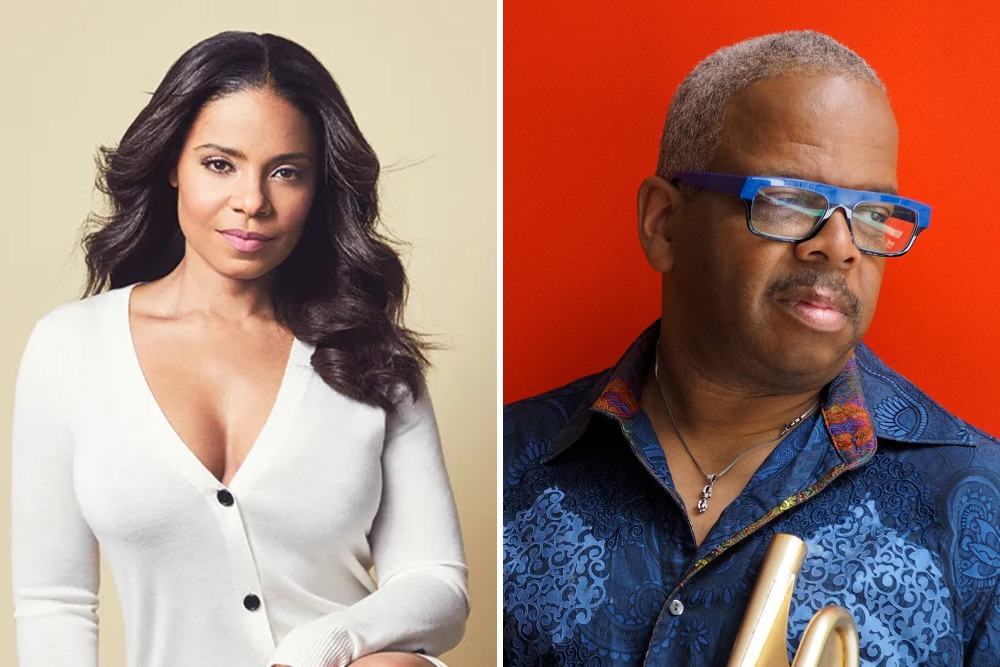
The reunion of the “Love and Basketball” duo – Sanaa Lathan and composer Terence Blanchard – finds its stage in an 11‑minute film that already snagged a top prize at Sundance. In a world where celebrity collaborations often feel scripted, their joint executive production on Will Niava’s Jazz Infernal feels less like a marketing gimmick and more like a purposeful bridge between past and present.
Niava’s short follows a father and son who, across a quiet kitchen in a small town, rediscover their African roots through the language of jazz. The narrative is framed by migration and grief, turning the piano into a conduit for memories that transcend borders. The film’s modest runtime belies a dense, resonant exploration of identity that earned it the Jury Award at the festival’s opening week. With Lathan’s emotive gravitas and Blanchard’s evocative score now under the production umbrella, the project is poised to reach audiences far beyond the festival circuit.
The collaboration also signals a new wave of veteran talent embracing the short‑film format. Lathan, who first made waves in the 2000 sports‑drama Love and Basketball, has been steadily building a reputation for socially conscious projects. Her pivot to executive production on Jazz Infernal reflects a broader industry shift, where established actors and musicians use their names to elevate smaller, risk‑taking stories. Blanchard, meanwhile, has long been revered for his ability to weave intricate musical narratives, most famously in the Ray biopic and the acclaimed Black Panther soundtrack. Their partnership is proof of the cross‑disciplinary alliances that keep the film world vibrant.
Background & Context
Will Niava’s Jazz Infernal was born from a simple, yet profound premise: music as a therapeutic balm for family trauma. The short draws heavily on African diasporic traditions, layering live recordings with archival footage to create a tapestry that feels both personal and universal. Niava, a former jazz pianist turned filmmaker, directed and edited the film himself, ensuring that the rhythm of the story remained tightly bound to the beat of the soundtrack.
The Sundance victory was a surprise to many, as the film entered the festival as a low‑budget, independent entry. Critics praised its lyrical quality, noting how the father‑son relationship mirrors the generational passage of musical traditions. While most Sundance winners are feature‑length, Jazz Infernal carved out its own niche, demonstrating that short‑form storytelling can carry the same emotional weight as its longer counterparts. In an industry that often rewards scale over substance, the short’s triumph highlighted the power of concise, resonant narratives.
Sanaa Lathan’s involvement as executive producer marks her first foray into this role. Known for her advocacy work and recent film projects that tackle social justice, Lathan has expressed a growing interest in projects that explore complex cultural identities. The executive producer position allowed her to shape the film’s creative direction while maintaining a connection to her roots in storytelling. Terence Blanchard’s appointment, meanwhile, offers a new canvas for his composition. With his track record of blending jazz with film, he brought fresh depth to the score, turning the piano into a character in its own right.
What People Are Saying
In the wake of the Sundance award, industry insiders are noting how Jazz Infernal dovetails with broader conversations about impact and profit. The short’s success coincides with the SIE Society’s upcoming Impact+Profit26 conference, slated for Dec. 7‑8 at USC Annenberg. The event will bring together influential figures such as Chuck Lorre, Zoe Clack, and Felicia Pride, all of whom are known for balancing creative vision with financial sustainability. The conference will also honor Miguel Sabido with the SIE Impact Entertainment Visionaries Award, underscoring the importance of content that bridges education and entertainment.
While Jazz Infernal is not directly tied to the conference’s agenda, its thematic focus on migration, identity, and the healing power of music resonates with the SIE Society’s mission to foster socially responsible storytelling. Commentators at the conference have suggested that films like Niava’s demonstrate how short formats can serve as powerful tools for cultural discourse, thereby achieving both artistic and commercial impact. Lathan’s and Blanchard’s involvement further amplifies this narrative, illustrating how high‑profile collaborators can elevate niche projects without compromising their core message.
The film’s reception has also sparked conversations on platforms dedicated to film criticism. Critics emphasize that the soundtrack—an integral part of the film’s storytelling—transcends typical background scores. Instead, it becomes a living dialogue between the father and son, echoing the complex layers of heritage and loss. As the conversation grows, many are asking whether this short will open doors for other artists to explore similar themes in equally intimate settings.
What Happens Next
After its Sundance win, Jazz Infernal is slated for a limited theatrical release in early 2025, with a subsequent streaming launch on a major platform that specializes in independent cinema. Distribution negotiations are already underway, with the production team exploring partnerships that can bring the film to a global audience without diluting its cultural specificity. Given the short’s universal themes, the producers hope to reach viewers beyond the diaspora, inviting broader conversations about migration and identity.
Lathan’s next project, reportedly a feature-length drama about an immigrant family’s journey to the United States, will likely benefit from the momentum generated by Jazz Infernal. Blanchard is expected to continue composing for Niava’s future projects, with the possibility of a collaborative documentary that follows the lives of jazz musicians in diaspora communities. The success of Jazz Infernal also positions Niava as a rising name in festival circuits, opening doors for future festival entries and potential feature-length adaptations.
The SIE Society’s Impact+Profit26 conference, occurring just weeks after the short’s Sundance triumph, may serve as a launchpad for the film’s broader distribution strategy. With industry leaders discussing metrics for impact, there is a clear opportunity to align Jazz Infernal’s storytelling with data-driven approaches that measure audience engagement and cultural influence. The conference’s emphasis on educational outreach also presents possibilities for integrating the film into academic curricula focused on music, migration studies, and African diaspora history.
In a landscape where headlines are often dominated by blockbuster releases, Jazz Infernal reminds audiences and creators alike that the most powerful stories can fit into the span of eleven minutes. With Sanaa Lathan and Terence Blanchard at its helm, the film is poised to spark dialogue long after the final note fades, proving that collaboration across generations and disciplines can indeed produce something truly resonant.
The Bottom Line
MyWorldPulse View: The triumph of “Jazz Infernal” is a resounding reminder that stories need not be long to be powerful. In a landscape saturated with blockbuster soundbites, the film’s concise, musically driven narrative challenges the status quo. By turning piano into a character, it invites audiences to feel the pulse of heritage and grief in an almost meditative space. The success of veteran actors and musicians taking executive roles in short formats signals a democratization of storytelling—talent can now champion underrepresented voices without the overhead of feature‑length production. For industry stakeholders, this is a wake‑up call: funding short‑form projects with cultural depth can yield critical acclaim, festival accolades, and meaningful audience engagement. For viewers, “Jazz Infernal” offers an intimate, reflective experience that echoes real-life migrations and the healing power of music. As the film moves toward limited theatrical and streaming releases, it paves the way for a new ecosystem where short‑films are not merely footnotes but influential cultural touchstones. Ultimately, the film’s journey from Sundance to mainstream screens redefines success—proof that creativity, collaboration, and cultural relevance can outshine budget and duration.
Reference:
- Official Jazz Infernal announcement on Sanaa Lathan’s verified Instagram
- Official Jazz Infernal announcement on Terence Blanchard’s verified Twitter
Read more celebrity news at MyWorldPulse.